




Key Takeaways
- A new rubber factory needs equipment at 5 core stations — cutting, deflashing, separation, cleaning/drying, and finishing — and buying them in the right sequence matters as much as the list itself.
- One air-power deflashing machine processes about 4 kg of parts per minute across OD 3–80 mm, replacing 40–50 times the manual trimming effort of the same station.
- A Phase 1 starter cell (deflashing machine + 0.25 kW vibrating separator + CNC weight cutter) typically fits in 25–30 m² and reaches stable output in 4–6 weeks — typical values from our experience.
- CNC rubber strip cutting machines come in 600, 800, and 1,000 mm cutting widths, all rated at 80 cuts per minute on stock up to 20 mm thick, so one model line covers most new-factory part portfolios.
The short answer: A new rubber parts factory should buy rubber processing equipment for five core stations — cutting, deflashing, separation, cleaning/drying, and finishing — but not all at once. Start with a deflashing machine and a vibrating separator, because that pair removes the heaviest manual labor bottleneck on day one, then add CNC cutting and cleaning equipment as volume grows. This sequence protects your cash while keeping every later upgrade compatible with the machines you already own.
Most new rubber factories overspend on molding presses, then discover that trimming, sorting, and cleaning flash-covered parts by hand caps their real output. The press is only one link in the chain — the post-molding stations decide how many sellable parts leave the building each shift.
This guide covers the complete purchase plan for a new factory: the five stations to equip, the capacity math to do before contacting suppliers, a phased buying roadmap that staggers capital spending, and supplier evaluation checks for a first-time buyer. All specifications quoted below come from our current production range, so you can use them as anchor points when comparing quotes.
The Five Core Stations Every New Rubber Factory Must Equip
A rubber processing line for molded parts is built around five stations, and each has a dedicated machine class. Skipping any one of them pushes the work back onto manual labor — exactly what a new factory can least afford during ramp-up.
| Station | Core equipment | Job | Key spec anchor |
|---|---|---|---|
| Cutting | CNC rubber strip cutting machine | Sized blanks from strip or sheet stock | 600–1,000 mm widths; 80 cuts/min; 0–20 mm thickness |
| Deflashing | Air-power or cryogenic deflashing machine | Flash removal without part damage | 4 kg/min at OD 3–80 mm (air-power) |
| Separation | Vibrating rubber separator | Splits parts from flash after deflashing | 0.25 kW; 160 kg; 380 V |
| Cleaning & drying | Rubber cleaning and drying machine | Washes residue and media dust | Multi-stage wash + dry |
| Post-cure & handling | Roller oven; automatic cutting and feeding line | Secondary vulcanization; automated transfer | 3.8 kW line; 0.1 g weighing accuracy |
Specifications from the current Xingchangjia production range — see the rubber cutting machine category and the deflashing links below for per-model details.
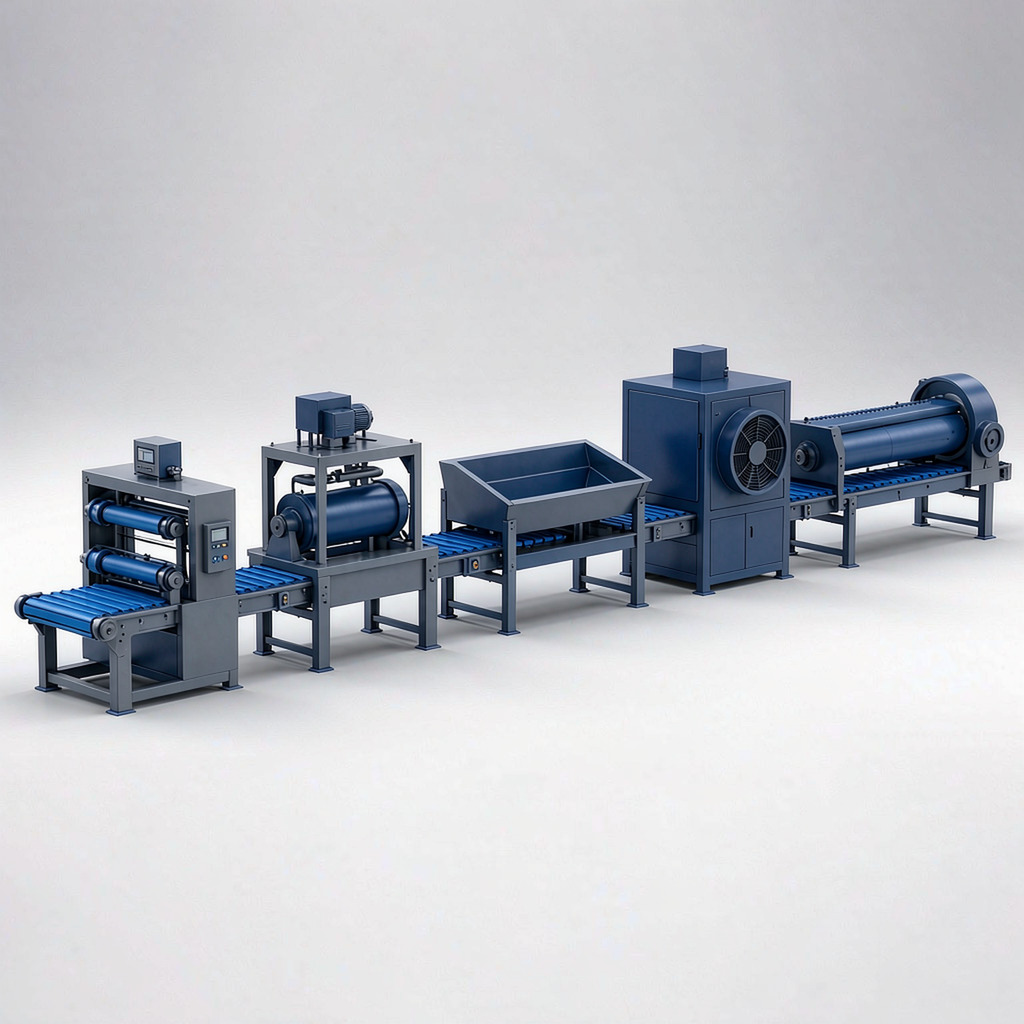
The table is organized by station, not by model, and that is deliberate: because station requirements are fixed by your product geometry, your shortlist should derive from the station list rather than from whatever a supplier promotes that quarter.
Start With Capacity Planning, Not Machine Selection
Before you request a single quotation, convert your sales forecast into per-station throughput — the machines you need then define themselves. Buyers who skip this step routinely purchase machines that are oversized for year one yet incompatible with year-two volumes.
- Convert monthly output into daily weight. If the plan calls for 2,000 kg of finished parts per month over 22 working days, the line must clear about 91 kg per day — roughly 11 kg per hour on one shift.
- Check each station against that rate. An air-power deflashing machine rated at about 4 kg per minute clears a full day’s requirement in under 25 minutes of active cycling, so one machine is enough for Phase 1.
- Add 25–30% capacity headroom. Because a new factory’s forecast is an estimate, not a contract, sizing each station a quarter above plan prevents early replacement.
- Verify utilities and floor space before ordering. Confirm 380 V three-phase power, compressed air, drainage for the cleaning station, and a liquid nitrogen route if you plan cryogenic deflashing.
Utility check saves commissioning time
The vibrating separator runs on a 380 V supply with a 0.25 kW motor; the CNC weight cutter needs a 1,100 × 1,400 × 1,200 mm footprint. Write every machine’s power and footprint on the factory plan before signing anything.
A Phased Buying Roadmap That Protects Your Cash Flow
Split the five stations into three purchase phases, and each phase pays for itself before the next one starts. In our experience commissioning new lines (typical values from our experience), a Phase 1 cell of one deflashing machine, one separator, and one weight-based cutter reaches stable daily output within 4–6 weeks — which is what funds and justifies Phase 2.
| Phase | When | What to buy | Why this order |
|---|---|---|---|
| Phase 1 | Months 0–3 | Deflashing machine + separator + weight cutter | Removes the biggest labor bottleneck first; no line integration needed |
| Phase 2 | Months 4–9 | CNC strip cutting machine + cleaning/drying machine | Cuts blanking labor; meets cleanliness requirements |
| Phase 3 | Year 2+ | Roller oven + automatic cutting and feeding line | Automates transfer once volumes justify 3.8 kW, 10–15 pcs/min feeding |
Anchor prices to real models: the XCJ-G600 super-model deflashing machine (600 mm drum, 15 kg batch, 20–40 s cycles) is the scale-up choice when Phase 1 volumes double.
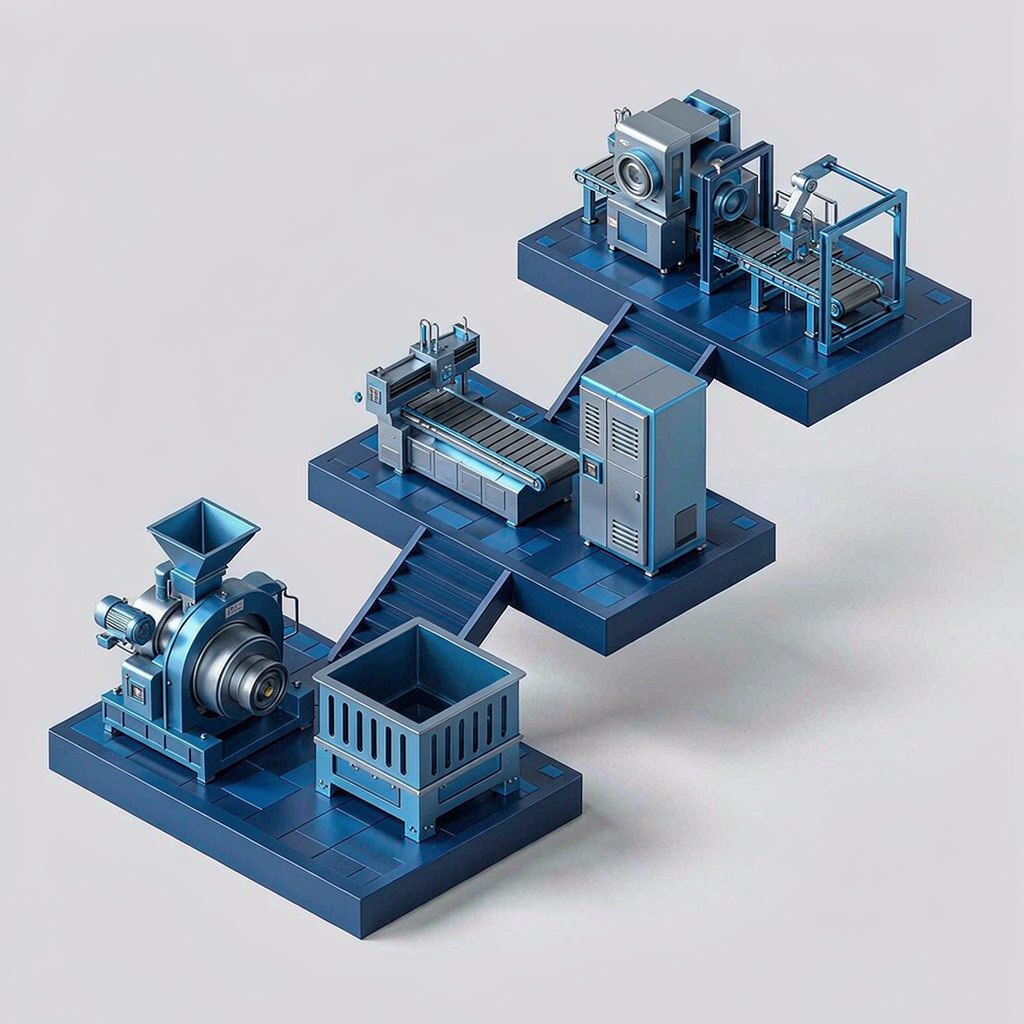
Because Phase 1 machines are standalone, they can be relocated and re-integrated later, so nothing bought early becomes scrap. That flexibility is the point of phasing: you are not buying a smaller factory, you are buying the same factory in installments.
Which Machine Delivers the Fastest Payback First?
Deflashing equipment pays back first, because it attacks the station where manual labor concentrates. A single air-power rubber deflashing machine is rated as equivalent to 40–50 times manual operations at roughly 4 kg per minute, using aerodynamic action with no freezing and no liquid nitrogen — so there is no cryogenic supply contract, no per-kilogram nitrogen cost, and no cold-handling training for your first hires.
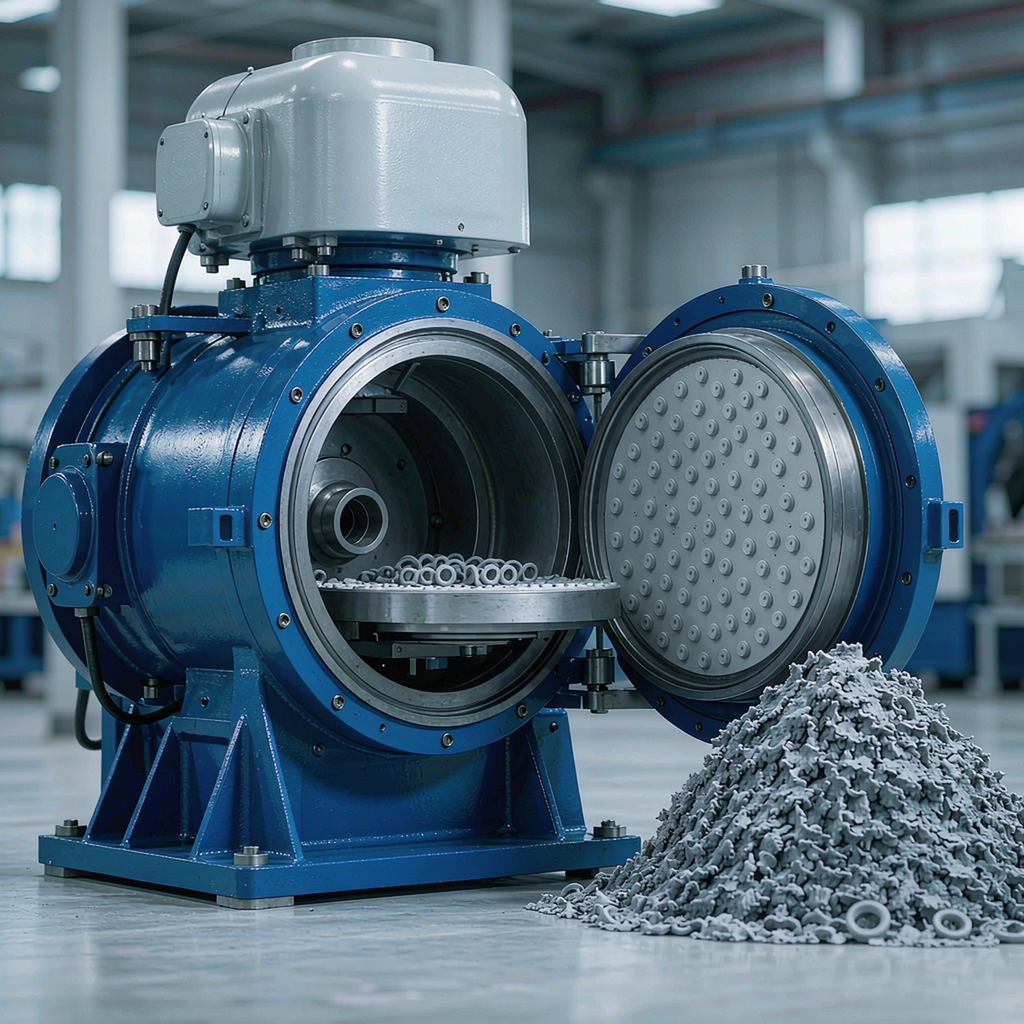
Cryogenic equipment earns its place only when part geometry demands it. Because thin flash embrittles faster at low temperature, a liquid nitrogen cryogenic deflashing machine running down to −150 °C at 20–70 RPM reaches pass rates around 98% on thin-flash work that mechanical media would damage. For a new factory without a nitrogen supply chain, start air-power and add cryogenic later.
After deflashing, the second-fastest payback is the separator — the smallest investment on the list. Its 0.25 kW motor and 160 kg frame belie its effect: because deflashed parts arrive mixed with flash, manual picking typically adds one full-time operator per shift, and the machine removes that position entirely.
How to Evaluate an Equipment Supplier Before You Sign
For a new factory, choose a supplier that covers multiple stations and takes end-to-end line responsibility — not the cheapest vendor per machine. When five machines come from five vendors, every throughput problem becomes someone else’s fault, and a new factory has no engineering staff to arbitrate.
- Station coverage: pick a supplier that builds cutting, deflashing, separation, and cleaning equipment, so later phases stay compatible with Phase 1 machines.
- Non-standard capability: a manufacturer of custom variants can match equipment to your parts rather than forcing your parts to fit standard machines.
- Quality system: an ISO 9001 certified manufacturer gives documented process control — verify the certificate scope covers the machines, not just the office.
- Commissioning and training: confirm the quote includes installation supervision and operator training, because a new factory’s biggest hidden cost is months of sub-standard output while operators learn by trial.
- Spare parts commitment: get written lead times for wear parts and confirm electricals use common brand components rather than unbranded substitutes.
| Common mistake | Why it hurts | Fix |
|---|---|---|
| Buying every station from a different vendor | Integration problems become finger-pointing contests between suppliers | One main supplier carries line responsibility |
| Choosing machines by price alone | Hidden costs surface later in consumables, utilities, and downtime | Compare per-station throughput and wear-parts cost |
| Ignoring spare parts at startup | One failed belt in month two can idle the whole Phase 1 cell | Order a 6-month startup spares kit with the machines |
Startup spares kits should cover blades and belts for the cutter, plus screens and springs for the separator.
Conclusion: Buy the Line in Stages, From One Accountable Supplier
A new rubber factory succeeds with rubber processing equipment bought in the right order: deflashing and separation first to remove the labor bottleneck, CNC cutting and cleaning second to raise quality, full automation third once volume proves itself. Because each phase funds the next and every machine stays useful through all three phases, the staged approach costs no more than a bulk purchase — it simply spreads the same investment across the time your revenue is growing into it.
Ready to plan your Phase 1 list? Send us your part drawings and monthly output target, and our engineers will map them to a concrete machine configuration with capacities, footprints, and utility requirements — contact Xingchangjia here.
Related Equipment Information
• Rubber deflashing machines — full product range: air-power, cryogenic, and super-model units for every phase of your line.
• CNC rubber strip cutting machine (metal-adaptable): 600/800/1,000 mm models, 80 cuts/min, 0–20 mm thickness.
• Rubber separator machine: vibrating separation of parts from flash, 0.25 kW, A and B type sizes.
• Automatic weight cutting machine: screen-set tolerance bands with automatic accept/reject weighing.
• Automatic cutting and feeding machine XCJ-600#-A: Phase 3 automation — 0.1 g weighing accuracy, 10–15 pcs/min.
• Rubber cleaning and drying machine: multi-stage wash-and-dry for post-deflashing cleanliness.
Frequently Asked Questions: Equipment Buying for New Rubber Factories
What is the minimum equipment set a new rubber factory should buy first?
How much floor space does a starter rubber processing line need?
A Phase 1 cell including an air-power deflashing machine (OD 3–80 mm parts), a 160 kg vibrating separator, and a CNC weight cutter (1,100 × 1,400 × 1,200 mm body) typically fits within 25–30 m² including operator and bin space — typical values from our experience.
Should a new factory buy cryogenic or mechanical deflashing first?
Can I buy the whole line from one equipment supplier?
What utilities must a new factory prepare before delivery?
How long does installation and commissioning take for a starter line?
Xiamen Xingchangjia Non-Standard Automation Equipment Co., Ltd.
Floor1, Building 13, Huli Industrial Park, Meixidao, Tongan, Xiamen China
Email: info@xcjrubber.com | Website: www.xmxcjrubber.com
Published: September 2026 | Last verified: September 2026
Post time: Sep-15-2026