




By Mike Chen, Production Director | 12+ Years in Rubber Manufacturing | LinkedIn
Key Specifications at a Glance
- The XCJ-G600 rubber deflashing machine uses a 600mm diameter drum with a 7.5kW motor to process 15 kg batches of O-rings and seals in 8-12 minutes per cycle.
- Each individual O-ring is trimmed in 20-40 seconds, and one machine replaces 40-50 manual deflashing workers or three older machines in production output.
- The machine handles rubber parts with outer diameters from 3 mm to 100 mm with no line diameter restriction, using automatic feeding and discharge for continuous operation.
- The aerodynamic deflashing principle means no liquid nitrogen or cooling media is required, which keeps per-part operating costs lower than cryogenic alternatives.
XCJ-G600 Rubber Deflashing Machine: Features and Specifications
The XCJ-G600 rubber deflashing machine represents a significant improvement in efficiency for manufacturers of molded rubber products. Because mechanical deflashing using aerodynamic force removes flash without freezing or chemical treatment, the XCJ-G600 delivers consistent quality at a lower per-part cost than both manual trimming and cryogenic processing for standard rubber compounds. Understanding the machine’s specifications, features, and application scope helps manufacturers determine whether it fits their production requirements.
This article provides a detailed examination of the XCJ-G600 rubber deflashing machine’s technical specifications, core features, performance benchmarks, application scope, and operational advantages.
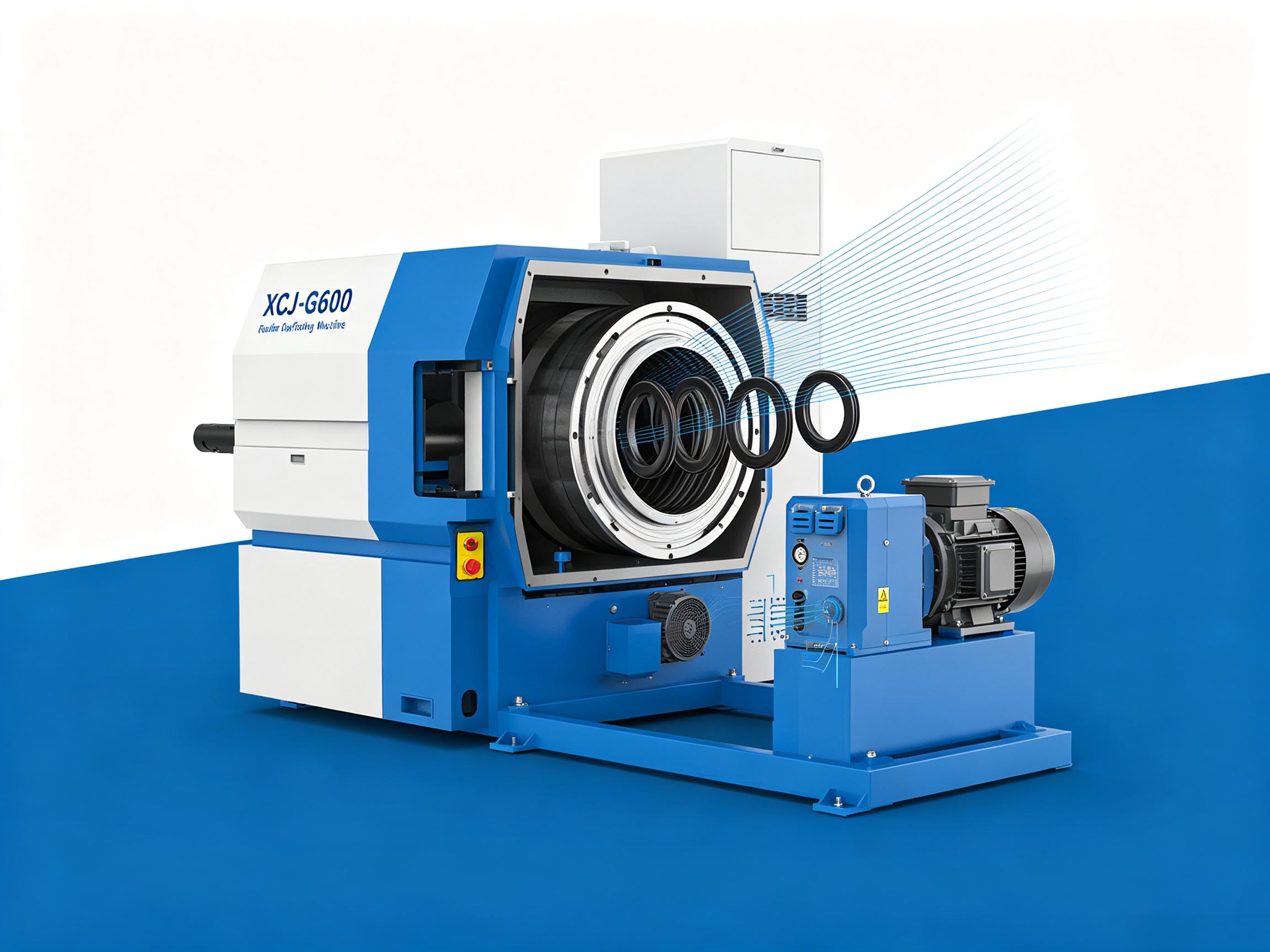
XCJ-G600 Rubber Deflashing Machine: Complete Technical Specifications
The XCJ-G600 rubber deflashing machine is built around a 600 mm diameter processing drum with a 600 mm barrel depth, providing an internal volume of approximately 170 liters for batch processing. The complete technical specifications are listed below.
| Parameter | Specification |
|---|---|
| Drum Diameter | 600 mm |
| Drum Depth | 600 mm |
| Motor Power | 7.5 kW with inverter drive |
| Batch Capacity | Approximately 15 kg per cycle |
| Per-Part Cycle Time | 20-40 seconds per O-ring |
| Part Diameter Range | 3 mm to 100 mm outer diameter |
| Dimensions (L x W x H) | 1750 mm x 1000 mm x 1000 mm |
| Net Weight | 650 kg |
| Operating Principle | Aerodynamic deflashing (no LN₂) |
| Feeding Mechanism | Automatic feeding and discharge |
| Efficiency Ratio | 1 machine = 40-50 manual workers |
| Product Line Restriction | None — no diameter limitation |
Specifications verified from factory data sheets. Custom configurations are available for special production requirements.
How the XCJ-G600 Rubber Deflashing Machine Removes Flash
The XCJ-G600 rubber deflashing machine operates on an aerodynamic principle that differs fundamentally from both manual trimming and cryogenic deflashing. Rubber parts are loaded into the rotating 600 mm drum, where high-velocity air streams and abrasive media abrade flash material from the part surfaces. The drum rotation creates continuous tumbling action that exposes all surfaces of each part to the deflashing media, ensuring consistent flash removal across the entire batch.
Because the process requires no liquid nitrogen, the machine avoids the supply chain complexity and per-batch consumable cost of cryogenic systems. The 7.5 kW inverter-controlled motor maintains consistent drum speed regardless of batch weight within the 15 kg capacity, and the inverter drive allows operators to adjust rotation speed for different rubber compounds and flash thicknesses.
The automatic feeding mechanism loads parts from a hopper into the processing drum, and the automatic discharge system separates deflashed parts from spent media at the end of each cycle. This automation enables continuous batch processing with minimal operator intervention.
Core Features of the XCJ-G600 Rubber Deflashing Machine
High-Volume Batch Processing
Processes 15 kg of rubber parts per batch cycle, sufficient for approximately 3,000+ standard O-rings per shift at continuous operation.
Rapid Cycle Time
Trims each O-ring in 20-40 seconds, achieving total batch cycle times of 8-12 minutes including loading, processing, and discharge.
No Consumable Coolant Required
Aerodynamic principle eliminates the need for liquid nitrogen or dry ice, keeping operating costs significantly lower than cryogenic methods for standard rubber compounds.
Wide Part Size Compatibility
Handles rubber parts from 3 mm to 100 mm outer diameter with no product line diameter restriction, accommodating mixed-size production runs.
Automatic Operation
Auto feeding and discharge mechanisms reduce operator involvement to loading the hopper and monitoring the control panel, freeing labor for other tasks.
Compact Footprint
At 1750 mm x 1000 mm x 1000 mm and 650 kg, the machine fits into standard production floor layouts without requiring specialized foundation work.
XCJ-G600 Rubber Deflashing Machine: Performance and Output Data
The production output of the XCJ-G600 rubber deflashing machine depends on part size, batch composition, and flash severity. The following performance data is based on standard testing conditions with NBR O-rings of 50 mm outer diameter.
| Metric | Value | Test Conditions |
|---|---|---|
| Per-part cycle time | 20-40 seconds | NBR O-ring, 50 mm OD, 5 mm cross-section |
| Batch capacity | ~15 kg | Standard O-rings, single compound per batch |
| Batch cycle time | 8-12 minutes | Including loading, processing, and discharge |
| Hourly throughput | 75-112 kg/hour | Based on 15 kg batches x 5-7 cycles per hour |
| Daily output (8-hour shift) | 600-900 kg | Continuous operation, standard O-ring mix |
| Manual replacement ratio | 40-50 workers per machine | Compared to manual trimming at 2-3 kg/hour per worker |
| Material compatibility | EPDM, NBR, Natural Rubber, FKM (with media adjustment) | All common rubber compounds |
Test data based on factory acceptance testing under controlled conditions. Actual output varies with part geometry, flash thickness, and compound characteristics.
The XCJ-G600 rubber deflashing machine achieves its efficiency advantage through continuous batch processing. A single operator can manage the machine’s automatic loading and unloading cycle, maintaining production output that would require 40-50 manual deflashing workers if done by hand. This labor replacement ratio is the primary driver of return on investment for most manufacturers.
Applications and Materials for the XCJ-G600 Rubber Deflashing Machine
The XCJ-G600 rubber deflashing machine is designed primarily for O-rings but processes a wider range of rubber molded products within its size limitations. The following applications are suitable for this equipment.
Primary applications: O-rings and seals
O-rings in standard sizes from 3 mm to 100 mm outer diameter are the primary application. The machine processes static and dynamic O-rings, square-section rings, and rubber gaskets. Per ISO 3601-1 tolerance standards, the machine achieves Class A and Class B surface quality on standard NBR and EPDM O-rings with flash removal at the parting line.
Secondary applications: General rubber molded parts
Beyond O-rings, the XCJ-G600 handles rubber gaskets, seals, diaphragms, and custom-molded rubber components within the 100 mm outer diameter limit. The 15 kg batch capacity allows mixed batches of parts with similar compound types to be processed together, maximizing throughput for manufacturers with diverse product ranges.
Material compatibility
The mechanical deflashing process is suitable for EPDM, NBR, natural rubber, and FKM compounds when media type and rotation speed are adjusted for material hardness. Silicone rubber requires careful parameter adjustment with soft media to prevent surface damage. For silicone and other low-tear-strength compounds, a cryogenic deflashing process is generally preferred.
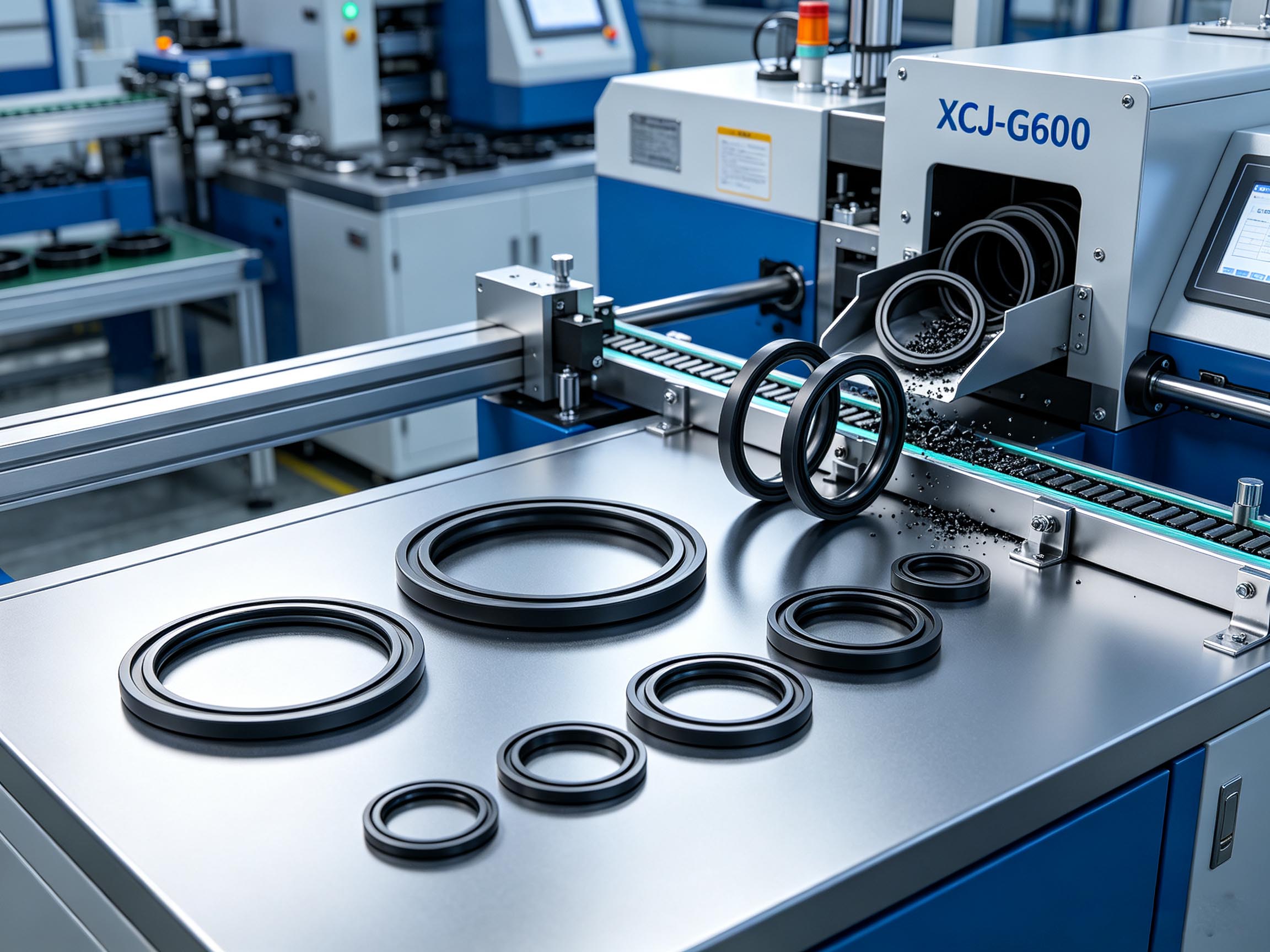
XCJ-G600 vs Other Deflashing Methods: Key Differences
| Parameter | XCJ-G600 Mechanical | Manual Trimming | Cryogenic Deflashing |
|---|---|---|---|
| Per-part cost (50 mm O-ring) | $0.003-0.008 | $0.03-0.08 | $0.015-0.035 |
| Throughput per shift | 600-900 kg | 15-20 kg per worker | 300-500 kg |
| Labor requirement | 1 operator | 40-50 workers | 1-2 operators |
| Consumable cost | Media only | None (labor only) | LN₂ at $5-15 per batch |
| Best for compound | NBR, EPDM, NR | All (slow) | Silicone, FKM, thin flash |
Cost and output comparisons based on standard production conditions. Actual results depend on part geometry, batch composition, and operator skill level.
Integrating the XCJ-G600 Rubber Deflashing Machine into Production
Per OSHA 1910.212 machine guarding standards, the XCJ-G600 should be installed with interlocked access panels and emergency stop controls accessible from the operator position. The machine’s 650 kg weight and 1750 mm length allow installation on standard industrial flooring without reinforcement. Required clearance around the machine includes 1 meter on the loading side for hopper access and 0.5 meters on the discharge side for part collection.
The automatic feeding mechanism can be connected to upstream inspection conveyors or molding press discharge chutes, enabling direct inline deflashing without manual part transfer. The automatic discharge outlet directs deflashed parts to downstream packaging or inspection stations. For production lines that include multiple rubber processing steps, the XCJ-G600 can be positioned between molding and secondary operations.
Conclusion: Is the XCJ-G600 Rubber Deflashing Machine Right for Your Production?
The XCJ-G600 rubber deflashing machine delivers high-volume flash removal for manufacturers of O-rings, seals, and standard rubber molded parts. Its 600 mm drum, 7.5 kW motor, automatic feeding system, and 20-40 second per-part cycle time make it suitable for facilities processing over 10,000 parts per day in NBR, EPDM, or natural rubber compounds. The mechanical deflashing principle keeps per-part costs lower than cryogenic methods and eliminates the complexity of liquid nitrogen supply.
For manufacturers processing silicone or FKM parts with thin flash below 0.3 mm, or those requiring zero flash tolerance on sealing surfaces, a cryogenic deflashing system may be a better choice. The XCJ-G600 is not designed to replace cryogenic deflashing but to fill the production volume gap that exists between manual trimming and precision cryogenic processes.
Related Equipment Information
• XCJ-G600 product page — View the full product listing, images, and inquiry form.
• Liquid nitrogen cryogenic deflashing machine — For precision deflashing of silicone, FKM, and thin-flash parts.
• Rubber deflashing machine category page — Browse all deflashing equipment options from Xiamen Xingchangjia.
Frequently Asked Questions: XCJ-G600 Rubber Deflashing Machine
Xiamen Xingchangjia Non-Standard Automation Equipment Co., Ltd.
Floor1, Building 13, Huli Industrial Park, Meixidao, Tongan, Xiamen China
Email: info@xcjrubber.com | Website: www.xmxcjrubber.com
Post time: Jul-07-2026