




By Mike Chen, Production Director | 12+ Years in Rubber Manufacturing | LinkedIn
Last Updated: May 11, 2026 | Verified by: Xiamen Xingchangjia Technical Team
Investing in the right rubber deflashing machine can transform your production line from a bottleneck into a competitive advantage. Whether you’re manufacturing O-rings, gaskets, seals, or custom rubber components, removing flash efficiently determines your product quality, production speed, and ultimately your bottom line.
But here’s the challenge: with cryogenic systems, mechanical deflashers, and various automation levels available, how do you choose the right rubber deflashing machine for your specific needs? This comprehensive guide walks you through everything manufacturers need to know—from understanding different technologies to evaluating suppliers and calculating ROI.
By the end of this guide, you’ll have a clear framework for making an informed investment decision that aligns with your production goals and budget.
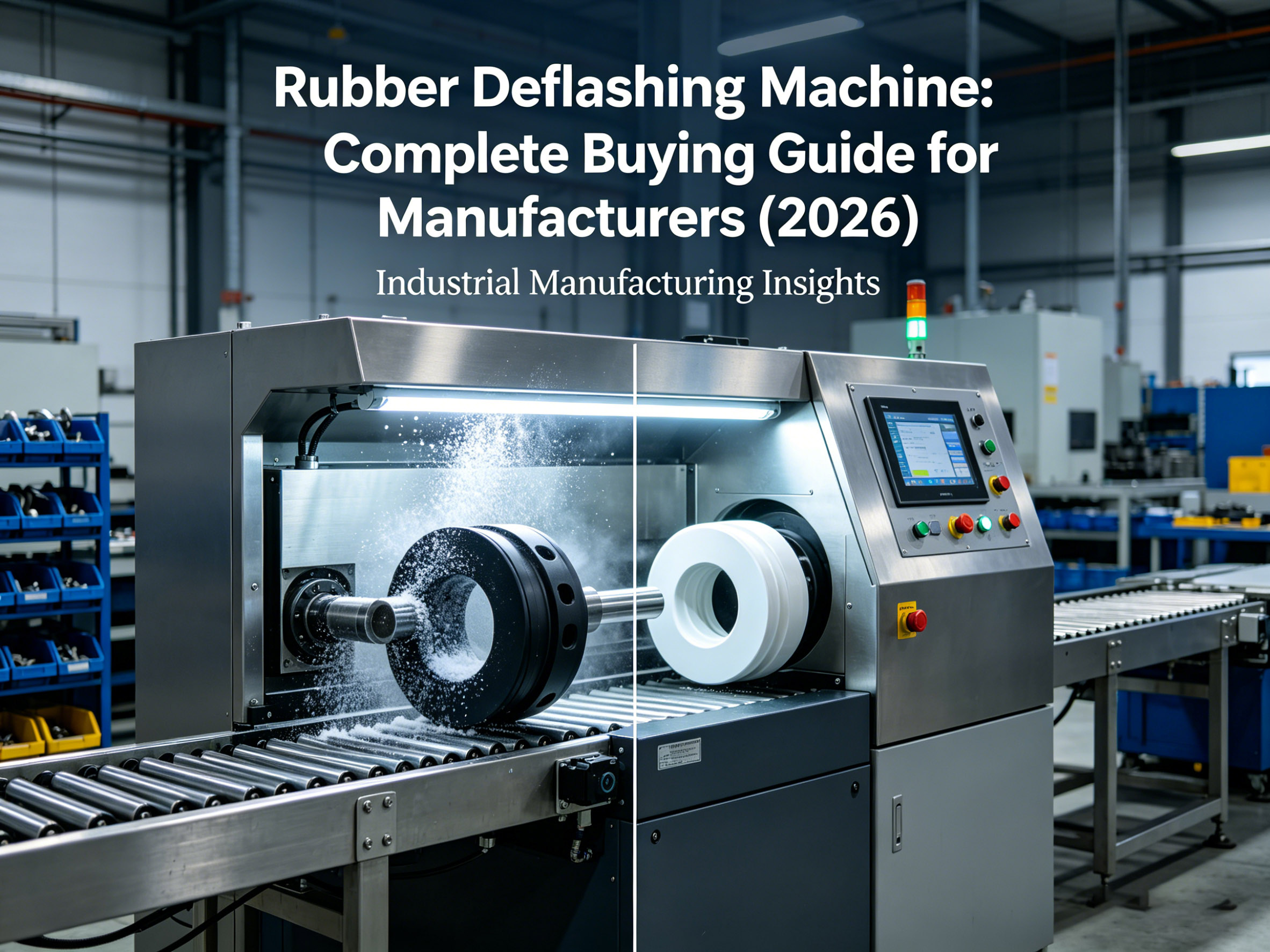
What Is a Rubber Deflashing Machine and Why Do You Need One?
A rubber deflashing machine is specialized equipment designed to remove excess material—called “flash” or “burrs”—from molded rubber products. During the compression or injection molding process, rubber material escapes between mold halves, creating thin ridges that must be removed before the part meets quality standards.
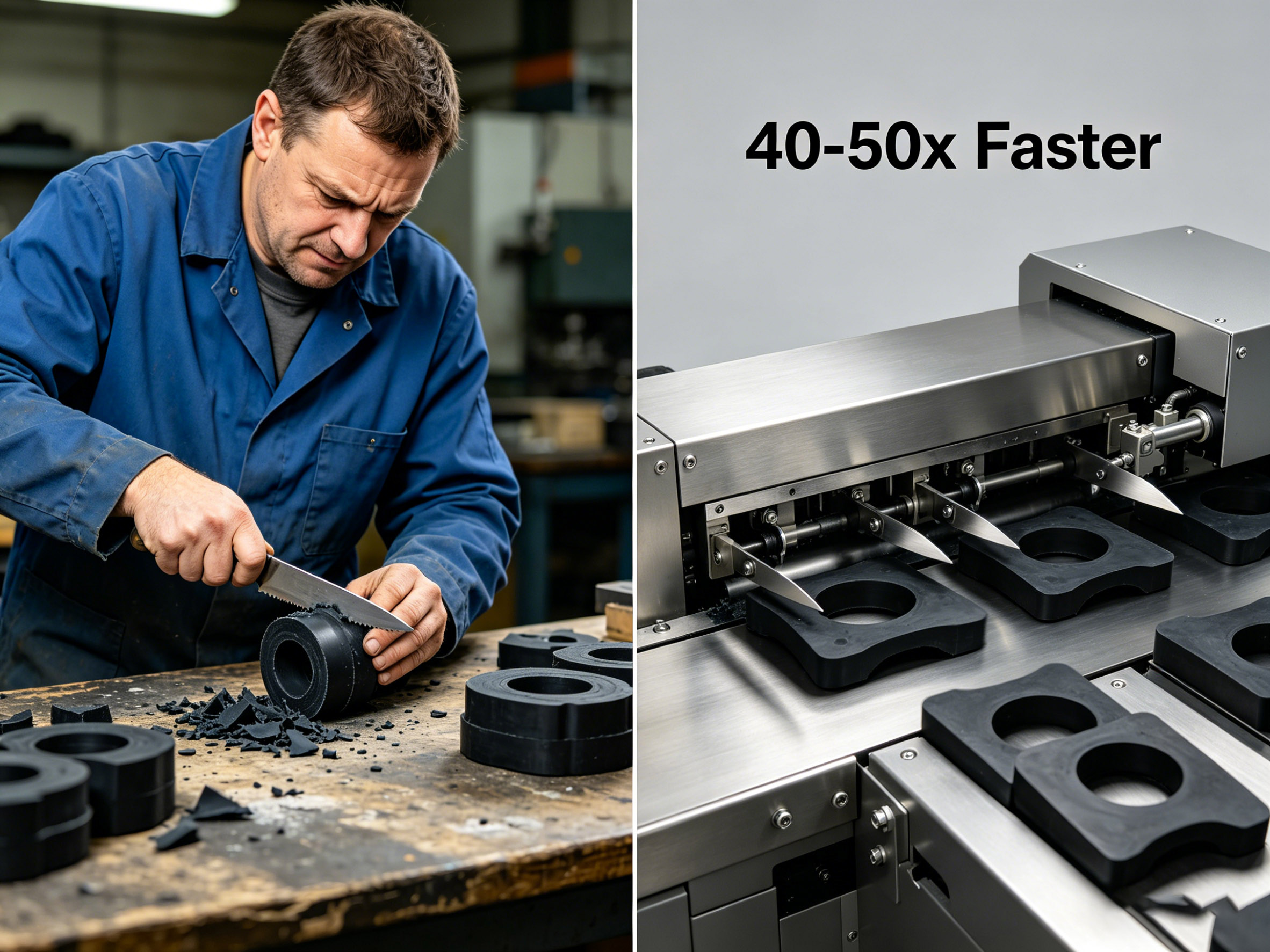
Manual deflashing using knives or scissors might work for prototypes, but it’s impractical for production-scale manufacturing. Here’s why manufacturers invest in automated deflashing equipment:
- Production speed: Automated machines process 40-50 times faster than manual labor
- Consistency: Every part receives identical treatment, eliminating quality variations
- Labor cost reduction: One operator can manage multiple machines simultaneously
- Worker safety: Eliminates repetitive strain injuries associated with manual trimming
- Material recovery: Some systems allow flash recycling, reducing material waste
Types of Rubber Deflashing Machines: Which Technology Fits Your Needs?
Understanding the different deflashing technologies is crucial for selecting equipment that matches your product requirements. Here’s a breakdown of the main types:
Cryogenic Deflashing Machines
Cryogenic systems use liquid nitrogen or dry ice to freeze rubber parts to extremely low temperatures (-100°C to -130°C). At these temperatures, the flash becomes brittle while the main part remains flexible. The parts are then tumbled with blasting media that breaks off the brittle flash.
Best for:
- Precision rubber parts with thin, delicate flash
- Complex geometries and tight tolerances
- Small to medium batch sizes
- High-value medical or aerospace components
Pros:
- Exceptional precision and surface finish
- No mechanical stress on parts
- Handles complex shapes effectively
Cons:
- Higher operating costs (nitrogen consumption)
- Longer cycle times (5-15 minutes typical)
- Higher initial investment
Mechanical (Abrasive) Deflashing Machines
Mechanical deflashing machines use physical abrasion—either through tumbling with media, high-pressure air blasting, or mechanical cutting tools—to remove flash. These systems operate at ambient temperature and don’t require cryogenic media.
Best for:
- High-volume production runs
- Parts with thicker, more robust flash
- Cost-sensitive operations
- Larger rubber components
Pros:
- Lower operating costs
- Faster processing times
- Lower initial investment
Cons:
- May not handle delicate parts as well
- Potential for surface marking
- Limited effectiveness on thin flash
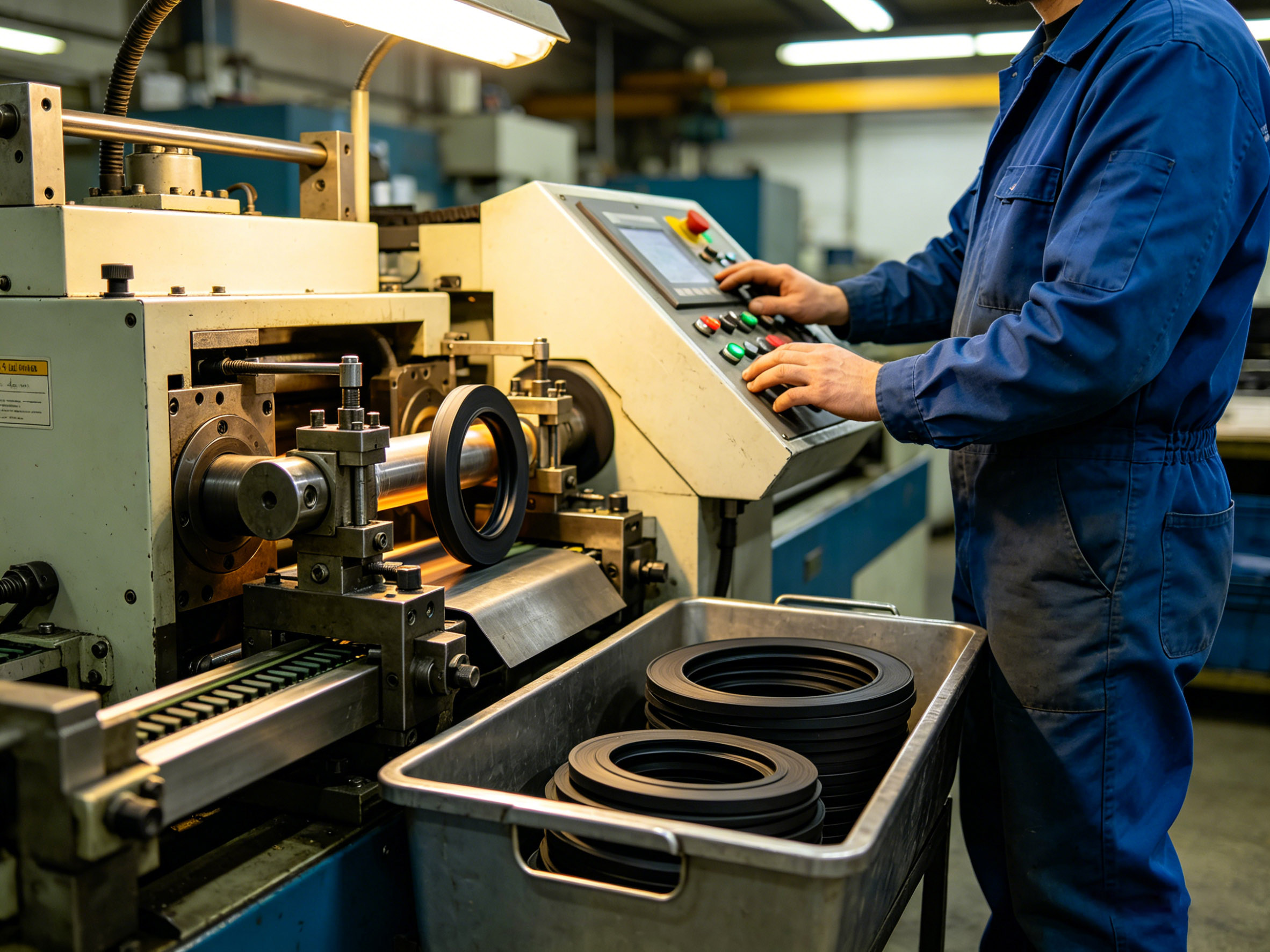
Key Features to Evaluate When Buying a Rubber Deflashing Machine
Once you’ve determined which deflashing technology suits your products, evaluate these critical features to ensure you select equipment that delivers long-term value:
| Feature | What to Look For | Why It Matters |
| Capacity | Parts per hour, basket/batch size | Must match your production volume |
| Part Size Range | Min/max dimensions supported | Ensure compatibility with your products |
| Automation Level | Manual, semi-auto, or fully automatic | Affects labor costs and consistency |
| Control System | PLC, touchscreen interface, programmability | Determines ease of use and repeatability |
| Media System | Type, size options, recovery/recycling | Impacts operating costs and finish quality |
| Safety Features | Interlocks, guarding, emergency stops | Protects operators, ensures compliance |
| Footprint | Dimensions, weight, installation requirements | Must fit your facility layout |
Pro Tip: Request a trial run with your actual parts before committing to a purchase. Reputable suppliers like Xiamen Xingchangjia offer sample processing to demonstrate results on your specific products.
Rubber Deflashing Machine Prices: What to Expect
Understanding the full cost picture helps you budget appropriately and avoid surprises. Here’s a breakdown of what manufacturers typically invest:
Initial Investment (Equipment Cost)
Equipment prices vary significantly based on technology, capacity, and features:
- Entry-level mechanical deflashers: $15,000 – $30,000
- Mid-range automated systems: $30,000 – $80,000
- High-capacity cryogenic systems: $80,000 – $200,000+
- Custom or specialized equipment: $200,000+
Operating Costs (Annual)
Don’t overlook these ongoing expenses:
- Consumables (media, nitrogen for cryogenic): $5,000 – $30,000/year
- Maintenance and spare parts: 5-10% of equipment cost annually
- Labor: 0.5-2 operators depending on automation level
- Energy: $1,000 – $5,000/year depending on machine size
Calculating ROI: Is a Rubber Deflashing Machine Worth the Investment?
The business case for automated deflashing is compelling for most manufacturers. Here’s how to calculate your return:
Cost Savings Factors:
- Labor reduction: Manual deflashing typically requires 3-5 workers per shift. Automation reduces this to 0.5-1 operator.
- Throughput increase: Machines process 40-50x faster than manual methods, enabling higher production volumes.
- Quality improvement: Consistent deflashing reduces rejection rates and customer complaints.
- Scrap reduction: Precise deflashing minimizes damage to parts, reducing waste.
- Worker safety: Eliminating repetitive manual tasks reduces injury claims and insurance costs.
Example ROI Calculation: A mid-sized manufacturer processing 500,000 parts annually might save $80,000-120,000 per year in labor costs alone, achieving payback within 12-18 months on a $60,000 machine.
How to Choose a Reliable Rubber Deflashing Machine Supplier
The supplier you choose matters as much as the equipment itself. Here’s what to evaluate:
Technical Expertise and Experience
Look for suppliers with demonstrated experience in your specific industry. Ask for case studies, customer references, and evidence of successful installations with products similar to yours. A supplier who understands rubber processing—not just machine building—will provide better long-term support.
After-Sales Support
Equipment downtime is expensive. Verify the supplier offers: prompt technical support, readily available spare parts, on-site training for your operators, and warranty terms that provide real protection. Ask specifically about response times and support availability in your region.
Customization Capabilities
Your products may have unique requirements. Choose a supplier capable of customizing machine specifications, developing specialized fixtures, and adapting the system to your production workflow. Off-the-shelf solutions rarely maximize efficiency.
Quality Certifications
Verify the manufacturer holds relevant quality certifications (ISO 9001, CE marking for European markets). These demonstrate commitment to quality management and regulatory compliance.
Conclusion: Making Your Rubber Deflashing Machine Investment
Selecting the right rubber deflashing machine requires balancing multiple factors: your product requirements, production volume, budget constraints, and long-term business goals. By understanding the different technologies available, evaluating key features, calculating true total cost of ownership, and choosing a reliable supplier, you position your operation for improved efficiency, quality, and profitability.
Remember: the cheapest option rarely delivers the best value. Focus on total cost of ownership, supplier support capabilities, and equipment suitability for your specific products. A well-chosen deflashing machine will serve your manufacturing needs for years to come.
Ready to explore rubber deflashing solutions for your operation? Contact Xiamen Xingchangjia Non-Standard Automation Equipment Co., Ltd. to discuss your requirements and request a sample processing demonstration with your actual parts.
Post time: May-11-2026