




By Mike Chen, Production Director | 12+ Years in Rubber Manufacturing | LinkedIn
TL;DR — Key Takeaways
1. Automotive OEMs classify rubber seals into Class A (visible, zero flash), B (functional, flash ≤0.1mm), C (high-precision, zero under 10× magnification), and D (safety-critical, particle-free).
2. Mechanical and cryogenic deflashing serve different needs — mechanical suits EPDM/NBR with 20-40 second cycle times, while cryogenic handles thin flash on silicone and FKM at -100°C to -130°C.
3. IATF 16949 compliance requires documented process capability, while ASTM D2000 and SAE J300 provide the material classification framework for automotive seal deflashing.
Automotive sealing systems — door seals, window gaskets, engine gaskets, and O-rings — demand consistent dimensional accuracy and flawless surface finish. Flash residue left on molded rubber seals can cause assembly issues, leak paths, and premature wear. A high-quality rubber deflashing process removes this excess material without compromising part integrity, and because automotive OEMs enforce strict quality gates, deflashing directly determines whether a seal batch passes or fails inspection.
The challenge lies in balancing deflashing efficiency with part preservation. Automotive seals are often manufactured from high-performance elastomers like EPDM, NBR, silicone, and fluoroelastomers (FKM) — each responding differently to mechanical and cryogenic deflashing methods. Because material properties such as tear strength and glass transition temperature vary widely, the deflashing approach must be matched to both the elastomer and the quality grade required.
This article examines the quality standards applied to rubber deflashing for automotive seals, covering flash acceptance criteria, surface finish requirements, and the equipment capabilities needed to meet OEM specifications.
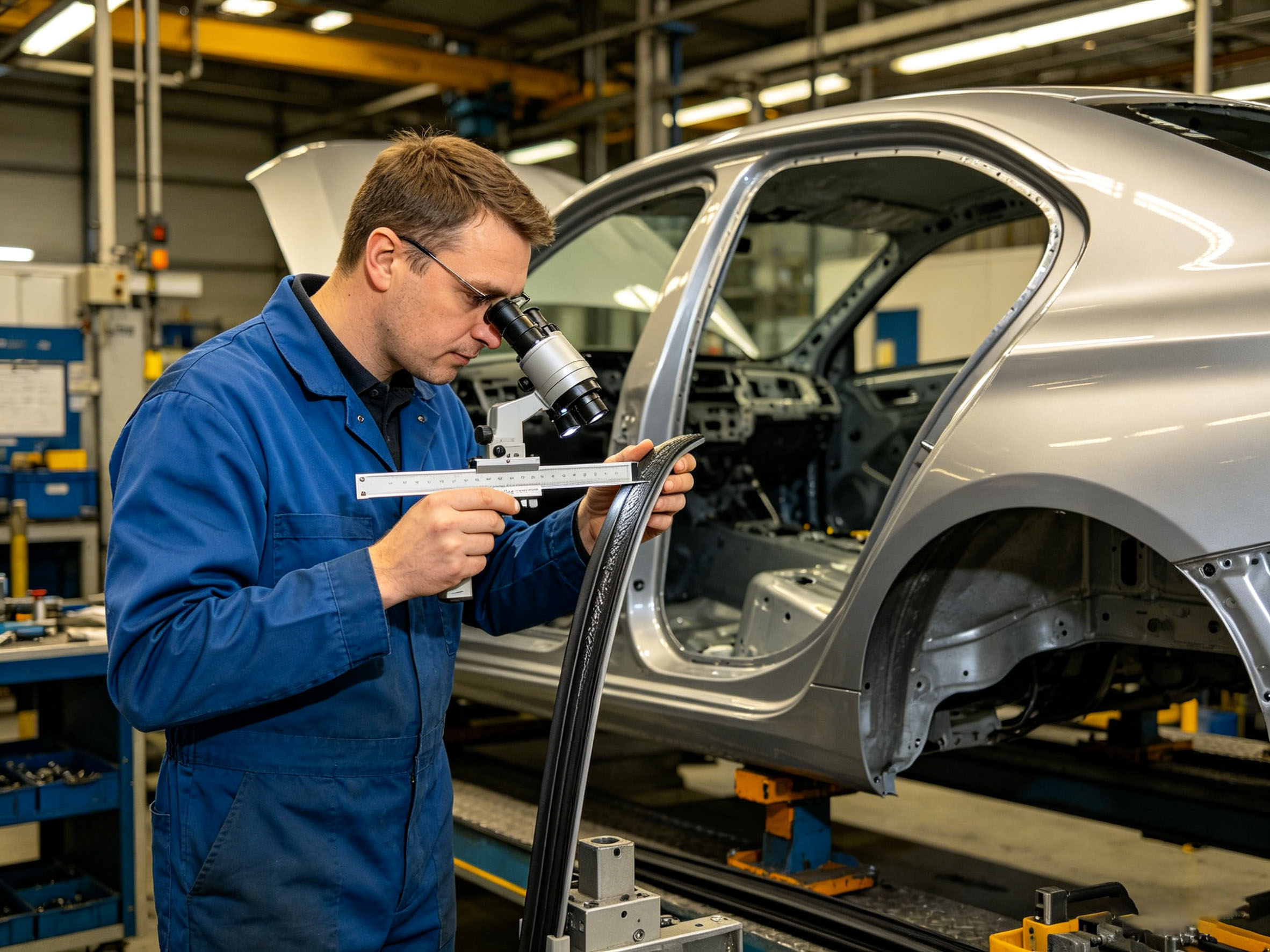
Automotive Seal Deburring Standards: Flash Tolerance and Acceptance Criteria
Automotive OEMs classify rubber seals into distinct quality tiers based on visibility, sealing function, and safety relevance. Flash tolerance limits vary accordingly — interior trim seals may tolerate residual flash up to 0.3mm, while fuel system seals require complete flash removal. Because these standards directly drive deflashing equipment selection, understanding each tier is essential for compliance.
OEM Flash Acceptance Standards in Automotive Sealing
Major automotive manufacturers reference international standards for rubber seal quality. ASTM D2000 classifies rubber materials for automotive applications and establishes baseline quality expectations. SAE J300 provides further specifications for seal performance under dynamic conditions.
For dynamic sealing applications like crankshaft seals and valve stem seals, flash removal must be complete on sealing surfaces. Any remaining material can cause leakage paths or accelerate seal wear. Static seals, such as flange gaskets, may have lenient tolerances — typically flash under 0.2mm in non-sealing areas — because they do not experience continuous surface contact during operation.
Surface Finish Requirements After Deflashing
Post-deflashing surface finish directly affects seal performance. Rough surface finishes increase friction in dynamic seal applications and reduce sealing contact area. Automotive seal specifications typically require Ra (roughness average) values below 1.6µm for visible Class A surfaces, and stricter limits for dynamic sealing faces.
Achieving these surface requirements depends on selecting a rubber deflashing machine with controlled process parameters. Mechanical deflashers can be adjusted for dwell time and media type, while cryogenic systems offer temperature control. Because surface finish directly impacts seal performance in high-cycle applications, manufacturers must verify post-deflashing roughness using calibrated profilometers as part of their quality control protocol.
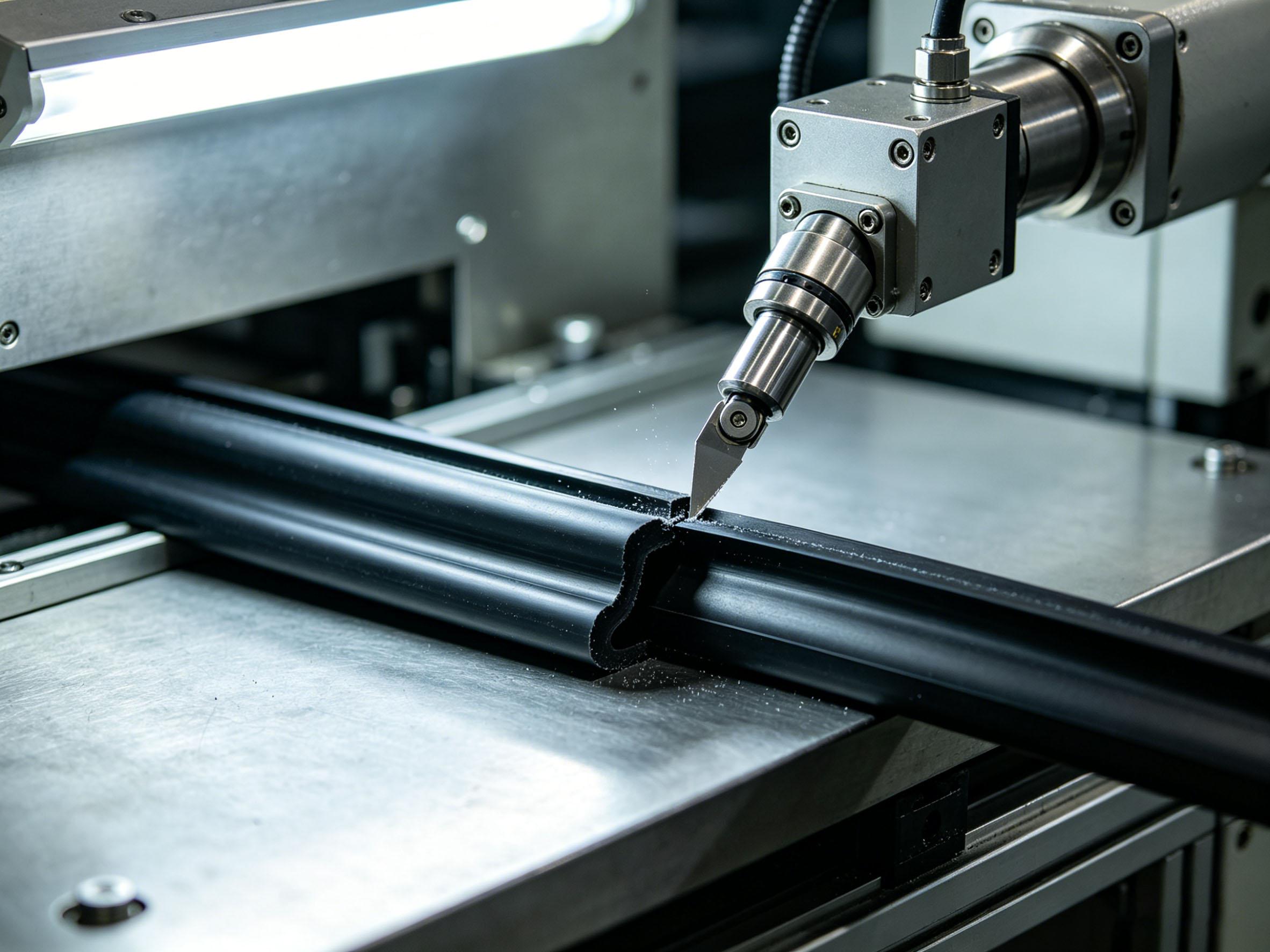
Rubber Flash Removal Methods for Automotive Seal Applications
Two primary deflashing technologies serve the automotive seal industry: mechanical deflashing and cryogenic deflashing. Each method offers distinct capabilities that match different seal geometries, production volumes, and quality requirements.
Mechanical Seal Deflashing Process
Mechanical deflashing systems, including those using aerodynamic principles without liquid nitrogen, process rubber seals by tumbling them with abrasive media or directing media at high velocity across part surfaces. A rubber deflashing machine operating on mechanical principles removes flash through impact and abrasion — because it uses no consumable coolants, it offers lower operating costs for high-volume production.
For O-ring applications specifically, the XCJ-G600 super model rubber deflashing machine achieves per-piece trimming times of 20-40 seconds with a 600mm barrel handling approximately 15kg per batch. The automatic feeding and discharge mechanisms enable continuous operation, making it suitable for production environments where throughput consistency is as critical as quality.
Cryogenic Deflashing for Precision Automotive Seals
Cryogenic deflashing systems freeze seals to temperatures between -100°C and -130°C using liquid nitrogen, making flash brittle while the main part maintains flexibility. This method suits thin, complex flash geometries common in precision automotive sealing components — because the temperature differential embrittles only the thin flash sections, base part dimensions remain unaffected.
The OSHA guidelines for industrial equipment operation, including those covering cryogenic gas handling, provide safety frameworks for facilities processing automotive rubber components at low temperatures. Proper ventilation and operator training remain mandatory for facilities adopting cryogenic deflashing.
Seal Quality Grade and Deflashing Requirements Comparison
The following table summarizes how quality grade classification drives deflashing requirements across automotive seal applications:
| Quality Grade | Application Examples | Deflashing Requirement |
| Class A (Visible) | Door seals, window channels | Zero visible flash, Ra ≤1.6µm surface |
| Class B (Functional) | Engine gaskets, intake seals | Flash ≤0.1mm, no surface damage |
| Class C (High-precision) | O-rings, hydraulic seals | Zero flash under 10× magnification |
| Class D (Safety-critical) | Brake system seals, fuel seals | Zero flash + particle-free finish |
Note: Quality grade classification varies by OEM. Always verify specific requirements against customer engineering specifications.
Automotive Seal Material Deflashing: Elastomer-Specific Considerations
Different elastomers used in automotive seals respond differently to deflashing processes. Material properties including tensile strength, tear resistance, glass transition temperature, and hardness directly affect deflashing outcome and must guide equipment and parameter selection.
EPDM and NBR Seal Deflashing
EPDM (ethylene propylene diene monomer) and NBR (nitrile butadiene rubber) represent the most common seal materials in automotive applications. Both compounds exhibit good mechanical toughness, making them suitable for mechanical deflashing with appropriate media selection. Because EPDM offers excellent ozone resistance, it is widely used for door seals and window channels where outdoor exposure is expected.
Silicone and FKM Seal Processing
Silicone rubber seals require gentler processing due to lower tear strength. Mechanical deflashing parameters must be adjusted to prevent surface damage. Cryogenic deflashing often produces superior results for silicone components because the controlled low-temperature embrittlement removes flash without mechanical abrasion.
FKM (fluoroelastomer) seals are specified for high-temperature and chemical-resistant applications, including fuel system components. Their higher material cost demands precise deflashing to avoid waste. ISO 1629 provides the nomenclature framework for rubber and latex materials used across the automotive industry, enabling standardized communication about material processing requirements between OEMs, seal manufacturers, and equipment suppliers.
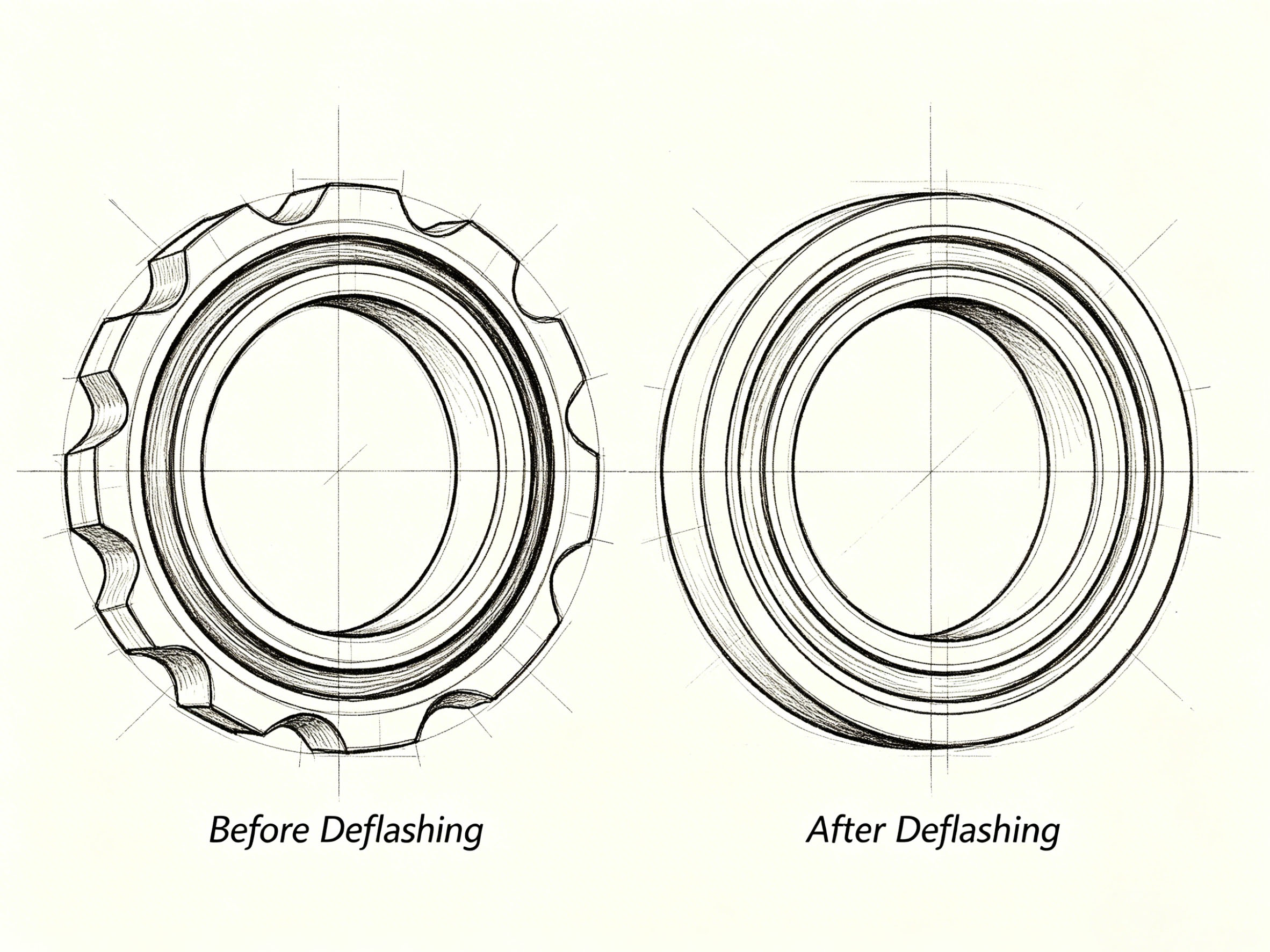
Automotive Rubber Deflashing Machine Selection for Quality Compliance
Selecting a rubber deflashing machine that consistently meets automotive quality standards requires evaluation of several specifications against the target application requirements.
Process Consistency and Repeatability
Automotive quality management systems, including IATF 16949, require documented process capability for all manufacturing operations. Deflashing equipment must demonstrate consistent results across batches and production shifts. Machines with programmable control systems and data logging capabilities support the documentation requirements of IATF 16949 certification.
Part Geometry Adaptability
Automotive seal manufacturers often process dozens of different part numbers with varying geometries. Equipment that accommodates rapid changeovers and adjusts to different seal sizes without major retooling reduces downtime and maintains production flexibility. Rubber deflashing machines with adjustable drum speeds and interchangeable media systems offer the adaptability required for mixed-production environments.
Integrated Quality Verification
Advanced deflashing lines increasingly incorporate vision inspection stations that verify flash removal quality immediately after processing. Integration of weight-based sorting mechanisms further supports quality assurance by separating parts that may have incomplete flash removal. Because real-time quality feedback enables immediate process adjustment, this integration reduces the risk of producing non-conforming batches.
Quality Control Practices for Automotive Seal Deflashing Operations
Establishing quality control protocols for deflashing operations helps manufacturers maintain consistent output and detect process drift before it produces non-conforming parts. Key practices include:
- • Visual Inspection Frequency: Perform visual inspection of deflashed seals at minimum every 30 minutes during production runs. Inspect sealing surfaces under adequate lighting, checking for remaining flash, surface damage, or contamination. Document inspection results.
- • Dimensional Verification: Use optical comparators, coordinate measuring machines, or automated vision systems to verify critical seal dimensions at defined intervals. Focus on sealing surface dimensions and contact areas where flash presence affects fitment.
- • Process Parameter Validation: Record and review cycle parameters including batch weight, processing duration, media condition, and temperature settings. Parameter drift often precedes quality issues and enables proactive adjustment.
- • Statistical Process Control: Implement SPC methods tracking key quality indicators across production shifts. Monitor flash removal rates, dimensional compliance, and visual defect frequency to identify trends.
- • First-Article Inspection: When changing seal types, adjusting machine parameters, or replacing tooling, conduct first-article inspection on the first parts produced to verify all quality requirements before full production.
Conclusion: Meeting Automotive Sealing Quality Through Proper Deflashing
Rubber deflashing for automotive seals requires a methodical approach that pairs appropriate equipment with documented quality standards. The relationship between flash tolerance requirements, material properties, and deflashing method selection determines whether a seal manufacturer can consistently meet OEM expectations.
Because automotive OEMs increasingly demand full process traceability and documented capability — per IATF 16949 requirements — investing in a rubber deflashing machine with programmable control, data logging, and integrated quality verification is becoming a competitive necessity rather than an option.
Manufacturers supplying automotive sealing components benefit from working with equipment suppliers experienced in automotive quality requirements. Properly selected and maintained deflashing equipment produces seals that meet Class A through Class C specifications consistently, supporting successful OEM qualification and production approval.
Related Equipment:
- • Explore rubber deflashing machine specifications for O-ring and seal processing
- • Review cryogenic deflashing machine capabilities for precision rubber components
- • See automotive rubber processing equipment options for complete production solutions
- • View rubber slitter cutting machines for seal strip processing
Frequently Asked Questions About Automotive Seal Rubber Deflashing
Q1: What flash tolerance do most automotive OEMs specify for rubber seals?
Most automotive OEMs specify Class A visible seals at zero detectable flash under normal visual inspection, typically 0.1mm maximum residual flash height. Functional seals like engine gaskets allow up to 0.2mm flash in non-sealing areas, while precision O-rings and safety-critical components demand zero flash under magnification. These specifications are documented in the OEM’s engineering standards, often referencing ASTM D2000 and SAE J300 as baseline frameworks.
Q2: Can the same deflashing machine process both EPDM door seals and silicone gaskets?
Yes, but parameter adjustments are required. EPDM compounds handle higher mechanical agitation and faster tumbling speeds. Silicone’s lower tear strength demands gentler processing with reduced media impact energy or cryogenic deflashing. Machines with programmable parameter presets allow quick switching between material types without manual recalibration.
Q3: How does flash thickness affect the choice between mechanical and cryogenic deflashing?
Flash thickness under 0.3mm typically responds well to cryogenic deflashing, which embrittles thin flash without damaging the base part. Thicker flash above 0.5mm often achieves better results with mechanical deflashing, where abrasive action removes material more efficiently. Because the two methods are complementary, some high-volume facilities deploy both technologies.
Q4: What inspection methods verify deflashing quality on automotive seals?
Common inspection methods include visual examination under controlled lighting for surface flash, optical comparator measurement for dimensional verification, tactile inspection using calibrated probes for residual flash detection, and automated vision systems for high-volume production lines. The choice depends on the quality grade — Class D safety-critical seals typically require inspection method validation per the OEM’s quality agreement.
Q5: Does deflashing affect the dimensional tolerance of precision O-rings?
Properly controlled deflashing does not alter O-ring dimensions beyond the removal of flash material. Over-processing, excessive cycle time, or aggressive media selection can cause material loss on sealing surfaces, altering cross-section diameter. It is essential to validate deflashing parameters using first-article inspection and periodic dimensional checks to ensure tolerance compliance.
Q6: What documentation do automotive OEMs require for deflashing process validation?
Automotive OEMs typically require process flow diagrams documenting deflashing steps, PFMEA (Process Failure Mode and Effects Analysis) identifying deflashing risks, control plans specifying inspection frequency and acceptance criteria, capability studies demonstrating Cp/Cpk values, and documented operator training records. These align with IATF 16949 requirements for production process validation.
Xiamen Xingchangjia Non-Standard Automation Equipment Co., Ltd.
Floor 1, Building 13, Huli Industrial Park, Meixidao, Tongan, Xiamen China
Email: info@xcjrubber.com | Website: https://www.xmxcjrubber.com/
Post time: Jun-02-2026