




By Mike Chen, Production Director | 12+ Years in Rubber Manufacturing | LinkedIn
Key Takeaways
- Silicone rubber used in electronics requires processing tolerances within ±0.1 mm for gaskets and seals and UL 94 V-0 flame retardant compliance for internal electronic components.
- Precision silicone cutting machines with servo motor control achieve feed accuracy of ±0.1 mm at slicing speeds up to 120 knives per minute for electronic part production.
- Silicone’s low tear strength makes mechanical deflashing challenging; cryogenic deflashing at -100°C to -130°C is the preferred method for silicone electronic components with thin flash below 0.3 mm.
- Three-stage cleaning and drying processes remove mold release agents and particulate contamination before silicone electronic parts proceed to assembly or packaging.
The short answer: Silicone rubber processing for the electronics industry involves precision cutting of silicone sheets into gaskets and seals, deflashing molded silicone electronic components, cleaning to remove mold release agents and particulate contamination, and controlled curing to achieve specified physical properties. Because electronic enclosures and sealing components require dimensional tolerances within ±0.1 mm and surface cleanliness suitable for cleanroom environments, automated processing equipment with servo motor control, PLC programming, and multi-stage cleaning systems is standard in electronics-grade silicone production.
Silicone rubber is specified in electronics for its thermal stability, electrical insulation properties, and resistance to environmental degradation. Key applications include keypad membranes, connector seals, EMI gaskets, display bezel gaskets, battery compartment seals, and protective boots for switches and sensors. Each application imposes specific processing requirements that differ from general-purpose silicone molding because of the tight tolerances and cleanliness standards demanded by electronic assembly.
Because silicone rubber has a glass transition temperature near -120°C and exhibits low tear strength compared to other elastomers, its processing requires equipment and parameters tailored to these physical characteristics. This article covers the main processing stages — cutting, deflashing, cleaning, and quality verification — for silicone rubber components used in electronic products.
Silicone Rubber Applications in Electronics: Processing Requirements
Silicone rubber components in electronic products fall into three categories by processing complexity. Gaskets and seals are typically die-cut or kiss-cut from calendered silicone sheets with thicknesses from 0.5 mm to 5.0 mm. Per ASTM D2000 classification for rubber products, silicone gaskets for electronics are commonly specified under line callouts such as 2GE705 with hardness, tensile, and elongation requirements specific to the application.
Molded silicone components — keypads, boots, and custom enclosures — are produced through compression or liquid silicone rubber (LSR) injection molding. These parts require flash removal after molding, and the thin flash typical of LSR molding requires cryogenic or precision mechanical deflashing. A third category, silicone encapsulants and potting compounds, is applied as liquid and cured in place without mechanical processing.
| Application | Typical Dimension | Processing Required | Key Standard |
|---|---|---|---|
| EMI gaskets | 0.5-3.0 mm thickness | Precision cutting, deflashing | UL 94, ASTM D2000 |
| Keypad membranes | 0.3-1.5 mm thickness | Kiss-cutting, deflashing | IEC 60068, ASTM D412 |
| Connector seals | 1.0-5.0 mm cross-section | Molding, deflashing | IP67, ISO 3601 |
| Battery compartment seals | 1.0-3.0 mm cross-section | Die cutting, deflashing | UL 94, RoHS |
| Switch boots | 10-50 mm length | Molding, deflashing, cleaning | MIL-STD-810, ASTM D573 |
UL 94 and IEC 60068 are referenced for flame retardance and environmental testing requirements in electronic applications.
Precision Silicone Cutting for Electronic Components
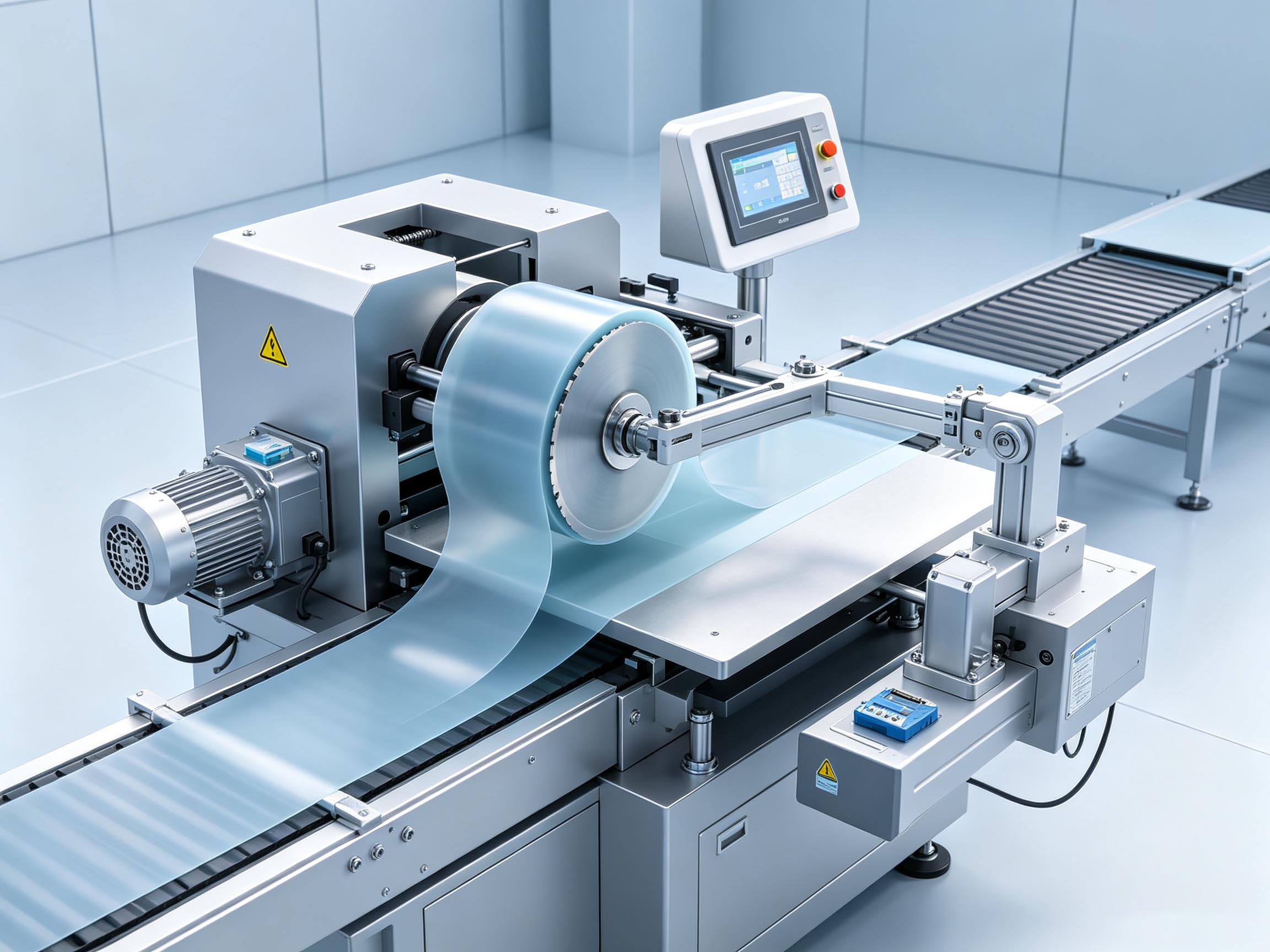
The silicone cutting machine from Xiamen Xingchangjia is designed to process silicone sheets and rolls into the precise dimensions required for electronic gaskets and seals. The machine’s servo motor drive and PLC touch-screen control enable programmable cutting patterns with adjustable depth and blade selection, handling silicone sheets, tubes, and custom shapes.
For higher-volume production of electronic silicone parts, the fully automatic silicone cutting machine offers continuous operation with automatic stacking. Key specifications include slicing width adjustable from zero upward, blade length of 550 mm, slicing thickness from 0 to 10 mm, and slicing speed up to 120 knives per minute. The machine uses a pneumatic cylinder to press material with pressure automatically adjusted to material thickness, eliminating the manual spring adjustment found on older equipment. The PLC-controlled system monitors material feed, product counting, and stacking with alarms for material shortage and full-stack conditions.
Kiss cutting — cutting through the silicone layer but not the release liner — is the standard method for adhesive-backed silicone gaskets used in electronic enclosures. The servo motor feed accuracy of ±0.1 mm is critical for maintaining dimensional consistency across thousands of parts per batch.
Deflashing Silicone Rubber Electronic Components
Silicone’s physical properties create unique deflashing challenges. Because silicone rubber has low tear strength and high flexibility, thin mold flash flexes rather than fractures under mechanical abrasion. For silicone electronic components with flash thickness below 0.3 mm, mechanical deflashing risks tearing the base material at the flash junction. Cryogenic deflashing at -100°C to -130°C using liquid nitrogen selectively embrittles the thin flash while preserving the silicone body’s structural integrity, enabling clean flash removal without surface damage.
For silicone parts with thicker flash above 0.3 mm or simple parting line geometries, mechanical deflashing can be used with soft media and reduced tumbling speed. The XCJ-G600 mechanical deflashing machine processes silicone parts within its 3 mm to 100 mm diameter range when adjusted with appropriate parameters, though trial batches are recommended to verify surface quality before full production.
⚠️ Silicone Deflashing Note
If production validation shows more than 2% surface defects on silicone parts after mechanical deflashing, switch to cryogenic processing. The per-part cost increase of $0.007-0.027 is offset by the reduction in scrap rework, particularly for precision-molded silicone electronic components with thin flash profiles.
Cleaning and Drying Silicone Parts for Electronic Assembly
Silicone electronic components require cleaning after molding and deflashing to remove mold release agents, residual flash dust, and handling contaminants. Mold release agents can interfere with adhesive bonding during electronic assembly, and conductive particulate contamination can cause short circuits in assembled devices. The rubber cleaning and drying machine is specifically designed for silicone rubber, hardware, plastics, and electronic enclosures, using three groups of six-stage cleaning procedures that can be combined freely for different contamination levels.
For electronics applications requiring cleanroom compatibility, the cleaning process should use deionized water and non-ionic surfactants followed by HEPA-filtered drying to prevent recontamination. The machine’s six cleaning stages allow sequential wash, rinse, and drying cycles that can be programmed for specific silicone formulations. Per IPC-1601 handling standards for electronic assemblies, cleanliness verification should include visual inspection at 10x magnification and ionic contamination testing for parts entering high-reliability electronic assemblies.
Quality Control in Silicone Rubber Processing for Electronics
| Parameter | Test Method | Typical Electronics Requirement | Measurement Frequency |
|---|---|---|---|
| Dimensional tolerance | Optical measurement or go/no-go gauge | ±0.1 mm for sealing surfaces | Every 500 parts |
| Hardness (Shore A) | ASTM D2240 | ±5 points from specification | Per batch |
| Tensile strength | ASTM D412 | Min. 6.0 MPa for gasket materials | Per batch |
| Flame retardance | UL 94 | V-0 for internal electronic components | Per material lot |
| Surface cleanliness | 10x visual / ionic contamination | No visible residue, <1.5 μg NaCl/in² | Every cleaning batch |
| Flash remnant height | Optical comparator or profilometer | <0.1 mm on sealing surfaces | Every 500 parts |
Quality parameters based on typical specifications for silicone rubber components in consumer and industrial electronic products. Specific requirements vary by OEM.
Dimensional inspection of silicone electronic parts should account for the material’s thermal expansion coefficient, which is approximately 3-4 times higher than NBR or EPDM. Parts measured at 25°C may be up to 0.15% larger than at the standard 23°C reference temperature specified in ISO 3601 for O-ring dimensional measurement. Temperature-controlled inspection environments are recommended for precision silicone electronic components.
Conclusion: Integrated Processing for Electronics-Grade Silicone Rubber
Silicone rubber processing for the electronics industry requires precision at every stage — from cutting and deflashing through cleaning and quality verification. The low tear strength and high thermal sensitivity of silicone demand equipment parameters different from those used for NBR, EPDM, or FKM compounds. Automated cutting machines with servo motor control, cryogenic deflashing for thin-flash silicone parts, and multi-stage cleaning systems form the standard processing line for electronics-grade silicone components.
Manufacturers entering the electronics silicone market should validate each processing stage with test batches before full production, paying particular attention to deflashing method selection based on flash thickness and cleaning effectiveness for mold release removal.
Related Equipment Information
• Silicone cutting machine — Precision cutting for silicone gaskets, seals, and electronic component sheet materials.
• Fully automatic silicone cutting machine — High-volume cutting with PLC control, servo motor, and automatic stacking for silicone electronic parts.
• Rubber cleaning and drying machine — Three-group six-stage cleaning for silicone, hardware, and electronic enclosures.
Frequently Asked Questions: Silicone Rubber Processing for Electronics
Xiamen Xingchangjia Non-Standard Automation Equipment Co., Ltd.
Floor1, Building 13, Huli Industrial Park, Meixidao, Tongan, Xiamen China
Email: info@xcjrubber.com | Website: www.xmxcjrubber.com
Published: July 2026 | Last verified: 2026-07-21
Post time: Jul-21-2026