




Struggling with stubborn flash on your molded rubber parts? Or tired of inconsistent results from manual trimming? If you work with O-rings, seals, or precision rubber components, the right rubber deflashing machine can completely change your production line.
In this guide, you’ll see exactly how modern rubber deflashing works—from cryogenic deflashing machines using liquid nitrogen to spin trim and tumbling/shot blasting systems—and how each method impacts quality, cycle time, and cost.
You’ll also learn how to match the right flash removal machine for rubber to your parts, volumes, and tolerances, and where non-standard rubber automation makes sense for complex or high-volume projects.
If you’re looking for clear, practical guidance on rubber deburring equipment before making an investment—or you’re exploring custom solutions with a partner like Xiamen Xingchangjia Non-standard Automation Equipment—you’re in the right place.
Understanding Rubber Deflashing Basics
What Is Flash In Rubber Molding?
In rubber molding, “flash” is the extra thin layer or fin of rubber that squeezes into the parting lines, vents, or gaps of the mold during curing. It shows up on edges, corners, and sometimes inside holes and grooves.
If flash is not removed correctly, it directly affects:
- Seal integrity – even a thin rubber fin on an O-ring or gasket can prevent full contact and cause leaks.
- Dimensional accuracy – excess material throws parts out of tolerance and creates assembly issues.
- Appearance and feel – visible flash or rough edges make automotive, medical, and consumer rubber parts look cheap or unfinished.
- Downstream performance – stray rubber pieces can break off during use and contaminate systems.
A modern rubber deflashing machine exists to remove this flash consistently, without damaging critical dimensions.
Deflashing vs. Deburring In Rubber Manufacturing
In metalworking, we talk about “deburring.” In rubber, we typically say “deflashing,” but the goal is similar: clean, safe edges that meet spec.
- Deflashing focuses on removing mold flash from rubber parts (O-rings, seals, gaskets, bumpers).
- Deburring is more about sharp burrs on metal or plastic, but many plants refer to automated rubber deburring equipment or “rubber trimming” in the same context.
- In practice, a flash removal machine for rubber often handles both deflashing and light edge finishing in a single cycle.
Main Types Of Flash On Rubber Parts
When I review molded parts on the line, I usually see three common flash types:
- Thin flash – hairline fins along parting lines, easy to miss but critical for precision sealing.
- Heavy flash – thick, rigid flash caused by worn molds, poor clamping, or process drift; harder to remove and more likely to tear.
- Internal flash – flash inside grooves, holes, cross-holes, and undercuts; a major issue for O-ring deflashing, valves, and complex seals.
Each flash type responds differently to manual trimming versus automated rubber deflashing machine solutions.
Impact On O-Rings, Seals, And Precision Parts
For O-rings, seals, and tight-tolerance rubber components, poor deflashing is one of the fastest ways to lose customers:
- Leak paths – flash on sealing surfaces or in gland areas prevents proper compression and creates micro leak channels.
- Incorrect squeeze – leftover flash changes cross-section, so even in-spec material fails in real use.
- Functional interference – flash on diaphragms, valves, and medical rubber parts can block flow, snag, or shed particles.
- Quality escapes – inconsistent manual trimming makes it harder to control variation and pass audits in automotive and medical markets.
That’s why many plants move from knives and scissors to automated precision rubber finishing and mold flash removal systems.
Manual Deflashing vs. Automated Deflashing Machines
Most shops start with manual deflashing. Over time, labor, consistency, and safety push them toward automation.
Manual deflashing:
- Uses knives, side cutters, grinding wheels, or simple tumblers.
- Low initial cost but very labor-intensive and operator-dependent.
- Inconsistent finish, higher scrap and rework, ergonomic risks for operators.
Automated rubber deflashing machines:
- Include cryogenic deflashing machines, spin trim mechanical deflashing, tumbling barrel deflashing, and shot blast rubber parts systems.
- Deliver uniform, repeatable flash removal across batches and shifts.
- Handle small O-rings up to larger automotive and industrial rubber parts with consistent quality.
- Reduce labor per part and support high-volume rubber deflashing and tighter quality control.
When I evaluate a plant, the rule is simple: once you care about sealing performance, dimensional tolerance, and throughput, a well-matched rubber deflashing machine stops being optional and becomes core rubber molding finishing equipment.
Main Types of Rubber Deflashing Machines
Overview of Common Rubber Deflashing Machine Technologies
When I talk with U.S. rubber molders, I usually group rubber deflashing machine options into four main buckets:
- Cryogenic rubber deflashing machine – Uses liquid nitrogen to freeze parts, then media blasting or tumbling knocks off brittle flash. This is the go‑to for high‑volume O-ring deflashing, seals, medical rubber parts, and tight-tolerance components.
- Spin trim mechanical deflashing machine – A centrifugal, mechanical deflashing system that spins small, mostly symmetrical parts to cut away flash. It’s fast and efficient for automotive rubber parts, gaskets, and standard O-rings with lighter flash.
- Tumbling barrel deflashing / shot blasting – A tumbling barrel deflashing setup with abrasive media or a shot blast rubber parts system to remove external flash on larger molded parts. It fits well for general rubber gasket deflashing and robust industrial components.
- Hybrid and custom flash removal machine rubber systems – Combined cryogenic, spin trim, and tumbling solutions with PLC controlled deflashing equipment and Industry 4.0 rubber processing features for fully automated rubber post-processing lines.
All of these fall under the same goal: consistent mold flash removal with minimal labor, predictable cycle times, and stable quality across shifts.
Matching Deflashing Methods to Parts and Production Needs
To choose the right rubber deflashing machine for a U.S. plant, I look at three things first: part type, material, and volume.
- For small precision parts like O-rings, seals, and medical rubber parts:
- Use a cryogenic deflashing machine or O-ring deflashing machine for EPDM rubber flash removal, silicone rubber deflashing, and nitrile rubber deflashing where tolerance and surface finish are critical.
- For small, round, or symmetric parts with moderate flash:
- A spin trim deflashing / mechanical centrifugal deflashing system often gives the best cost per part and shorter cycle times.
- For larger, heavier, or more rugged parts:
- Go with tumbling barrel deflashing or shot blast rubber parts systems when you mainly need external flash removal and don’t need ultra-fine precision.
- For high-volume rubber deflashing and mixed product lines:
- Consider a hybrid industrial rubber deflashing system with PLC controls, data tracking, and inline integration as part of an automated rubber post-processing line.
From there, I factor in labor rates, energy and liquid nitrogen consumption in deflashing, maintenance, and the deflashing machine price and cost over the life of the equipment. The end goal is the same every time: the simplest rubber deflashing process that consistently hits your quality targets with the lowest total cost per good part.
Cryogenic Rubber Deflashing Machine
How cryogenic deflashing works
A cryogenic rubber deflashing machine freezes parts with liquid nitrogen and then knocks off the brittle flash in a controlled tumble.
- Parts are cooled to a set low temperature so the thin mold flash turns hard while the main body stays tough.
- The basket or tumbler rotates, and a blast wheel or nozzle hits the parts with media to break off the flash.
- PLC controls keep temperature, speed, and time consistent so you get repeatable rubber deflashing results from batch to batch.
Role of blast media in cryogenic tumbling deflashing
Blast media is what actually cuts the flash in cryogenic tumbling deflashing.
- We typically use polycarbonate or similar plastic media to protect sealing surfaces.
- Media size, shape, and hardness are tuned for O-ring deflashing, precision rubber seals, and small medical rubber parts.
- With the right rubber deburring equipment setup, media cleans external and internal flash without gouging parts.
Advantages for complex and internal flash
Cryogenic deflashing has clear advantages over basic mechanical trimming when parts get tricky.
- Reaches internal grooves, cross-holes, and undercuts that are hard to hand-trim.
- Handles dense baskets of small parts, giving uniform mold flash removal around the full 360°.
- Works well on silicone rubber deflashing, EPDM rubber flash removal, and nitrile rubber deflashing where tight tolerances matter.
Best use cases: O-ring and medical rubber deflashing
For U.S. manufacturers, cryogenic deflashing is often the go-to for critical sealing parts.
- O-ring deflashing machine applications: high-volume automotive rubber parts deflashing, hydraulic and pneumatic seals.
- Medical rubber parts finishing: stoppers, valves, gaskets where clean edges and low particle generation are key.
- Precision rubber finishing for telecom, aerospace, and industrial valves where bad flash means leaks and returns.
Cost and operation factors
To run a cryogenic deflashing machine profitably, I always look at total operating cost, not just the deflashing machine price.
- Liquid nitrogen consumption in deflashing: main running cost; depends on load size, starting temperature, and cycle length.
- Cycle time: typically minutes per batch; shorter cycles boost high-volume rubber deflashing throughput.
- Temperature control: tight control avoids over-brittling (part damage) or under-cooling (incomplete flash removal).
- Media and maintenance: media wear, basket liners, blast wheels, and seals need planned upkeep.
- For U.S. plants, tying this industrial rubber deflashing system into existing compressed air, material handling, and quality control keeps the rubber deflashing process lean and predictable.
Spin Trim Mechanical Rubber Deflashing Machine
A spin trim mechanical rubber deflashing machine uses centrifugal force to knock off mold flash fast and clean. I like this method for U.S. manufacturers who run high volumes of small, repeat parts and need a simple, low-cost rubber deflashing process.
How Spin Trim Centrifugal Deflashing Works
- Parts are clamped or nested in a fixture and spun at high speed.
- The rubber flash, which is thinner and weaker than the main body, tears off under centrifugal force and mechanical impact.
- In some designs, a rotating blade, carbide tool, or hardened ring makes light contact to help cut the flash.
- This gives consistent mold flash removal without manual trimming knives.
Core Components Of A Spin Trim Rubber Deflashing Machine
A typical spin trim rubber deflashing machine includes:
- Centrifugal spindle or chuck – holds and spins the rubber parts.
- Precision fixtures or collets – keep small rubber parts or O-rings centered and balanced.
- Guarded trim chamber – protects the operator and contains any loose flash.
- Drive motor and speed control – sets RPM based on part size and rubber compound.
- Basic PLC or timer control – repeatable cycle time and easy operator setup.
Advantages For Small Rubber Parts And Symmetrical Components
Spin trim deflashing shines when you’re running:
- Small, round, or symmetrical parts like grommets, bushings, simple O-rings, and washers.
- High-volume, repeat tools where the flash is thin and predictable.
- Shops that want low energy use and no liquid nitrogen consumption in deflashing.
- A fast, automated rubber trimming solution with short cycle times and minimal training.
Limitations On Thick Flash And Complex Shapes
This mechanical centrifugal deflashing method is not a fit for everything:
- Thick, heavy flash or large gates often won’t tear off cleanly.
- Complex 3D geometries, deep grooves, or hidden internal flash are hard to reach.
- Very soft silicone rubber deflashing or sticky compounds may smear instead of break.
- Parts that are unbalanced can vibrate and require more expensive fixtures.
When To Choose Spin Trim Over Cryogenic Deflashing
I usually recommend a spin trim deflashing machine instead of a cryogenic deflashing machine when:
- You run small, symmetrical rubber parts with simple parting lines.
- You want lower deflashing machine price and operating cost (no liquid nitrogen, no cryogenic media).
- Your quality spec is tight, but not as extreme as medical or micro-precision sealing.
- You need a compact, mechanical rubber deburring equipment solution that fits easily into an existing rubber molding post-processing cell.
For U.S. plants focused on cost control and high-throughput production of standard rubber components, a spin trim rubber deflashing machine is often the most practical, high-ROI choice.
Tumbling Barrel And Shot Blasting Deflashing
Tumbling barrel rubber deflashing machine
A tumbling barrel rubber deflashing machine uses a rotating drum plus abrasive media to knock off mold flash from batches of parts. As the rubber parts tumble, the media rubs and chips away the excess flash on edges and surfaces. For U.S. shops running high-volume molding, this is a simple, low-cost flash removal machine for rubber where you want steady, repeatable results without a lot of operator touch time.
Shot blast rubber parts for external flash
Shot blasting for rubber parts uses high-speed media blasting over a rotating basket or conveyor to clean external flash quickly. This style of rubber deburring equipment works well on sturdy automotive rubber parts, gaskets, and industrial seals where the main problem is heavy external flash, not delicate internal features.
Best fit: larger molded rubber components
I mainly use tumbling barrel deflashing and shot blast rubber parts processing when:
- Parts are larger and durable (gaskets, bushings, bumpers, industrial seals)
- Tolerances are moderate, but appearance and edge cleanliness still matter
- You need batch deflashing for hundreds or thousands of parts per cycle
- You want a lower deflashing machine price compared with a cryogenic deflashing machine
Common issues and how we handle them
With tumbler-style and shot blast rubber deflashing, you need to manage:
- Media residue: Media stuck in holes or grooves; we dial in media size/shape and add integrated cleaning steps
- Part-on-part damage: Scuffs or nicks on softer silicone or nitrile; we adjust load size, speed, and cycle time to protect the surface
- Inconsistent flash removal: Solved by balancing media mix, barrel speed, and using PLC controlled deflashing equipment for repeatability
Combining tumbling with cryogenic deflashing machine
For U.S. customers running mixed product lines, I often pair tumbling with cryogenic tumbling deflashing:
- Use cryogenic deflashing machine for tight-tolerance O-ring deflashing and precision rubber finishing
- Follow with a short tumbling barrel deflashing cycle to smooth edges and clean surfaces
- Or pre-tumble heavy flash, then finish with liquid nitrogen deflashing for internal flash and critical sealing areas
This hybrid approach keeps liquid nitrogen consumption in deflashing under control while still delivering industrial rubber deflashing system performance that fits real-world production and cost targets.
Hybrid Rubber Deflashing Solutions
Combining Cryogenic And Mechanical Rubber Deflashing
For many U.S. manufacturers, one single rubber deflashing machine type isn’t enough. I often see the best results when we combine cryogenic deflashing with mechanical methods like spin trim or tumbling barrel deflashing.
- Use a cryogenic deflashing machine to break and blast off fine, stubborn flash, especially on O-rings, seals, and medical parts.
- Follow with mechanical centrifugal deflashing or shot blast rubber parts processing to clean up heavier gates and parting lines.
- This hybrid setup lets you balance precision rubber finishing with higher throughput and lower per-part cost.
The result is cleaner edges, better sealing performance, and less manual rubber deburring equipment on the line.
PLC Controls And Automated Rubber Trimming
Modern rubber deflashing machines in the U.S. need to be easy to run, quick to train on, and consistent day to day. That’s why I always push for PLC controlled deflashing equipment with simple HMI screens:
- Save and recall recipes for different rubber materials (EPDM, silicone, nitrile) and part families.
- Lock in parameters like liquid nitrogen temperature, blast time, and media flow to stabilize your rubber deflashing process.
- Use alarms, interlocks, and safety logic to protect operators and cut unplanned downtime.
This level of automation turns your flash removal machine for rubber into a repeatable industrial rubber deflashing system instead of a “black art.”
Industry 4.0 Rubber Deflashing And Data Tracking
U.S. plants that care about quality and traceability now expect Industry 4.0 rubber processing features built in:
- Log cycle time, part counts, reject rates, and liquid nitrogen consumption in deflashing per batch.
- Connect your rubber molding post-processing line to MES/ERP for live performance dashboards.
- Use data to tune shot blast intensity, media usage, and batch deflashing vs inline deflashing strategies.
With real data from your flash removal machine, you can prove process capability, pass audits, and keep tight control on rubber parts quality control.
Non-Standard Rubber Automation And Custom Systems
Most U.S. rubber shops don’t run textbook parts; they run tricky profiles, multi-material seals, and mixed batch sizes. That’s where non-standard rubber automation and custom rubber deflashing solutions matter:
- Custom baskets, fixtures, and part-handling to protect delicate silicone rubber deflashing and medical rubber parts finishing.
- Inline integration with presses, vision inspection, and packing to build a fully automated rubber post-processing line.
- Tailored flow for automotive rubber parts deflashing, rubber gasket deflashing, and high-volume rubber deflashing cells.
When I design or select a custom rubber deflashing solution, my goal is simple: fit your parts, your people, and your existing equipment so the system actually gets used and pays back fast.
How To Choose The Right Rubber Deflashing Machine
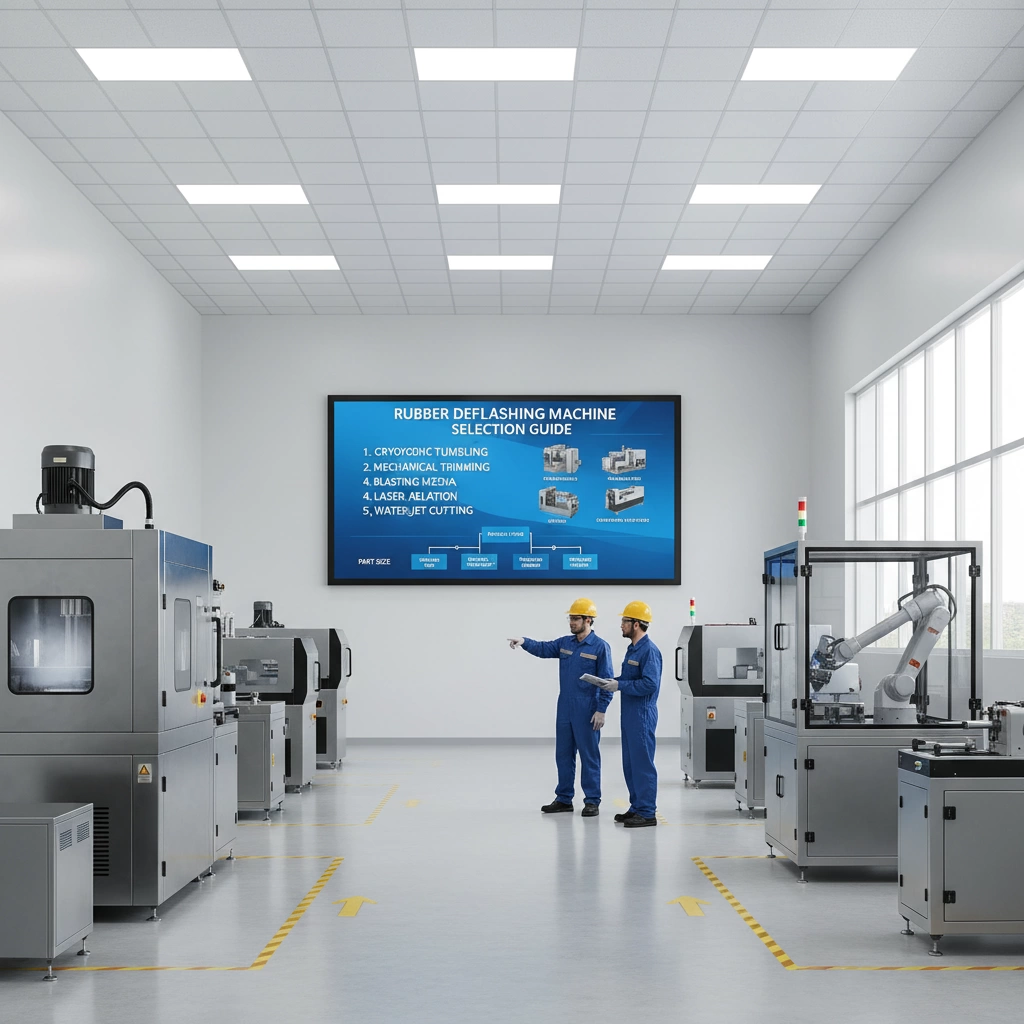
When I help U.S. plants select a rubber deflashing machine, I walk through a simple checklist. The goal is low scrap, stable quality, and predictable cost.
Define Volume And Batch Size
- Low volume / many changeovers: Flexible, easy-to-set machines; smaller cryogenic deflashing or tumbling barrel deflashing systems.
- High-volume / dedicated lines: Larger industrial rubber deflashing systems, often inline or automated rubber post-processing lines.
- Batch vs inline:
- Batch deflashing works well for job shops, custom rubber molding.
- Inline deflashing fits automotive rubber parts deflashing and other high-volume work.
Match Machine To Part And Material
Use the part map first, not the machine brochure.
- Simple, small, symmetric parts (O-rings, gaskets, plugs):
- Spin trim deflashing / mechanical centrifugal deflashing or compact O-ring deflashing machines.
- Complex shapes, internal flash, tight seal grooves:
- Cryogenic deflashing machine / cryogenic tumbling deflashing with media blasting.
- Large, heavy or chunky parts (mounts, bushings, bumpers):
- Tumbling barrel deflashing or shot blast rubber parts systems.
Material impact:
- EPDM rubber flash removal: often cryogenic or shot blast.
- Silicone rubber deflashing: gentler cryogenic deburring settings, fine media.
- Nitrile rubber deflashing: can run cryogenic, spin trim, or tumbling depending on hardness.
Tolerances And Surface Finish
- Critical sealing (rubber seals and O-ring finishing, medical rubber parts finishing):
- Tight tolerance, clean edge: favor precision rubber finishing with cryogenic media blasting for rubber.
- General industrial parts:
- Tumbling barrel or shot blast rubber deflashing usually good enough.
If you need consistent ± tolerance on mold flash removal, prioritize machines with:
- Stable temperature control (for liquid nitrogen deflashing)
- Repeatable recipes and PLC controlled deflashing equipment
Cost Breakdown And ROI
Look at total cost, not just deflashing machine price and cost:
| Cost Item | What To Watch |
|---|---|
| Equipment price | Size, automation level, options |
| Energy | Motors, blowers, refrigeration, compressed air |
| Media / blast media | Type, life, consumption rate |
| Liquid nitrogen consumption in deflashing | Biggest ongoing cost for cryogenic systems |
| Maintenance & spare parts | Belts, bearings, seals, nozzles, media wear |
| Labor | Setup, loading/unloading, inspection |
For U.S. customers, I usually target a 1–3 year payback vs manual trimming.
Cycle Time, Throughput, And Consistency
- Compare cycle time per batch for each flash removal machine rubber option.
- Check throughput per shift vs your forecast demand.
- Ask for sample runs to see flash removal consistency on your own parts.
High-volume rubber deflashing needs:
- Stable cycle time
- Low rework rate
- Easy recipe recall for repeat jobs
Safety, Environmental, Ergonomics
- Verify guarding, interlocks, e-stops, and OSHA-friendly layouts.
- For cryogenic deflashing machines, check ventilation and oxygen monitoring.
- Look at noise level, dust collection, and waste media handling.
- Make sure loading height, baskets, and controls are operator-friendly to keep turnover and injuries down.
Integration With Your Rubber Molding Line
- Check how the rubber deflashing machine ties into presses, conveyors, and packing.
- Confirm:
- Part baskets or totes match your molding and inspection flow.
- Signals available for Industry 4.0 rubber processing (data logging, OEE, traceability).
- PLC / network protocols work with your plant (EtherNet/IP, Profinet, etc.).
For automated rubber post-processing lines, I usually design:
- Press → cooling → deflashing → inspection → packing as one continuous flow.
When You Need Custom Or Non-Standard Automation
Choose a custom rubber deflashing solution or non-standard rubber automation when:
- Parts have unusual geometry where standard cryogenic or spin trim deflashing fails.
- You need mixed technologies (cryogenic + shot blasting, or spin trim + tumbling).
- You’re running very high volume and want fully automated rubber trimming with robots and smart conveyors.
- You need deep rubber parts quality control with integrated vision inspection and data tracking.
In those cases, I design the industrial rubber deflashing system around your exact part mix, your U.S. labor situation, and your long-term growth plan.
Benefits Of Modern Rubber Deflashing Technology
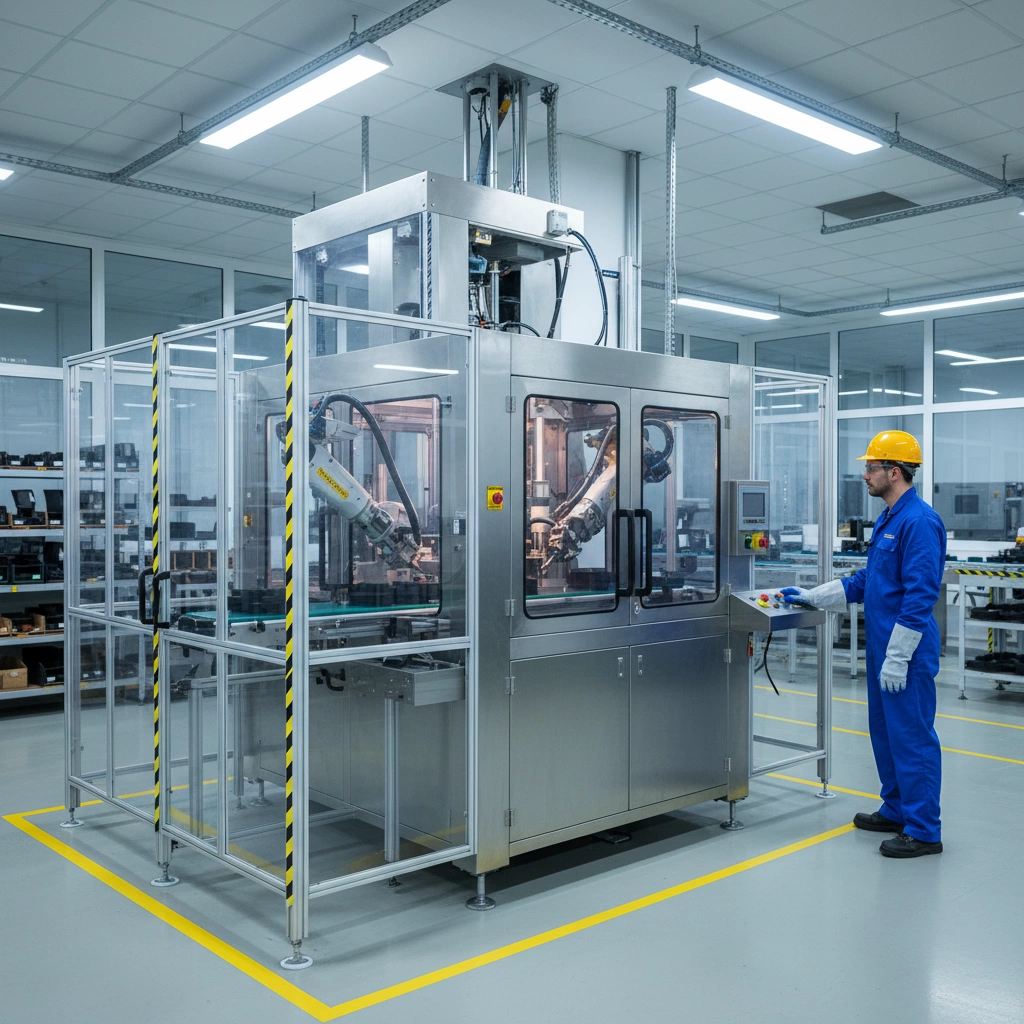
Modern rubber deflashing machine technology solves the real pain points I see every day in U.S. rubber molding shops—quality, labor, and consistency.
Better Quality, Less Scrap
With automated rubber deflashing equipment (cryogenic deflashing, spin trim, and tumbling systems), we keep flash under tight control:
- Cleaner sealing surfaces on O-rings, gaskets, and rubber seals
- Fewer leaks and warranty issues in automotive rubber parts and industrial equipment
- Less manual trimming, so fewer nicks, cuts, and cosmetic defects
| Benefit | Impact on Parts Quality |
|---|---|
| Consistent flash removal | Stable dimensions and better sealing performance |
| Controlled parameters (time/temp/media) | Repeatable results batch after batch |
| Less manual handling | Lower risk of damage and contamination |
Save Labor And Shorten Post-Processing
Automated flash removal machine rubber systems cut labor-heavy hand trimming:
- One operator can run multiple batches or machines
- Faster rubber molding post-processing cycles versus manual knives and scissors
- Easier training and less dependence on highly skilled trimmers
| Before Automation | With Rubber Deflashing Machine |
|---|---|
| Multiple operators hand trimming | 1 operator manages several automated batches |
| Long, unpredictable cycle times | Defined, repeatable cycle times |
| High ergonomic strain | Safer, more ergonomic operation |
More Consistency For Critical Sealing Parts
For precision rubber finishing in automotive, medical, and industrial seals, consistency is everything:
- Tight, repeatable tolerances for O-ring deflashing and medical rubber parts
- Stable surface finish for high-pressure seals and vacuum applications
- Easier to pass PPAP, validation, and customer audits
| Application | Value of Modern Deflashing |
|---|---|
| Medical rubber parts finishing | Clean, repeatable edges and low particle risk |
| Automotive rubber parts deflashing | Dimensional stability lot to lot |
| Precision O-rings and gaskets | Reliable sealing in harsh conditions |
Lower Total Cost Of Ownership
A modern industrial rubber deflashing system costs more up front but pays back fast in U.S. labor and quality conditions:
- Less scrap and rework
- Lower labor per part
- Optimized media and liquid nitrogen consumption in deflashing
- Predictable maintenance schedules
| Cost Element | How Automation Helps |
|---|---|
| Scrap and rejects | Reduced through consistent flash removal |
| Direct labor | Fewer hours per finished part |
| Media / LN₂ / energy usage | Tuned recipes for each rubber material |
| Downtime | Planned maintenance and remote diagnostics |
Scalable For High-Volume Rubber Deflashing
For high-volume U.S. molding—especially automotive, appliance, and HVAC—scalability is key:
- Batch and inline high-volume rubber deflashing options
- Easy to add machines as orders grow
- PLC controlled deflashing equipment supports scheduling, data logging, and Industry 4.0 rubber processing
| Production Stage | Role of Deflashing Technology |
|---|---|
| Pilot and low-volume runs | Flexible recipes across EPDM, silicone, nitrile |
| Full-scale automotive programs | Stable throughput and traceable process data |
| Multi-plant rollouts | Same process window across locations |
I build our custom rubber deflashing solutions around these benefits so U.S. manufacturers can hit quality targets, control labor costs, and scale without surprises.
Custom Rubber Deflashing With Xiamen Xingchangjia
When a standard rubber deflashing machine can’t hit your specs, I build around your parts and your line, not the other way around. At Xiamen Xingchangjia Non-standard Automation Equipment, we focus on custom, industrial rubber deflashing systems that fit how U.S. manufacturers actually run production.
Non-standard Rubber Deflashing Machine Design
I design non-standard rubber automation from the ground up for your parts, including:
- Custom fixtures and baskets for O-ring deflashing, seals, gaskets, and small precision rubber parts
- Tailored process windows for EPDM rubber flash removal, silicone rubber deflashing, nitrile rubber deflashing, and mixed-material lines
- Integrated quality control options for critical industries like automotive rubber parts deflashing and medical rubber parts finishing
Support For Cryogenic, Spin Trim, Tumbling, Hybrid
My systems cover the main rubber deflashing process technologies in one place:
- Cryogenic deflashing machine with liquid nitrogen deflashing and cryogenic tumbling deflashing
- Spin trim deflashing / mechanical centrifugal deflashing for small, symmetric parts
- Tumbling barrel deflashing and shot blast rubber parts processing for larger components
- Hybrid flash removal machine rubber setups that combine cryogenic media blasting for rubber with mechanical trimming for tougher flash
Integration With Your Rubber Molding Line
I don’t just drop a machine on your floor and walk away. I plan the automated rubber post-processing line with you:
- Inline or batch rubber deflashing process layouts
- Clean integration with upstream rubber molding finishing equipment and downstream inspection/packing
- PLC controlled deflashing equipment that can tie into MES/ERP for Industry 4.0 rubber processing and data tracking
Engineering, Commissioning, After-Sales
I back the hardware with full lifecycle support so you can keep running:
- Front-end process engineering and sample trials to lock in your rubber deflashing performance
- On-site commissioning and training to get operators comfortable fast
- After-sales service, spare parts, and remote diagnostics to keep uptime high and total deflashing machine cost under control
How We Optimize Your Deflashing Performance
My goal is simple: stable, repeatable flash removal with the lowest total cost per part:
- Dialed-in recipes for high-volume rubber deflashing of automotive, industrial, and medical parts
- Tighter and more consistent precision rubber finishing for rubber seals and O-ring finishing
- Optimized liquid nitrogen consumption in deflashing, media use, and cycle time to keep operating costs predictable
If you need a rubber deflashing machine supplier in China that understands U.S. production habits—shorter lead times, higher traceability, and strict quality control—I build custom rubber deflashing solutions to match.
Post time: Feb-25-2026