




Struggling to keep up with high-volume molding orders?
The truth is, manual flash removal is the single biggest bottleneck in your production line. It’s slow, inconsistent, and aggressively eats into your profit margins. If you’re still relying on labor-intensive finishing for thousands of parts, you aren’t just falling behind—you’re overspending.
To scale, you need to move beyond the limitations of standard 30L units.
In this guide, I’ll show you exactly how a Big Volume Cryogenic Deflashing Machine can replace up to 80 manual workers, slash LN2 consumption, and deliver 100% part uniformity at a massive industrial scale. I’ve updated these technical benchmarks for 2026 to help you maximize your post-molding automation ROI.
Let’s dive right in.
Would you like me to proceed with writing the first section of the outline, focusing on the engineering and thermal dynamics of these high-capacity systems?
The Engineering Behind Big Volume Cryogenic Deflashing
In high-output manufacturing, efficiency is determined by how effectively you can process massive batches without sacrificing precision. Our big volume cryogenic deflashing machine is engineered to bridge that gap, utilizing advanced physics to automate the removal of flash from complex molded parts. By combining extreme cold with high-speed mechanical energy, we’ve created a system that handles hundreds of parts in a single cycle.
Thermal Dynamics and Precise Embrittlement
The core of our technology lies in thermal stress embrittlement. We use liquid nitrogen (LN2) to rapidly lower the temperature within the industrial cryogenic chamber. Because the “flash” (excess material) is significantly thinner than the main body of the part, it reaches its brittle point almost instantly.
- Selective Cooling: The main component remains flexible and protected while the flash becomes glass-like.
- Precision Control: Our PLC systems maintain temperatures within a fraction of a degree, ensuring liquid nitrogen deburring is consistent from the first part to the last.
- Cycle Optimization: Rapid pull-down times minimize LN2 consumption, maximizing your throughput-to-cost ratio.
The Impeller System: 80L to 150L Uniformity
Maintaining consistency in an 80L or 150L basket requires more than just cold air; it requires perfect mechanical distribution. Our high-capacity systems utilize a high-speed impeller system that projects polycarbonate media at a precise trajectory.
| Feature | Performance Benefit |
|---|---|
| Variable Speed Impeller | Adjusts centrifugal force based on part weight and geometry. |
| Baffled Basket Design | Prevents “nesting” or clustering of parts during the tumble. |
| Media Recirculation | Ensures a continuous stream of non-abrasive finishing media. |
Material Versatility in Bulk
A big volume cryogenic deflashing machine must be a workhorse capable of handling diverse production lines. Our engineering focus ensures that whether you are finishing high-precision silicone gaskets or rugged zinc die-casts, the results remain uniform.
We have optimized our high-capacity deflashing parameters for:
- Rubber & Elastomers: EPDM, Nitrile (NBR), and Viton (FKM) O-rings.
- Advanced Silicones: Delicate medical-grade and automotive silicone components.
- Metal Die-Casts: Efficient flash removal for Magnesium and Zinc alloys.
- Plastic Polymers: Clean finishing for PEEK and other high-performance resins.
By integrating this post-molding automation, we eliminate the bottlenecks associated with manual trimming, providing a scalable solution for the most demanding U.S. manufacturing environments.
Why Investing in a Big Volume Cryogenic Deflashing Machine is a Strategic Power Move
For any high-output manufacturing facility, the decision to move to a big volume cryogenic deflashing machine is about more than just speed—it’s about total operational control and long-term profitability.
Slashing Labor Costs and Headaches
The most immediate impact is on your payroll and HR management. In the current US job market, finding reliable manual labor for repetitive tasks is a constant struggle. A single high-capacity deflashing unit can effectively replace a team of 60 to 80 manual workers.
- Labor cost reduction: Shift from managing a massive manual crew to a single machine operator.
- Recruitment ease: Eliminate the struggle of finding, training, and retaining dozens of manual deburrers.
- Reliability: Our machines don’t deal with fatigue or take sick days, ensuring your production schedule stays on track.
Bulletproof Consistency at Scale
Human error is the enemy of high-volume O-ring and gasket production. When you’re processing thousands of parts in a single batch, consistency is everything.
- 100% Part Uniformity: Every part in the basket receives the same level of treatment, eliminating the “Friday afternoon” quality dip common with manual work.
- Zero-Damage Finishing: Automated flash removal uses precise cryogenic temperatures to embrittle the flash without harming the main body of the part.
- Consistent finishing quality: Meet strict automotive and medical standards every single time, drastically reducing your scrap rates.
Maximizing Your Factory Footprint
Square footage is expensive. A manual finishing department for high-volume orders requires massive tables, lighting, and workspace for dozens of people.
| Feature | Manual Finishing | Big Volume Cryogenic Machine |
|---|---|---|
| Space Required | Massive (Multiple Stations) | Compact (Single Unit) |
| Output | Variable & Slow | High-Speed & Predictable |
| Waste | High (Human Error) | Minimal (Precision Control) |
By consolidating your finishing department, you maximize your output per square foot. This frees up valuable real estate for more molding presses or secondary operations, allowing you to scale your business without expanding your building. Using a big volume cryogenic deflashing machine ensures that your post-molding automation is as efficient as possible.
Critical Features of a Professional Big Volume Cryogenic Deflashing Machine
High-output manufacturing demands more than just a large basket. To keep a big volume cryogenic deflashing machine running at peak efficiency, we focus on the hardware that actually impacts your bottom line: thermal retention, smart automation, and structural integrity.
Advanced Thermal Barrier Technology
The biggest overhead in liquid nitrogen deburring is the gas itself. Our machines utilize high-density, multi-layer insulation to trap the cold exactly where it belongs.
- Minimized LN2 Waste: Superior thermal barriers prevent “cold leaks,” drastically reducing hourly consumption and improving LN2 consumption efficiency.
- Rapid Pull-Down: Reaching embrittlement temperatures faster means shorter cycle times and higher throughput.
- External Condensation Control: Keeps your factory floor dry and safe by preventing moisture buildup on the machine exterior.
Industry 4.0 and Smart Control Systems
Managing 100L or 150L batches requires surgical precision. We’ve integrated PLC-controlled deflashing systems that take the guesswork out of the operation.
- Multi-Recipe Storage: Save specific parameters for EPDM, Silicone, or Zinc die-casts. Switch between jobs in seconds without recalibrating.
- Real-Time Monitoring: Track temperature, impeller speed, and media flow live on an intuitive touchscreen.
- Data Export: Simplifies quality auditing and provides the transparency required for high-stakes automotive and medical parts.
Built for Heavy-Duty Durability
A high-capacity deflashing unit faces constant thermal shock and intense vibration. We don’t cut corners on the structural build.
- Cryogenic-Grade Stainless Steel: The industrial cryogenic chamber is built with materials that resist the embrittlement that eventually cracks standard metals.
- Vibration Dampening: Heavy-duty frames are engineered to handle the massive torque and centrifugal forces of large-batch loads.
- Maintenance-Friendly Access: We design our machines with easy-access panels for the impeller and media recovery systems, ensuring your uptime remains high.
| Feature | Advantage for High-Output Manufacturing |
|---|---|
| High-Density Insulation | Lower operational costs and stable internal temperatures. |
| PLC Touchscreen | Reduced operator training time and 100% repeatable results. |
| Reinforced Chamber | Long-term reliability in high-vibration, 24/7 environments. |
| Multi-Recipe Memory | Instant changeovers between different rubber or plastic part geometries. |
Maximizing ROI with a Big Volume Cryogenic Deflashing Machine
When you look at the numbers, a big volume cryogenic deflashing machine isn’t an expense—it’s a profit driver. There’s a common myth in the industry that the cost of liquid nitrogen makes high-capacity systems too expensive to run. In reality, the opposite is true. By processing massive batches in a single cycle, we achieve superior LN2 consumption efficiency. The cost-per-part drops significantly when you’re finishing 100 liters of O-rings versus running multiple smaller, less efficient loads.
The Myth of High Operating Costs
Bulk processing is the key to cycle time optimization. Our large-scale systems are designed with high-density thermal barriers that lock in the cold, ensuring that every drop of liquid nitrogen is used for thermal stress embrittlement rather than escaping into the shop floor.
- Lower Cost-Per-Part: Spreading the fixed cost of a cooling cycle over thousands of units.
- Media Longevity: Variable speed controls allow us to tune the impeller force. This prevents the polycarbonate media from breaking down prematurely, saving you money on consumables.
- Reduced Scrap: Automation removes the “human factor,” meaning you don’t lose money on parts damaged by inconsistent manual trimming.
Comparative Analysis: Manual vs. Automated Finishing
| Feature | Manual Finishing | Big Volume Automation |
|---|---|---|
| Labor Requirement | 60–80 workers | 1 operator |
| Consistency | Highly variable | 100% uniform |
| Throughput | Slow and scalable only by hiring | High-speed, bulk processing |
| Long-term ROI | Ongoing high overhead | Rapid payback through labor savings |
We’ve seen facilities across the US replace entire rows of manual trimming stations with a single high-capacity deflashing unit. The transition doesn’t just save on wages; it reclaimed floor space and drastically improved rubber molded parts finishing quality. By shifting to an automated workflow, you’re not just cutting costs—you’re scaling your production capacity to handle bigger contracts without adding to your headcount.
Big Volume Cryogenic Deflashing Machine: The XCJ Custom Edge
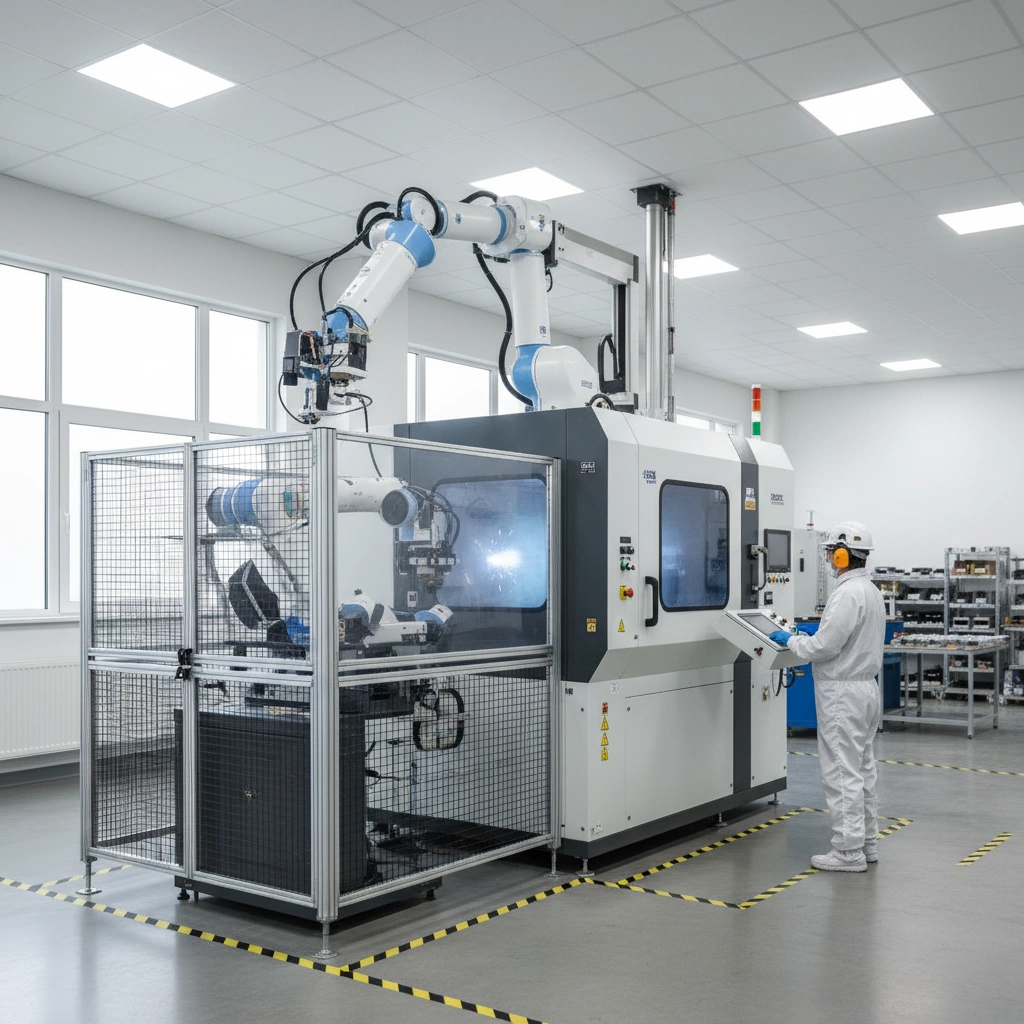
At Xingchangjia (XCJ), we’ve moved beyond “one-size-fits-all” equipment. We specialize in non-standard automation, meaning we build our big volume cryogenic deflashing machines to fit your specific production line, not the other way around. If you are dealing with complex part geometries that standard tumblers can’t handle, our custom-engineered internal fixtures ensure every surface gets hit.
The XCJ Advantage in Custom Engineering
We focus on post-molding automation that solves real-world bottlenecks. Our engineering team designs custom basket configurations and impeller speeds to protect delicate features while maximizing automated flash removal.
- Custom Geometry Solutions: Specialized baffling for long or interlocking parts.
- Precision Control: Fine-tuned parameters for different rubber and plastic compounds.
- High-Output Reliability: Systems designed for 24/7 industrial operation in high-demand hubs.
Technical Benchmarks: 80L to 120L Payloads
Our mid-to-large range is the “sweet spot” for U.S. manufacturers looking to scale without losing quality. We’ve optimized the cycle time optimization to ensure that even at 120L, your throughput remains consistent.
| Feature | 80L Payload Model | 120L Payload Model |
|---|---|---|
| Basket Volume | 80 Liters | 120 Liters |
| Max Load Weight | ~40-50 kg | ~70-80 kg |
| Typical Cycle Time | 3–8 Minutes | 5–10 Minutes |
| Control System | High-speed PLC | High-speed PLC |
| LSI Benefit | LN2 consumption efficiency | High-capacity deflashing |
Global Reach with Localized Support
We understand that downtime isn’t an option in a high-output factory. While our manufacturing excellence is rooted in our specialized facility, our support for big volume cryogenic deflashing machines reaches across the United States. We provide the technical documentation, remote diagnostics, and wear-parts availability that North American maintenance teams expect. We don’t just ship a box; we provide a long-term high-capacity deflashing partner to ensure your O-ring production scaling or gasket cleaning stays on track.
Choosing the Right Basket Volume for Your Output
Selecting the right big volume cryogenic deflashing machine isn’t just about buying the biggest tank available; it’s about matching your basket capacity to your specific production cycle. I’ve seen many shops over-spec or under-spec their equipment, which leads to bottlenecks or wasted LN2.
80L vs. 150L: Finding Your Throughput Sweet Spot
The choice between an 80L and a 150L basket usually comes down to your daily part count and the material density.
- 80L Systems: These are the “workhorses” for mid-to-large-scale shops. They provide the perfect balance for O-ring production scaling and precision silicone gasket cleaning without the risk of over-packing.
- 150L Systems: If you are running high-volume EPDM or Nitrile industrial parts, the 150L is a beast. It’s designed for massive throughput where the sheer weight of the load won’t compromise the finish.
Assessing Part Fragility and Weight Constraints
In high-capacity deflashing, more volume means more weight at the bottom of the basket. We always evaluate two critical factors before recommending a size:
- Crush Risk: For delicate, thin-walled silicone parts, a 150L load can sometimes cause “clumping” or physical damage to the parts at the bottom due to the weight of the batch.
- Media Penetration: Larger batches require a powerful impeller to ensure the polycarbonate media reaches the center of the mass. If your parts are complex or “nest” together, a slightly smaller 80L batch often yields a more consistent finish.
Seamless Integration with Upstream Molding
A big volume cryogenic deflashing machine should never sit idle. To maximize your ROI, we look at your current molding output:
- Batch Synchronization: We recommend sizing your basket so it can handle the output of 2–3 injection molding presses simultaneously.
- Post-Molding Automation: Your deflasher should be the bridge between the molding floor and final inspection. By matching basket volume to your molding cycle times, you eliminate “work-in-progress” piles and keep the floor clear.
Pro Tip: If your parts are heavy (like zinc or magnesium die-casts), focus on weight capacity rather than just liter volume to protect the drive system and ensure long-term durability.
Big Volume Cryogenic Deflashing Machine FAQs
We understand that scaling up to a big volume cryogenic deflashing machine is a significant step for your production line. Here are the straight answers to the most common questions we hear from high-output manufacturers in the United States.
How much liquid nitrogen does a big volume machine consume?
While a larger chamber requires more gas to reach initial operating temperatures, the LN2 consumption efficiency is actually superior in bulk. By processing 80L to 150L in a single cycle, your cost-per-part drops significantly compared to running multiple smaller batches. Our advanced high-density insulation ensures that once the chamber is cold, thermal loss is kept to an absolute minimum.
Can large batches cause damage to delicate silicone gaskets?
No. Despite the massive payload, the process remains a non-abrasive finishing method. We use precise variable speed controls for the impeller and the basket. By tuning the thermal stress embrittlement to the specific flash thickness of your silicone gasket cleaning job, we ensure the flash becomes brittle and breaks away while the main part remains flexible and protected.
What is the typical cycle time for a 100L load?
Efficiency is the core of cycle time optimization. For most rubber and silicone parts, a full 100L load is finished in 5 to 10 minutes. This includes the cooling phase, the high-speed media blasting, and the final separation. This speed is exactly why one automated unit can effectively replace a massive team of manual trimmers.
Is specialized training required for PLC-controlled deflashing?
If you can use a smartphone, you can operate our machines. The PLC-controlled deflashing interface is designed for the modern shop floor.
- Multi-recipe storage: Save settings for EPDM, Viton, or Zinc die-casts.
- One-touch operation: Operators simply select the recipe and hit “Start.”
- Real-time monitoring: The system tracks LN2 levels and motor speeds automatically.
| Feature | Impact on Production |
|---|---|
| 80L-150L Capacity | Higher throughput, lower labor costs |
| Automated Flash Removal | 100% consistency across all parts |
| Smart PLC Interface | Minimal operator training required |
| Polycarbonate Media | Clean, non-toxic, and reusable finishing |
The Future of Your Production Scaling Starts Here
Moving to a big volume cryogenic deflashing machine is more than an equipment upgrade; it is a strategic shift toward a more profitable, automated future. By eliminating the manual bottlenecks that stifle growth, you empower your facility to take on larger contracts with the confidence of 100% part uniformity and drastic labor cost reduction.
In the competitive landscape of 2026, the manufacturers who win are those who optimize their LN2 consumption efficiency and embrace post-molding automation. At Xingchangjia (XCJ), we don’t just provide a machine—we provide a custom-engineered solution designed to integrate seamlessly with your molding line and stay operational 24/7.
Ready to see how much you can save by automating your finishing department? Whether you are processing high-precision silicone gaskets or high-volume EPDM O-rings, our technical team is ready to help you calculate your ROI and find the perfect basket capacity for your output. Reach out to us today for a technical consultation or a custom quote.
-
Explore our high-capacity solutions: https://www.xmxcjrubber.com/
-
Get a custom quote: info@xcjrubber.com
Post time: Mar-03-2026