




By Mike Chen, Production Director | 12+ Years in Rubber Manufacturing | LinkedIn
Key Takeaways
- · Mechanical deflashing costs 40–60% less to operate but delivers lower precision on complex flash geometries.
- · Cryogenic deflashing handles thin flash (under 0.3 mm) better and preserves surface finish on delicate parts.
- · High-volume O-ring production favors mechanical; precision medical or aerospace parts require cryogenic.
- · Equipment selection depends on part geometry, material properties, production volume, and acceptable per-part cost.
Achieving consistent rubber strip quality is a common challenge in manufacturing. Variations in strip width, edge quality, and dimensional accuracy affect downstream processes such as gasket fabrication, seal production, and rubber component assembly. A rubber slitter cutting machine eliminates much of this variability, but optimal results require understanding how to set up and operate the equipment correctly.
This guide covers the working principles of rubber slitter cutting machines, the factors that determine strip quality, step-by-step setup procedures, common troubleshooting, and maintenance practices that sustain long-term performance.
What Is a Rubber Slitter Cutting Machine and How Does It Work?
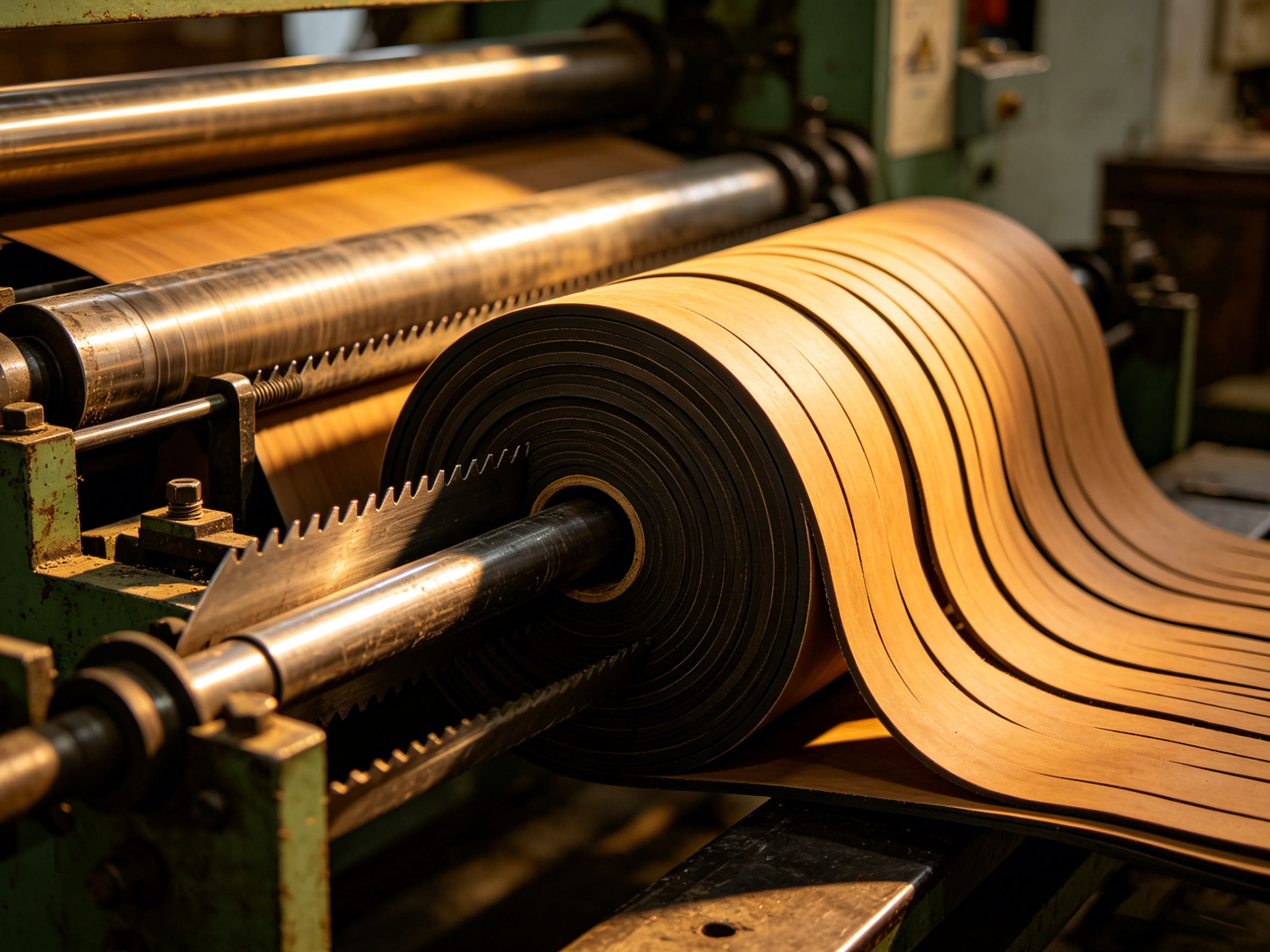
A rubber slitter cutting machine is an automated device designed to cut rubber sheets, mats, and continuous rolls into strips of predetermined width. The machine typically operates using a rotary or guillotine-style cutting mechanism, feeding material through precision rollers while a blade performs the cut at programmed intervals.
The key difference between a rubber slitter machine and general-purpose cutting equipment is the combination of high-precision guide rails, servo motor control, and specialized blade geometry. The linear guide rails, typically the same type used in CNC machining, maintain blade alignment within tight tolerances. Servo motors control the feed mechanism to ±0.1 mm accuracy, ensuring each strip matches the programmed width specification.
Modern rubber slitter cutting machines accommodate multiple material types including natural rubber, synthetic rubber compounds, silicone, and certain plastic materials. The CNC rubber strip cutting machine from Xiamen Xingchangjia, for example, handles cutting widths up to 1000 mm and thicknesses up to 20 mm at a rate of 80 cuts per minute, with three model variants (600, 800, 1000) available for different production volumes.
Key Factors That Determine Strip Quality in Rubber Slitting
Several variables influence the final strip quality produced by a rubber slitter cutting machine. Understanding these factors helps operators adjust parameters for optimal results.
Blade selection and maintenance for rubber slitting
Blade geometry directly affects cut edge quality. Steel blades with bevel-type shear design reduce friction during cutting, extending blade life and producing cleaner edges. The blade’s sharpness must be maintained through regular inspection and scheduled replacement. A worn blade produces ragged edges and inconsistent strip width, increasing waste. Rubber slitter cutting machines benefit from blades that resist abrasive wear from fillers and reinforcing compounds commonly present in rubber formulations.
Material preparation and condition
Rubber material properties vary with temperature. Materials cut at lower temperatures tend to be harder and more brittle, increasing the risk of edge cracking. Materials at higher temperatures become tacky and may deform during cutting. The optimal cutting temperature depends on the specific compound. Natural rubber and EPDM generally cut well at ambient temperature (20–25°C), while silicone and certain synthetic compounds may benefit from controlled cooling to reduce tackiness. Consistent material thickness also matters—variations exceeding 10% of nominal thickness can affect strip width accuracy.
Machine calibration and parameter settings
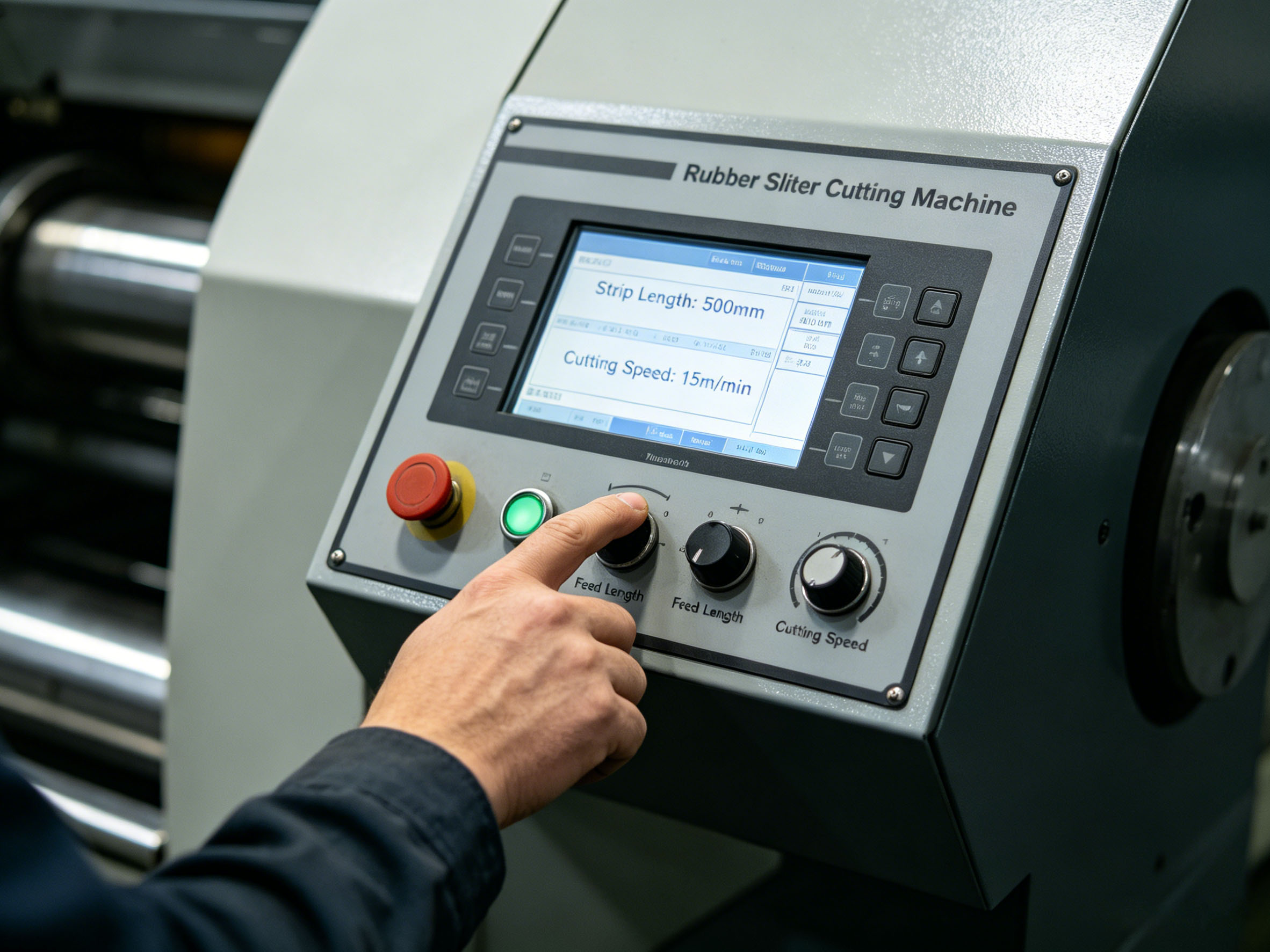
A rubber slitter cutting machine requires correct setup of feeding speed, cutting pressure, and blade alignment. The feed roller sensors and blade edge sensors built into modern machines provide real-time feedback to the control system. The touch-screen control panel displays operational parameters including product counting, cutting speed, and feed length. Operators should verify that the servo motor feed accuracy is within specification before each production run. The CNC rubber strip cutting machine includes automatic monitoring and alarm functions that alert operators when parameters drift outside acceptable ranges.
Pro Tip: Track Material Temperature
Record the rubber sheet temperature at the point of cutting. A 5°C variation can change strip edge quality noticeably, especially for thinner strips under 5 mm. Consistent material temperature leads to consistent strip quality.
How to Set Up a Rubber Slitter Cutting Machine for Optimal Strip Width
Following a structured setup procedure ensures the rubber slitter cutting machine produces strips that match specifications from the first cut.
- Verify blade condition and alignment. Inspect the blade for nicks, wear, or damage. Check that the blade is securely mounted and aligned parallel to the feed direction. Misalignment of even 0.1 mm produces tapered strips.
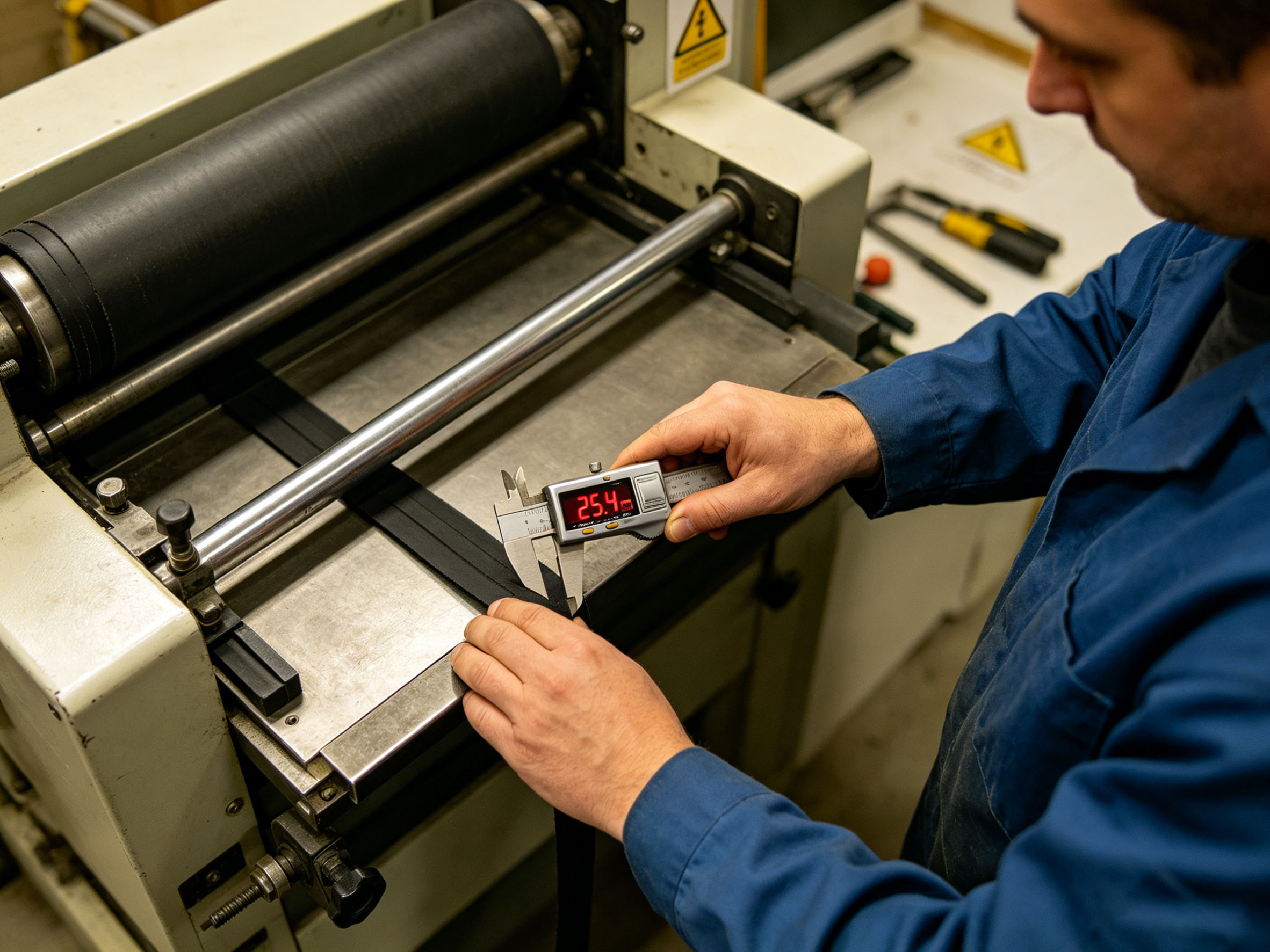
- Set material guides to the target strip width. Adjust the side guides or blade position to match the programmed strip width. Use a calibrated ruler or digital gauge to verify the distance. For the rubber slitter cutting machine, the adjustable blade position allows width changes without tooling replacement.
- Configure feed length and cutting speed on the control panel. Enter the desired strip dimensions through the touch-screen interface. Set the feed length to match the required strip width and adjust cutting speed based on material hardness. Softer materials require slower feed speeds for clean cuts.
- Run a test cut and measure the result. Feed a material sample through the machine and measure the resulting strip width at three points along its length. Verify that all measurements fall within the tolerance range. The feeding accuracy of ±0.1 mm should produce consistent results when calibration is correct.
- Adjust parameters based on test results. If strip width varies, check feed roller pressure and blade depth. Width deviations exceeding tolerance typically indicate loose material guides or incorrect feed calibration. Make small adjustments and retest.
- Begin production with real-time monitoring. Start the production run while observing the first several cuts. The machine’s automatic counting function tracks production quantity, and the monitoring system alerts operators to any parameter drift during operation.
Safety Note
All setup procedures should be performed with the machine in safe mode. Rubber slitter cutting machines include knife edge sensors, feed roller sensors, and feeder safety door protection functions. Verify these safety systems are operational before production begins per OSHA machine guarding guidelines.
Common Rubber Slitting Problems and How to Fix Them
| Problem | Likely Cause | Solution |
|---|---|---|
| Uneven strip width | Material guide misalignment or blade wear | Realign guides; inspect and replace blade |
| Ragged or torn edges | Blade dullness or incorrect material temperature | Sharpen or replace blade; adjust material temperature |
| Inconsistent strip length | Feed roller slippage or servo calibration drift | Clean feed rollers; recalibrate servo motor |
| Material sticking to blade | Compound tackiness or excessive blade temperature | Apply mold release; reduce cutting speed; cool blade |
| Strip curling after cut | Blade pressure too high or material stress release | Reduce cutting pressure; allow material relaxation before cutting |
Most rubber slitting defects can be corrected through parameter adjustment. Persistent issues may indicate blade replacement is needed.
Rubber Slitter Machine Maintenance for Consistent Long-Term Performance
Regular maintenance of a rubber slitter cutting machine preserves cutting accuracy and extends equipment service life. The CNC guide rail system, which uses the same high-precision linear guides found in CNC machining centers, requires periodic cleaning and lubrication. Rubber dust and compound residues accumulate on guide surfaces and can affect carriage movement if not removed.
Blade maintenance is the most frequent requirement. The special steel blade should be inspected after every production shift. Signs of wear include visible dulling, chipping, or burn marks on the blade edge. A preventive replacement schedule—typically after 200–300 operating hours for continuous use—prevents quality issues before they occur.
The touch-screen control panel and electrical system require minimal maintenance but should be kept clean and free of rubber dust. The automatic monitoring system tracks machine hours and can alert operators when scheduled maintenance is due. The machine’s durable construction, including the heavy-duty frame and vibration-dampening mounts, maintains alignment over extended periods when properly maintained.
Choosing the Right Rubber Slitter Cutting Machine for Your Production
The correct machine specification depends on production volume, material dimensions, and precision requirements. Key specifications to evaluate include maximum cutting width, thickness capacity, cutting speed, and feed accuracy.
| Model | Cutting Width | Cutting Thickness | Speed | Motor | Net Weight |
|---|---|---|---|---|---|
| 600 | 0–1000 mm | 0–20 mm | 80/min | 1.5 kW | 450 kg |
| 800 | 0–1000 mm | 0–20 mm | 80/min | 2.5 kW | 600 kg |
| 1000 | 0–1000 mm | 0–20 mm | 80/min | 2.5 kW | 1200 kg |
CNC rubber strip cutting machine specifications from Xiamen Xingchangjia. Custom specifications available for special production requirements.
For manufacturers cutting rubber sheets into strips for gaskets, seals, or automotive components, a machine with servo motor control and automated feeding is recommended. Facilities processing multiple rubber compounds benefit from the adjustable parameters and versatile material handling capabilities. The rubber slitter cutting machine’s ability to handle natural rubber, synthetic rubber, and plastic materials makes it suitable for mixed-production environments.
Conclusion: Consistent Rubber Strip Quality Starts with the Right Process
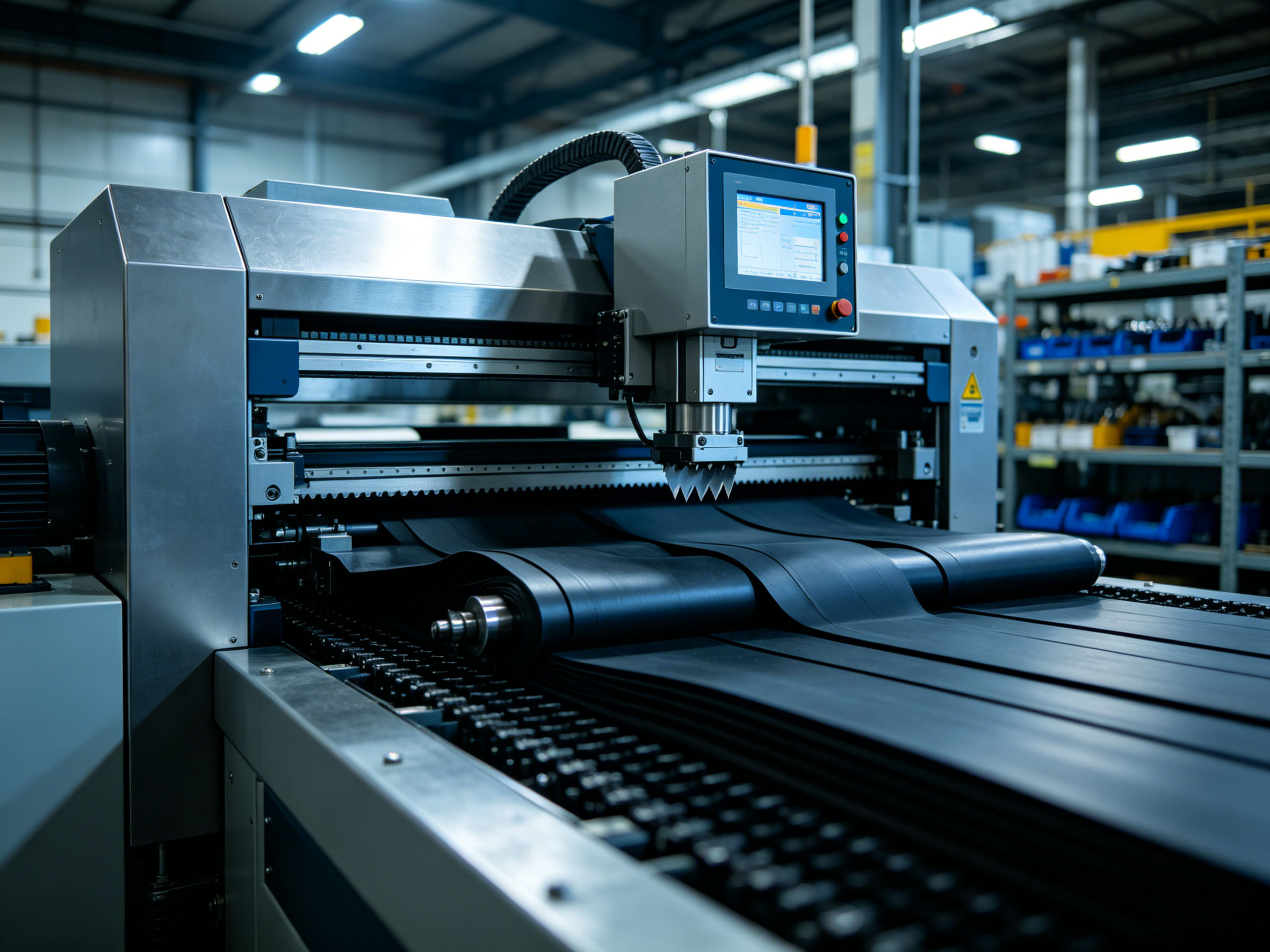
Achieving perfect rubber strips requires more than simply feeding material into a cutting machine. Blade selection, material preparation, calibration accuracy, and regular maintenance all contribute to the final result. A rubber slitter cutting machine with servo motor control, CNC-grade guide rails, and touch-screen parameter control eliminates most of the variability inherent in manual cutting methods.
The investment in proper setup time and preventive maintenance pays back through reduced material waste, fewer rejected parts, and consistent production output. Operators who follow structured procedures and monitor key parameters can maintain strip quality within tight tolerances over extended production runs.
Related Equipment Information
• Review rubber slitter cutting machine specifications for precision strip cutting applications.
• Explore CNC rubber strip cutting machine capabilities with servo motor control and ±0.1 mm feed accuracy.
• See rubber slitter and cutting machine options for combined slitting and cutting in automated lines.
• View rubber gasket cutting machines for finished gasket production from precision-cut strips.
Frequently Asked Questions: Rubber Slitter Cutting Machine
Xiamen Xingchangjia Non-Standard Automation Equipment Co., Ltd.
Floor1, Building 13, Huli Industrial Park, Meixidao, Tongan, Xiamen China
Email: info@xcjrubber.com | Website: www.xmxcjrubber.com
Post time: Jun-16-2026