




By Mike Chen, Production Director | 12+ Years in Rubber Manufacturing | LinkedIn
Post-processing rubber products often carry residual mold release agents, surface oils, dust, and loose particles from previous manufacturing stages. For manufacturers supplying automotive seals, medical components, or precision industrial gaskets, surface cleanliness directly affects bonding performance, appearance quality, and downstream inspection results. A dedicated rubber cleaning and drying machine addresses these requirements through an integrated process that washes, rinses, and dehydrates components in a single automated cycle.
Unlike general-purpose industrial washers, equipment designed specifically for rubber processing must accommodate material-specific challenges: silicone surfaces resist water wetting, complex geometries trap cleaning fluid, and some compounds degrade under excessive heat. Understanding how a rubber washing machine operates—and what process parameters affect output quality—helps manufacturers select appropriate systems and optimize existing workflows.
This guide examines the complete process sequence of rubber cleaning and drying equipment, covering machine principles, cleaning stages, drying mechanisms, and operational considerations for industrial rubber parts. 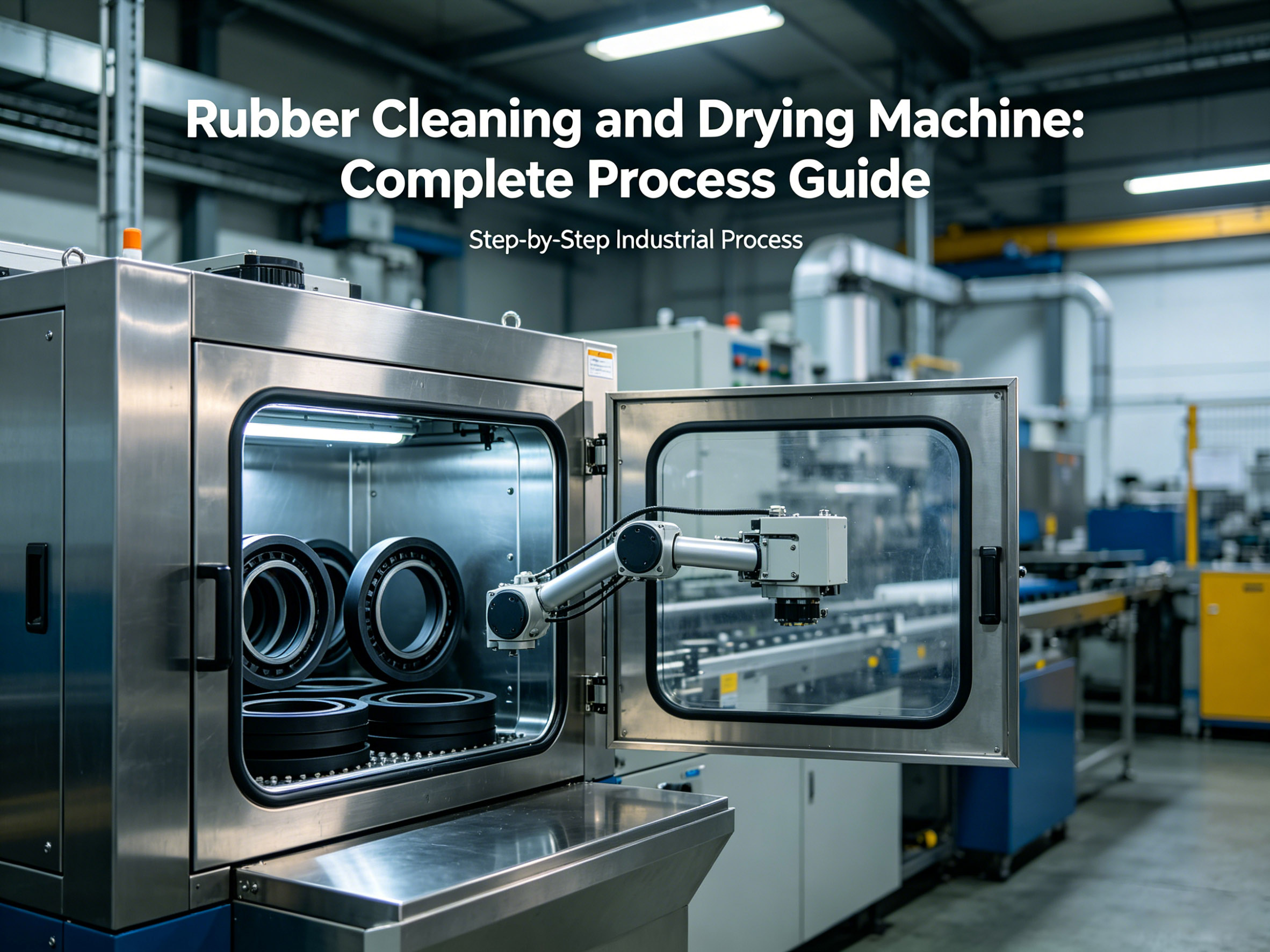
Rubber Cleaning Machine Process: From Wash to Rinse
Industrial rubber cleaning machines employ a multi-stage approach to remove contaminants while protecting the material integrity of the parts being processed. The effectiveness of each stage depends on correct parameter selection and machine configuration.
High-Pressure Spray Cleaning Stage
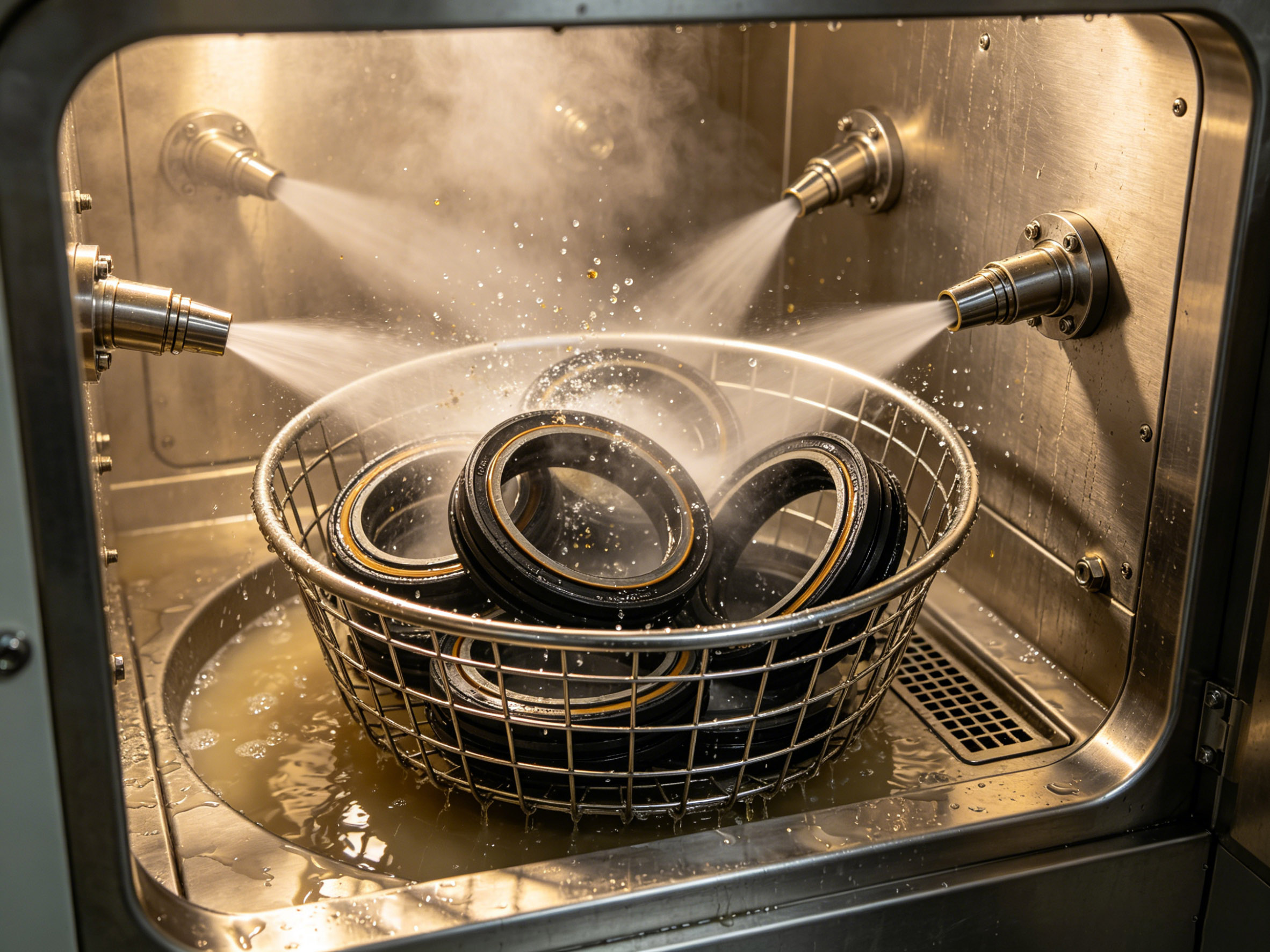
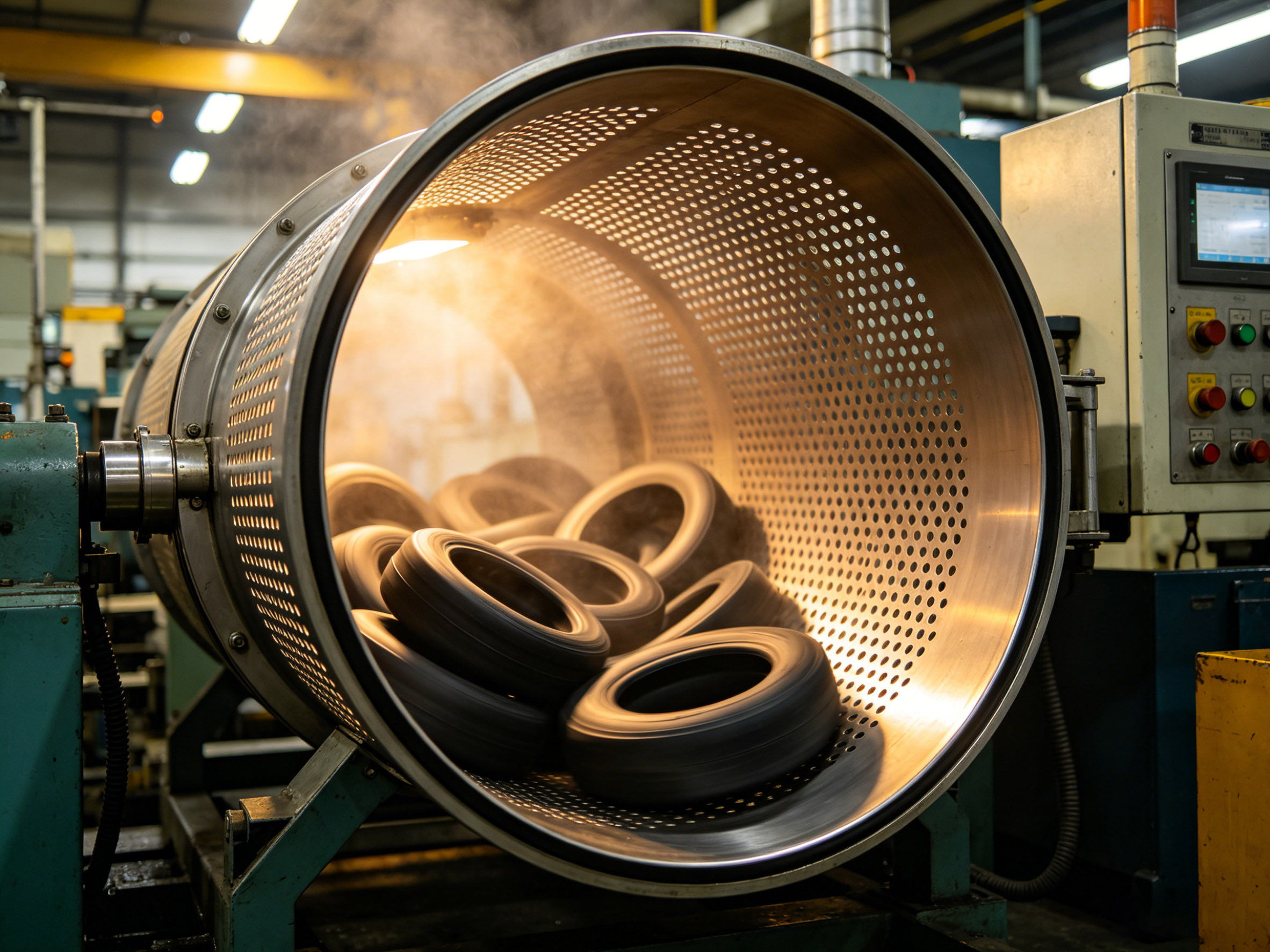
Most modern rubber washing machines use a roller-type drum with 304-grade stainless steel screen plates that rotate parts through high-pressure spray zones. Positive and reverse rotation ensures all part surfaces—including recessed areas and internal bores—receive direct spray exposure, eliminating dead zones where contaminants could remain.
High-pressure fan nozzles distribute cleaning solution across the full drum width while a multi-stage centrifugal pump maintains consistent spray pressure throughout the cycle. Cleaning fluid options include clean water for light soil removal or additive-enhanced solutions for stubborn mold release residues. Manufacturers processing silicone rubber products benefit from the adjustable spray intensity, which can be tuned to avoid surface damage while still achieving the required cleanliness level.
Multi-Stage Cleaning Configurations
Machine configurations typically offer three groups with six-stage cleaning procedures that can be combined to match specific product requirements. A silicone rubber cleaning operation, for example, might use a pre-wash stage with mild detergent, a main high-pressure wash, a fresh water rinse, and an anti-static final rinse. Each stage operates independently, allowing operators to adjust temperature, pressure, and duration parameters.
The U.S. Environmental Protection Agency‘s guidelines on industrial wastewater management highlight the importance of optimizing wash water usage. Modern rubber cleaning equipment with staged cleaning reduces total water consumption by reusing rinse water for preliminary wash stages, achieving typical water usage of approximately 20 liters per minute during active cleaning cycles.
Rubber Drying Machine Mechanisms: Pre-Drying and Final Dehydration
After cleaning, removing residual moisture from rubber parts presents distinct challenges. Rubber’s hydrophobic surface properties cause water to bead rather than sheet off, and complex part geometries trap droplets in crevices. The drying sequence addresses these issues through a two-phase approach that optimizes both energy efficiency and drying quality.
Air Pre-Drying Phase
Before applying heat, an air pre-drying device passes high-velocity ambient or heated air through the drum, displacing bulk water from part surfaces. This preliminary step significantly reduces the moisture load that subsequent electric heating must handle, lowering overall energy consumption by approximately 30–40% compared to direct thermal drying from wet state.
Multi-wing centrifugal fans generate the required airflow volume, distributing air evenly across the rotating drum. The drum’s continuous tumbling action exposes fresh part surfaces to the air stream, accelerating moisture removal while preventing the re-deposition of loosened particles.
Ceramic Heater Thermal Drying
Following air pre-drying, ceramic heaters raise the chamber temperature to accelerate final moisture evaporation. Ceramic heating elements offer advantages over traditional metal-sheathed heaters in this application—faster thermal response, more uniform heat distribution, and longer service life in humid environments.
Complete cleaning and drying cycles for typical rubber batches require approximately 20 minutes, with actual duration varying based on part geometry, material composition, and desired dryness level. For a standard batch load of 15–30 kilograms, total power consumption averages 2.5 kilowatt-hours per cycle. The National Institute of Standards and Technology (NIST) provides reference data on industrial drying energy efficiency that supports pre-drying integration as a best practice for reducing thermal processing costs.
Rubber Drying Machine Mechanisms: Pre-Drying and Final Dehydration
After cleaning, removing residual moisture from rubber parts presents distinct challenges. Rubber’s hydrophobic surface properties cause water to bead rather than sheet off, and complex part geometries trap droplets in crevices. The drying sequence addresses these issues through a two-phase approach that optimizes both energy efficiency and drying quality.
Air Pre-Drying Phase
Before applying heat, an air pre-drying device passes high-velocity ambient or heated air through the drum, displacing bulk water from part surfaces. This preliminary step significantly reduces the moisture load that subsequent electric heating must handle, lowering overall energy consumption by approximately 30–40% compared to direct thermal drying from wet state.
Multi-wing centrifugal fans generate the required airflow volume, distributing air evenly across the rotating drum. The drum’s continuous tumbling action exposes fresh part surfaces to the air stream, accelerating moisture removal while preventing the re-deposition of loosened particles.
Ceramic Heater Thermal Drying
Following air pre-drying, ceramic heaters raise the chamber temperature to accelerate final moisture evaporation. Ceramic heating elements offer advantages over traditional metal-sheathed heaters in this application—faster thermal response, more uniform heat distribution, and longer service life in humid environments.
Complete cleaning and drying cycles for typical rubber batches require approximately 20 minutes, with actual duration varying based on part geometry, material composition, and desired dryness level. For a standard batch load of 15–30 kilograms, total power consumption averages 2.5 kilowatt-hours per cycle. The National Institute of Standards and Technology (NIST) provides reference data on industrial drying energy efficiency that supports pre-drying integration as a best practice for reducing thermal processing costs.
Rubber Washing Machine Construction: Material and Design Considerations
The physical construction of rubber cleaning equipment directly affects longevity, sanitation, and maintenance requirements. Key material choices and design features distinguish purpose-built rubber washing machines from general industrial cleaning systems.
Stainless Steel Construction
Thickened 304 stainless steel construction provides corrosion resistance essential for equipment operating in constant contact with water, cleaning additives, and rubber residues. Higher-grade materials also facilitate cleaning of the machine itself, preventing cross-contamination between production batches. The smooth interior surfaces minimize areas where rubber particles or biofilm could accumulate.
Control System Integration
Touch-control human-machine interfaces display real-time process parameters and allow operators to adjust cleaning programs without specialized programming knowledge. Programmable logic controllers (PLC) manage the sequence timing, temperature regulation, and safety interlocks with the precision and reliability characteristic of industrial automation systems.
The OSHA standard 1910.212 for machine guarding applies to rotating drum equipment, requiring interlocked access panels that prevent operation when opened. Reputable manufacturers incorporate these safety features as standard equipment.
Rubber Cleaning and Drying Equipment: Technical Specifications Overview
The following table summarizes key specifications for a standard industrial rubber cleaning and drying machine configuration:
|
Parameter |
Specification |
| Model |
XCJ-QXJ 600 |
| Drum Diameter |
600 mm (six-angle design) |
| Drum Length |
1000 mm |
| Single Batch Capacity |
15–30 kg |
| Water Consumption |
20 L/min (~0.1 tons per 6-min cleaning cycle) |
| Power Consumption |
2.5 kWh per complete cleaning and drying cycle |
| Total Power / Voltage |
12 kW / 380V |
| Cycle Duration |
Approximately 20 minutes (wash + dry) |
| Machine Dimensions |
1520 mm × 1050 mm × 1720 mm |
| Material |
304 stainless steel (thickened gauge) |
Note: Specifications apply to standard configurations. Custom sizing and parameter ranges are available for specialized production requirements.
Rubber Cleaning Applications Across Industrial Sectors
Industrial rubber cleaning machines find applications across multiple manufacturing sectors, each presenting distinct contamination profiles and cleanliness requirements:
- • Automotive Manufacturing: Rubber seals, gaskets, and vibration dampeners require thorough cleaning before adhesive bonding or painting operations. Surface contamination from mold release agents directly impacts bond strength and can cause adhesive failure in service. Parts processed through a rubber cleaning and drying machine typically achieve the surface energy levels required for reliable adhesive bonding.
- • Electronics and Instrumentation: Silicone rubber components used in electronic device sealing must meet stringent cleanliness specifications to avoid outgassing or contamination of sensitive assemblies. Multi-stage cleaning with deionized water rinse cycles addresses these requirements without leaving chemical residues.
- • Petroleum and Chemical Processing: Seals and gaskets destined for oil and gas applications require removal of processing oils and particulates before quality inspection. Consistent cleaning results enable reliable surface defect detection during visual examination.
- • Aviation and Aerospace Components: Precision rubber parts for aircraft systems must meet the cleanliness levels specified in industry standards such as SAE AS4059 for particulate contamination. Automated cleaning with validated process parameters provides the documentation trail required for quality audits.
Factors in Equipment Selection for Rubber Parts Washing and Drying
Selecting appropriate equipment requires matching machine capabilities to specific production parameters. The following factors influence selection decisions:
Batch Size and Production Throughput
Drum volume directly determines per-cycle throughput. A 600 mm diameter drum with 1000 mm length accommodates 15–30 kilograms per batch, with each complete cleaning and drying cycle requiring approximately 20 minutes. Manufacturers calculate daily capacity based on cycle time multiplied by available operating hours, accounting for loading and unloading periods.
Material Sensitivity and Heat Tolerance
Different rubber compounds have varying tolerance for elevated temperatures. Standard silicone and EPDM compounds withstand typical drying temperatures without degradation, while certain specialty elastomers require reduced temperature settings. Machines with adjustable heating profiles accommodate these variations, allowing operators to set appropriate parameters for each material type.
Cleaning Chemistry Compatibility
Dual water intake capability allows switching between additive-enhanced cleaning solution and clean water within the same cycle. This feature enables chemical cleaning followed by fresh water rinse without manual intervention, reducing operator exposure to cleaning chemicals.
Rubber Cleaning and Drying Machine Operational Best Practices
Achieving consistent results from a rubber cleaning and drying system depends on establishing and following standard operating procedures. Key practices include:
- Load Distribution: Distribute parts evenly within the drum to prevent unbalanced loads. Overloading reduces cleaning effectiveness by restricting part movement and spray access. Maintain batch weight within the manufacturer’s specified range.
- Water Quality Monitoring: Check incoming water quality regularly. Hard water can leave mineral deposits on parts, while particulates in supply water may clog spray nozzles. Install appropriate filtration based on local water conditions.
- Drain and Filter Maintenance: Inspect and clean drum drainage screens and recirculation filters daily. Accumulated rubber particles reduce flow rates and can re-deposit on clean parts.
- Periodic Calibration: Verify temperature sensor accuracy and spray pressure readings at regular intervals. Calibration drift affects process repeatability and may lead to inadequate cleaning or excessive energy consumption.
- Cycle Documentation: Record process parameters for each production batch. Documented cycles facilitate troubleshooting, support quality audits, and provide reference data for process optimization efforts.
Conclusion: Process Integration for Rubber Cleaning and Drying
The rubber cleaning and drying machine serves as a critical processing step between molding and final inspection in rubber manufacturing operations. Effective removal of processing residues through multi-stage spray cleaning followed by efficient air pre-drying and thermal drying ensures product quality and facilitates downstream operations such as bonding, painting, or packaging.
Equipment selection should account for part geometry, material sensitivity, production volume, and facility infrastructure. Machines offering adjustable parameters, programmable cycles, and robust construction provide the flexibility needed to accommodate changing production requirements.
Manufacturers evaluating rubber cleaning solutions can consult equipment suppliers like Xiamen Xingchangjia for application-specific recommendations and technical specifications tailored to their production environment.
Post time: May-26-2026