




By Mike Chen, Production Director | 12+ Years in Rubber Manufacturing | LinkedIn
Precision in rubber processing operations directly impacts product quality, material waste, and production efficiency. For manufacturers working with rubber sheets, strips, and extruded profiles, achieving consistent cut dimensions while maintaining clean edges presents significant operational challenges. This is where CNC rubber strip cutting machine technology transforms production workflows.
Computer Numerical Control (CNC) systems have revolutionized rubber cutting operations across automotive, aerospace, industrial sealing, and consumer goods sectors. Unlike manual cutting methods that rely on operator skill and experience, CNC rubber cutting equipment delivers repeatable accuracy measured in fractions of millimeters—essential for applications where dimensional tolerances directly affect product performance.
This comprehensive analysis examines how precision cutting solutions utilizing CNC technology address common manufacturing challenges, explores technical capabilities and limitations, and provides guidance for evaluating equipment investments based on specific production requirements.
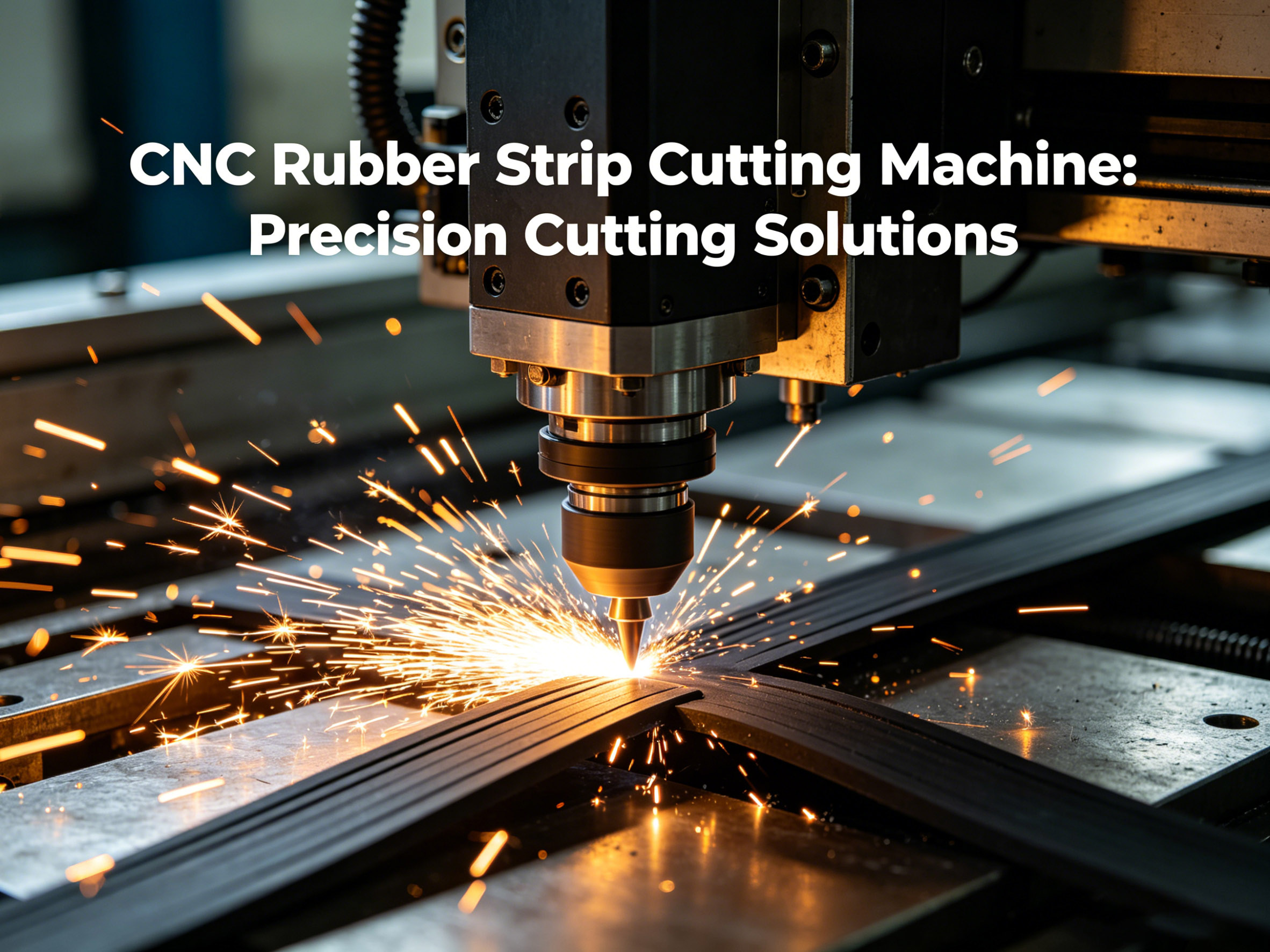
Understanding CNC Technology in Rubber Strip Cutting Applications
CNC technology integrates computer-controlled positioning systems with mechanical cutting mechanisms to automate rubber material processing. The fundamental principle involves translating digital design specifications into precise mechanical movements, eliminating variability introduced by manual operation.
Core Components of CNC Rubber Cutting Systems
Modern CNC rubber strip cutting machines incorporate several critical subsystems working in coordination:
- • Motion Control Architecture: High-precision linear guide rails and servo motor systems enable positioning accuracy typically within ±0.1mm. These components, often adapted from CNC machining center designs, withstand continuous operation in industrial environments while maintaining dimensional stability.
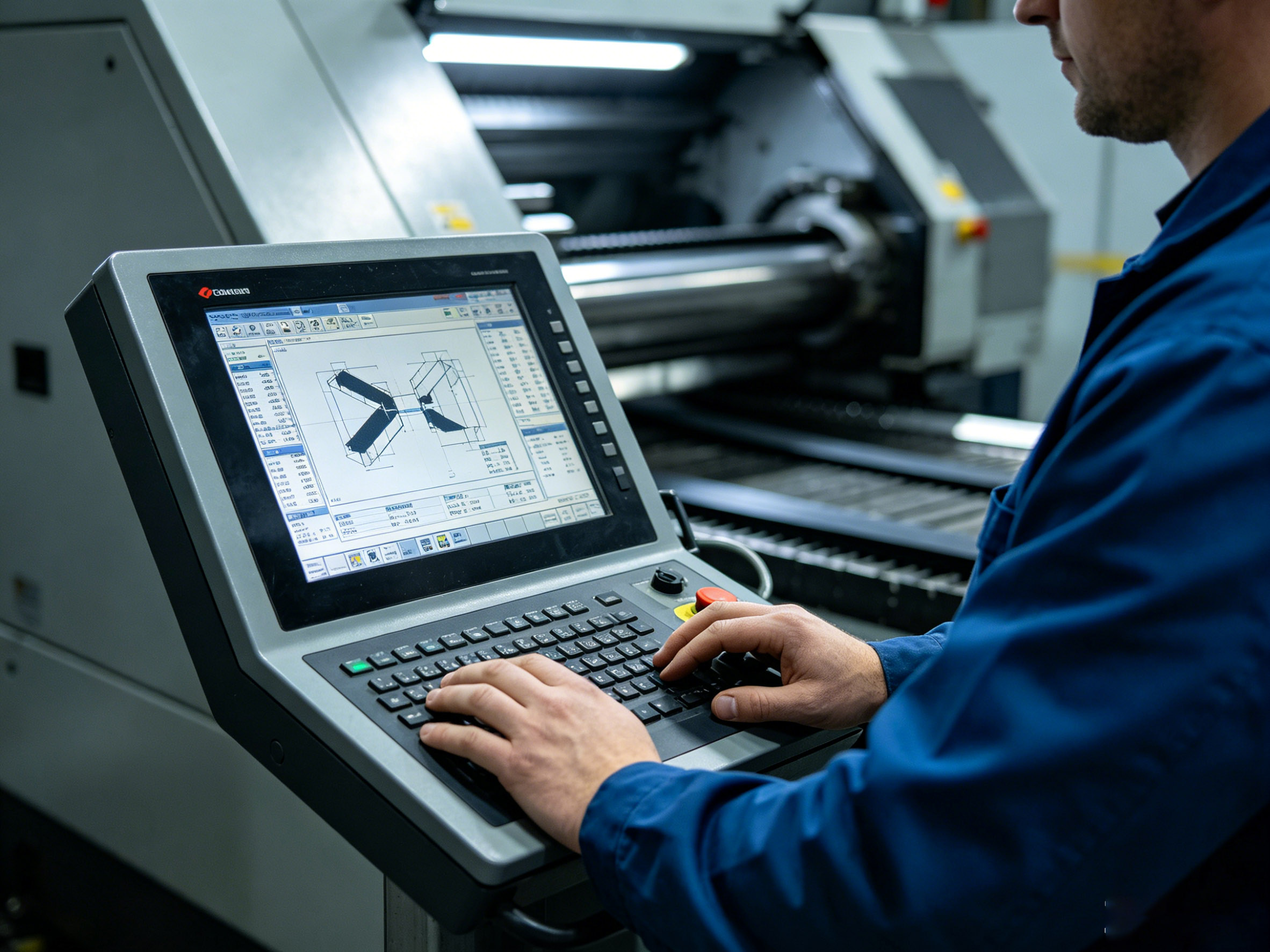
- • Programmable Logic Controller (PLC): The operational brain of the system processes cutting parameters, manages safety interlocks, and coordinates multi-axis movements. Touchscreen interfaces allow operators to input specifications, store cutting programs, and monitor production metrics.
- • Cutting Mechanism: Depending on application requirements, systems employ guillotine-style blades, rotary cutters, or oscillating knife configurations. Blade materials range from high-carbon steel for general-purpose cutting to carbide-tipped or ceramic options for abrasive-resistant compounds.
- • Material Handling Systems: Automated feeding mechanisms, tension control devices, and alignment guides ensure consistent material presentation to the cutting zone—critical for achieving uniform results across production runs.
Precision Cutting Capabilities and Technical Specifications
The defining characteristic of CNC rubber cutting equipment lies in its ability to maintain tight tolerances across extended production runs. Understanding achievable specifications helps manufacturers assess suitability for specific applications.
Dimensional Accuracy and Repeatability
Industry-standard CNC rubber strip cutting machines typically achieve positioning accuracy of ±0.1mm to ±0.5mm depending on machine class and configuration. Repeatability—the variation between successive cuts under identical conditions—often exceeds accuracy specifications, with premium systems demonstrating ±0.05mm consistency across thousands of cycles.
These specifications prove particularly valuable for applications such as automotive sealing systems, where gasket dimensions must conform to strict OEM tolerances to ensure leak-free performance under varying pressure and temperature conditions.
Typical Technical Specifications
|
Parameter |
Standard Range |
Industrial Grade |
| Maximum Cutting Width |
600mm – 1000mm |
Up to 2000mm |
| Material Thickness |
0.5mm – 20mm |
Up to 50mm |
| Positioning Accuracy |
±0.5mm |
±0.1mm |
| Cutting Speed |
40-80 cuts/minute |
Up to 120 cuts/minute |
| Power Requirement |
1.5kW – 2.5kW |
3kW – 5kW |
Note: Specifications vary by manufacturer and model. Always verify capabilities against your specific material and dimensional requirements.
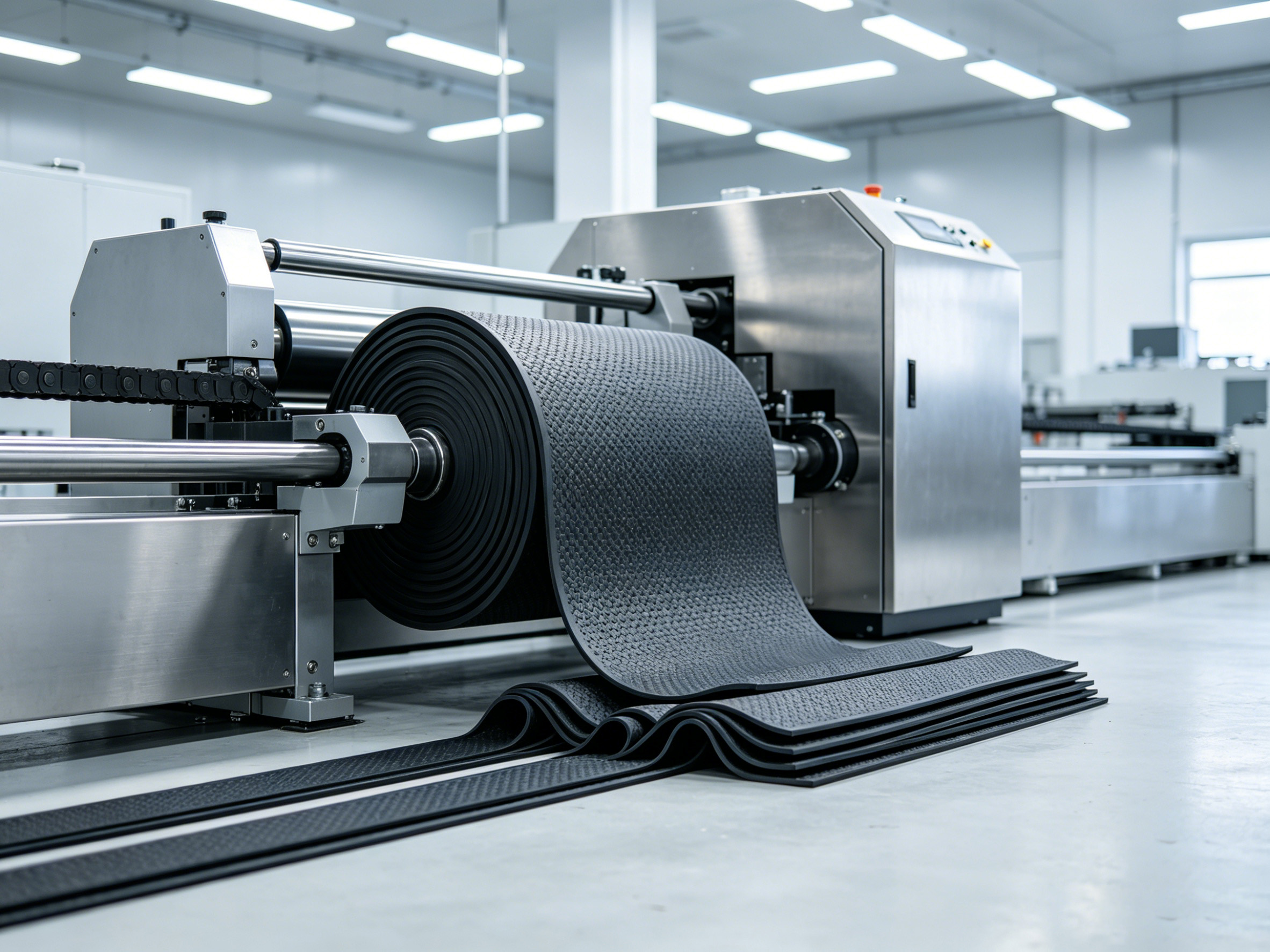
Industry Applications for Precision Rubber Cutting Solutions
CNC rubber strip cutting technology serves diverse industrial sectors, each presenting unique material handling and precision requirements. Understanding these applications illustrates the technology’s versatility and helps identify relevant performance benchmarks.
Automotive and Transportation Sector
The automotive industry represents one of the largest consumers of precision-cut rubber components. Applications include door seals, window gaskets, engine bay insulation, and vibration dampening elements. According to industry analysis from the Rubber Manufacturers Association, automotive applications account for approximately 55% of industrial rubber consumption in North America.
Manufacturers supplying OEM and aftermarket automotive components require cutting systems capable of processing various elastomer compounds—including EPDM, NBR, silicone, and fluoroelastomers—while maintaining the dimensional consistency necessary for automated assembly line integration.
Industrial Sealing and Gasket Manufacturing
Industrial gasket production demands precise cutting of sheet rubber materials into complex geometries. CNC strip cutting machines serve as preliminary processing equipment, producing accurately dimensioned strips that feed into die-cutting or waterjet cutting operations for final part geometry.
The U.S. Department of Commerce notes that industrial gasket manufacturing represents a $3.2 billion annual market, with consistent growth driven by infrastructure maintenance requirements and industrial equipment production.
Construction and Building Materials
Building industry applications include weatherstripping, expansion joint fillers, and acoustic isolation materials. These products often require processing of dense, closed-cell foam rubber or sponge rubber materials where clean cuts prevent material compression and ensure proper sealing performance.
Key Selection Criteria for CNC Rubber Cutting Equipment
Evaluating CNC rubber strip cutting machines requires systematic assessment of technical capabilities against operational requirements. The following factors warrant careful consideration during equipment selection:
Material Compatibility and Processing Range
Different rubber compounds exhibit varying cutting characteristics. Soft, low-durometer silicones require different blade geometries and cutting forces compared to dense, fiber-reinforced industrial rubbers. Evaluate equipment specifications against your complete material portfolio, including minimum and maximum thickness requirements, material hardness ranges (Shore A), and any specialized compounds your operation processes.
Production Volume and Speed Requirements
Machine capacity must align with production targets while accounting for setup times, material changeovers, and maintenance intervals. High-volume operations may justify investments in automated feeding systems and conveyor integration, while job-shop environments might prioritize quick-change tooling and program flexibility over maximum throughput.
Integration with Existing Workflow
Consider how new equipment integrates with upstream and downstream processes. Material feeding from roll stock, collection of cut pieces, and waste removal all impact overall system efficiency. Some manufacturers offer turnkey integration services, while others provide standalone equipment requiring customer-side integration.
Operational Considerations and Maintenance Requirements
Successful implementation of CNC rubber cutting technology extends beyond equipment selection to encompass operator training, maintenance protocols, and quality assurance systems.
Operator Training and Skill Requirements
While CNC systems automate cutting operations, skilled operators remain essential for program development, machine setup, troubleshooting, and quality verification. Training requirements typically include basic machine operation, program editing, blade replacement procedures, and safety protocol familiarization. Most equipment suppliers provide initial training, with comprehensive programs extending 3-5 days for complex systems.
Preventive Maintenance Protocols
Regular maintenance ensures consistent performance and extends equipment service life. Key maintenance items include blade sharpening or replacement (frequency depends on material abrasiveness and cutting volume), linear guide lubrication, pneumatic system inspection, and control system calibration verification.
Develop maintenance schedules based on manufacturer recommendations and operational experience. Document maintenance activities to identify patterns and optimize service intervals.
Investment Analysis and Cost Considerations
Understanding total cost of ownership enables informed investment decisions. CNC rubber strip cutting machine pricing varies significantly based on specifications, automation level, and supplier.
Equipment Investment Ranges
Entry-level CNC rubber cutting systems suitable for small-to-medium production volumes typically range from $25,000 to $45,000. These systems offer fundamental CNC capabilities with manual material loading and basic programmability.
Mid-range industrial systems with enhanced automation, larger cutting capacities, and advanced control features generally fall within $50,000 to $100,000. These configurations suit high-volume production environments requiring consistent quality and minimal operator intervention.
Custom-configured systems with specialized material handling, multi-tool capabilities, or integration with production line automation may exceed $150,000 depending on complexity.
Emerging Trends in Rubber Cutting Technology
The rubber processing equipment sector continues evolving with technological advancements. Several trends merit attention for manufacturers planning long-term equipment investments:
Industry 4.0 Integration
Modern CNC systems increasingly incorporate connectivity features enabling integration with manufacturing execution systems (MES) and enterprise resource planning (ERP) platforms. Real-time production monitoring, automatic quality data logging, and predictive maintenance algorithms enhance operational visibility and reduce unplanned downtime.
Advanced Material Handling
Robotic material handling and vision-guided alignment systems reduce operator involvement while improving consistency. These technologies prove particularly valuable for processing expensive specialty elastomers where material waste directly impacts profitability.
Conclusion: Implementing Precision Cutting Solutions
CNC rubber strip cutting machines represent significant investments that can fundamentally transform production capabilities. The precision, consistency, and efficiency gains achievable through automated cutting technology justify careful evaluation for operations currently relying on manual or semi-automated cutting methods.
Successful implementation requires matching equipment capabilities to specific application requirements, planning for operator training and maintenance needs, and selecting suppliers with demonstrated technical expertise and support capabilities.
For manufacturers seeking to explore CNC rubber cutting solutions, Xiamen Xingchangjia offers comprehensive equipment options with application engineering support to match technology capabilities with production requirements.
Related Resources:
- • Explore CNC rubber strip cutting machines for precision cutting applications
- • View rubber slitter cutting machines for high-volume strip production
- • Learn about automatic weight cutting systems for precision material portioning
- • Discover rubber deflashing equipment for post-molding finishing operations
Frequently Asked Questions About CNC Rubber Strip Cutting
What distinguishes CNC rubber cutting from traditional manual methods?
CNC systems utilize computer-controlled positioning to achieve consistent dimensional accuracy within ±0.1mm, compared to typical manual cutting variations of ±1-2mm. Automated operation eliminates operator fatigue effects, maintains cutting speed consistency, and enables complex cutting patterns impractical with manual methods. Additionally, CNC systems reduce material waste through optimized nesting and precise cut placement.
What materials can CNC rubber strip cutting machines process?
Standard CNC rubber cutters handle natural rubber, SBR, NBR, EPDM, silicone, and neoprene compounds across hardness ranges from 30 to 90 Shore A. Specialized blade configurations accommodate foam rubber, sponge materials, and fiber-reinforced elastomers. Material thickness capabilities typically span 0.5mm to 20mm for standard systems, with heavy-duty configurations processing materials up to 50mm thickness.
How do I determine the appropriate cutting speed for my application?
Optimal cutting speed depends on material hardness, thickness, and required edge quality. Softer materials generally allow higher cutting speeds, while dense or abrasive compounds require slower processing to prevent blade overheating and excessive wear. Most CNC systems offer programmable speed settings, enabling operators to establish optimal parameters through test cutting sequences. Industry guidelines suggest starting at 60 cuts per minute for general-purpose applications and adjusting based on results.
What maintenance procedures ensure consistent cutting performance?
Daily maintenance includes blade condition inspection, material path cleaning, and safety interlock verification. Weekly procedures encompass linear guide lubrication, pneumatic system leak checks, and control system calibration review. Blade replacement intervals vary significantly based on material abrasiveness—carbon steel blades processing abrasive compounds may require daily replacement, while processing soft silicones extends blade life to several weeks.
What safety considerations apply to CNC rubber cutting operations?
Primary safety concerns involve blade contact hazards, pinch points in material feeding mechanisms, and noise exposure. Modern CNC cutters incorporate interlocked safety guards preventing operation when access panels are open, emergency stop systems, and two-hand activation controls. Personal protective equipment requirements typically include cut-resistant gloves for material handling, safety glasses, and hearing protection when operating high-speed systems. OSHA guidelines for industrial cutting equipment provide additional safety framework recommendations.
How does CNC rubber cutting equipment integrate with existing production lines?
Integration options range from standalone manual-feed systems to fully automated production line integration. Standard communication protocols (Modbus, Profibus, Ethernet/IP) enable connectivity with upstream extrusion or calendering equipment and downstream processing stations. Many manufacturers offer custom material handling solutions including roll unwinders, accumulator systems for continuous operation, and conveyor integration for cut piece collection. Successful integration requires coordination between equipment suppliers and facility engineering teams.
Xiamen Xingchangjia Non-Standard Automation Equipment Co., Ltd.
Floor1, Building 13, Huli Industrial Park, Meixidao, Tongan, Xiamen China
Email: info@xcjrubber.com | Website: https://www.xmxcjrubber.com/
Post time: May-19-2026