




The Hidden Costs of Manual Deflashing in Today’s Factories
Are you seeing your profit margins shrink in the finishing room? I talk to factory owners every day who are frustrated by the same bottleneck: the trimming station. While the molding presses are running at high efficiency, the post-processing area is often stuck in the past. Relying on hand tools to clean up rubber parts isn’t just slow; it is actively draining resources through hidden inefficiencies that don’t always show up on the initial balance sheet.
When we compare manual deflashing vs automated methods, the financial and operational toll of sticking to the “old way” becomes undeniable. Here is where the money is really leaking:
- Inconsistent Results and High Scrap Rates: Humans aren’t robots. By the end of an eight-hour shift, operator fatigue sets in. A tired worker is more likely to over-trim a part or miss the flash entirely, leading to Deflashing Quality issues and wasted materials.
- Elevated Injury Risks: Manual trimming is a prime cause of workplace injuries. We are seeing high rates of carpal tunnel and sharp edge cuts. Reducing repetitive strain injuries in finishing isn’t just about safety; it’s about avoiding costly workers’ compensation claims and lost time.
- High Turnover and Rising Wages: Let’s face it—deflashing is a “dirty, dull, and dangerous” job. It is getting harder to find people willing to do it, driving up wages for low-skill tasks. High turnover means you are constantly spending money on recruiting and training.
- Production Bottlenecks: When you are short-staffed, parts pile up. Factory labor shortage solutions are critical because manual trimming simply cannot keep pace with modern high-speed injection molding machines, causing missed delivery deadlines.
What “Hands-Off” Deflashing Really Means
When I talk about “hands-off” operations, I’m not referring to a worker holding a power tool instead of a knife. I am talking about a fully unmanned deflashing process where the equipment handles the precision work. In the current US manufacturing landscape, moving away from manual trimming isn’t just about speed; it’s about redefining consistency through post-molding automation.
The Mechanics: Cryogenic and Vibratory Systems
The most effective solution we see replacing manual lines is the cryogenic deflashing machine. The concept is straightforward but powerful. The system uses liquid nitrogen to freeze the molded rubber parts, lowering the temperature just enough to make the thin flash brittle while keeping the main part flexible.
Once the flash is embrittled, the parts undergo cryogenic tumbling with non-abrasive media—typically polycarbonate beads. This media acts like thousands of tiny hammers, knocking the flash off cleanly without damaging the surface finish. For different material needs, we also utilize centrifugal barrel finishing and vibratory systems, which rely on friction and specialized stones or ceramic media to grind away unwanted burrs.
True Automation: Load and Go
Real automated rubber deflashing creates a closed loop that minimizes human intervention. Modern systems often feature integrated robotic handling or automated conveyors, creating a seamless workflow:
- Bulk Loading: Parts are dumped directly from the mold into the machine basket.
- Programmed Cycles: The machine executes a specific “recipe” for temperature, wheel speed, and cycle time.
- Auto-Separation: The system automatically separates the reusable media from the finished parts.
- Clean Output: Perfectly trimmed parts are discharged, ready for shipping or assembly.
Contrast with Traditional Methods
Compare this to the “old school” method where an operator sits at a workbench with traditional hand tools or semi-manual clippers. That approach relies entirely on the steadiness of a human hand, which naturally degrades over an eight-hour shift. With hands-free flash trimming, we eliminate the variability of manual labor. We aren’t just making the job faster; we are ensuring that the ten-thousandth part looks exactly like the first one, transforming a chaotic finishing room into a streamlined production asset.
Key Benefits Transforming Factory Operations
When we integrate automated rubber deflashing into our lines, the immediate impact goes beyond just speed. It fundamentally changes how the shop floor operates. We aren’t just buying a machine; we are solving the persistent headache of finding reliable staff for repetitive finishing jobs.
Labor Reallocation and Shortage Relief
Finding people willing to sit and trim parts by hand is getting harder every year. Factory labor shortage solutions are top of mind for all of us. By switching to an unmanned deflashing process, we free up skilled workers from “dirty and dull” tasks. Instead of wielding a knife, they are monitoring equipment or handling quality assurance—jobs that add real value to the business.
Superior Consistency and Quality
Human hands vary; machines do not. Deflashing Quality is often the first casualty of operator fatigue. An automated system eliminates that variability entirely. Whether it’s the first part of the shift or the last, consistent part quality deflashing ensures every piece meets strict tolerances. This repeatability is crucial for maintaining trust with clients who demand zero defects.
Enhanced Workplace Safety
Reducing repetitive strain injuries in finishing is a massive win for compliance and morale. Manual trimming leads to carpal tunnel and accidental cuts. By moving to hands-free flash trimming, we drastically cut down on workers’ compensation claims and keep the team safer.
Throughput and Cost Efficiency
Time is money. High-volume deflashing systems reduce cycle times significantly compared to manual processing. This speed translates directly to labor cost savings in molding and a lower cost-per-part, making us more competitive in a tight market.
Scalability for High-Volume Production
For sectors like automotive and medical, demand can spike overnight. Post-molding automation allows us to scale production up without scrambling to hire and train temporary staff.
Comparison of Operational Impact:
| Feature | Manual Deflashing | Automated Deflashing |
|---|---|---|
| Consistency | High variability due to fatigue | 100% Repeatable precision |
| Labor Focus | Low-value, repetitive trimming | High-value machine tending |
| Safety Risk | High (Cuts, RSI) | Near Zero (Hands-off) |
| Throughput | Limited by human speed | High-speed batch processing |
| Scalability | Difficult (Requires hiring) | Instant (Machine capacity) |
Real-World Impact: Before-and-After Factory Transformations
When we transition a facility from manual trimming to automated rubber deflashing, the operational shift is immediate. We aren’t just tweaking a process; we are fundamentally changing how the finishing floor operates. The most significant change is the drastic reduction in manual hours required to process parts, allowing US manufacturers to remain competitive despite rising wages.
Here is what the transformation looks like on the ground:
- Slashing Labor Requirements: We typically see a 70-80% reduction in the labor hours needed for deflashing. This directly addresses factory labor shortage solutions by freeing up staff. Instead of sitting with a knife for eight hours, those operators are reallocated to higher-value tasks like molding oversight or quality control.
- Rapid ROI: The math is straightforward. Between labor cost savings in molding, reduced workers’ comp claims, and lower scrap rates, most facilities achieve a full payback period of just 12 to 24 months.
- Consistent Delivery: Deflashing equipment ROI isn’t just about cash; it’s about reliability. Automated systems remove the bottlenecks caused by fatigue or staffing gaps, significantly improving on-time delivery rates.
By implementing a high-volume deflashing system, manufacturers stop reacting to labor constraints and start controlling their production schedule.
Manual Deflashing vs Automated: A Side-by-Side Breakdown
When we look at the hard data on the shop floor, the contrast between traditional hand trimming and a modern rubber deflashing machine is stark. It isn’t just about doing things faster; it is about predictability and protecting your bottom line. Transitioning to automated rubber deflashing changes the math on your production costs completely.
Speed, Throughput, and Labor Requirements
The most immediate impact is sheer volume. In a manual setup, output is limited by human speed and endurance. A cryogenic deflashing machine or mechanical system doesn’t need breaks and doesn’t slow down at the end of a shift.
- Manual: Low throughput per person; requires large teams for high-volume deflashing systems.
- Automated: One machine can often do the work of 4 to 10 laborers, providing critical factory labor shortage solutions.
- Result: You get massive labor cost savings in molding operations by reallocating staff to roles that actually require human judgment.
Quality Consistency and Safety Risks
Human inspection is subjective. One operator might trim too close, while another leaves too much flash. Consistent part quality deflashing is virtually impossible with hand tools because fatigue sets in. Furthermore, manual trimming is a leading cause of workplace injuries.
- Manual: High variability in Deflashing Quality; high risk of cuts and Carpal Tunnel Syndrome.
- Automated: Precision repeatability within strict tolerances; drastically reducing repetitive strain injuries in finishing.
- Result: Fewer rejected parts and lower insurance liabilities.
Operating Costs and Scrap Reduction
While the upfront cost of equipment is higher, the deflashing equipment ROI becomes clear when you analyze operating expenses. Manual labor involves rising wages, training costs, and high turnover. Automation swaps those variable costs for predictable energy and maintenance costs.
- Manual: High scrap rates due to human error (over-trimming); hidden costs in hiring and training.
- Automated: Unmanned deflashing process minimizes waste; consumables (like media or liquid nitrogen) are controlled and predictable.
Comparison at a Glance:
| Feature | Manual Deflashing | Automated Deflashing |
|---|---|---|
| Speed | Slow, inconsistent | Fast, continuous cycles |
| Labor Dependency | High (Vulnerable to shortages) | Low (Operator only loads/unloads) |
| Quality | Variable, operator-dependent | Precision deflashing for rubber parts |
| Safety | High risk of injury | “Hands-off” safety |
| Scrap Rate | High (Human error) | Near zero |
By moving to post-molding automation, we stop relying on luck and start relying on engineering. It’s the only way to maintain competitiveness in the US market where efficiency is king.
Addressing Common Concerns About Automation
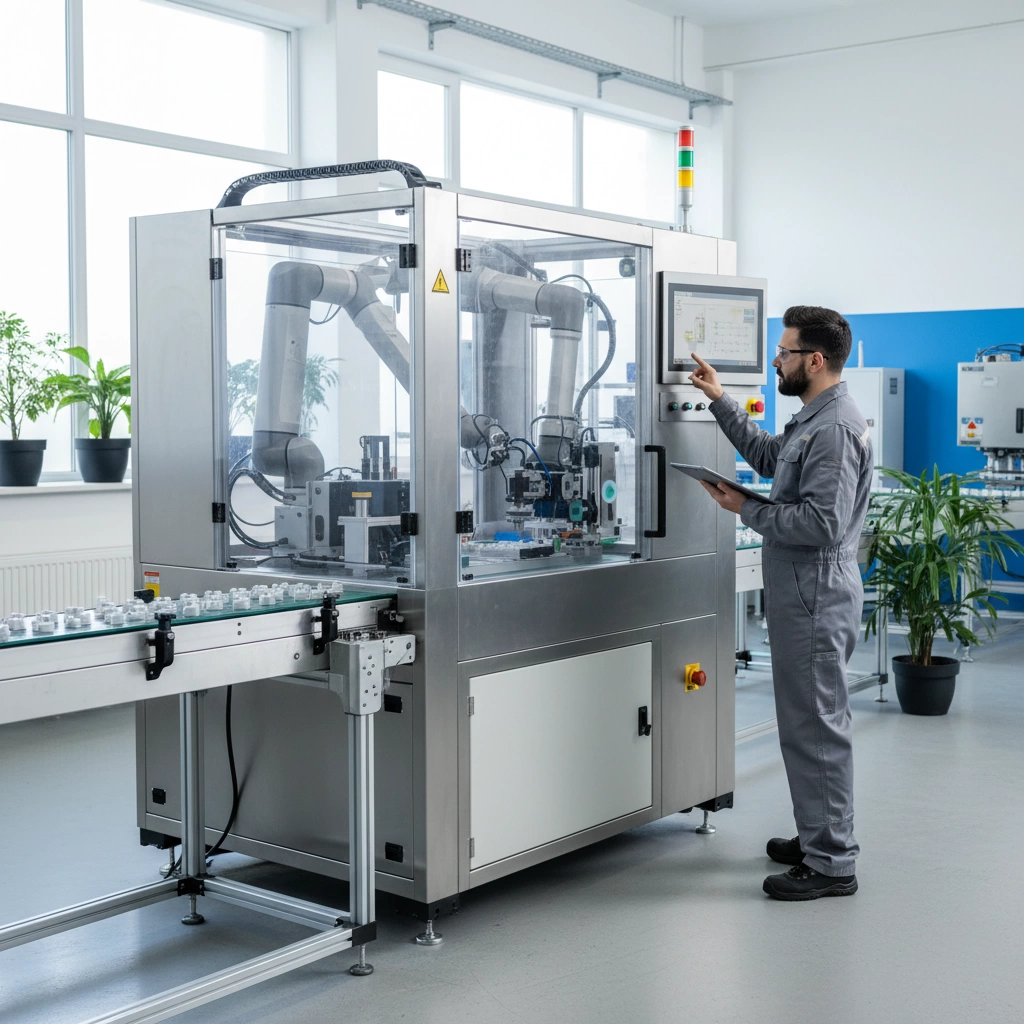
Myth-Busting: Upgrading Jobs, Not Eliminating Them
Let’s tackle the biggest fear head-on: the idea that robots are here to steal paychecks. In my experience, manufacturing automation trends aren’t about cutting headcount; they are about survival and growth. Manual deflashing is a job that leads to high turnover and injury. When we install a cryogenic deflashing machine, we aren’t removing the worker; we are removing the drudgery. We upgrade those roles, allowing staff to manage multiple machines or focus on final quality checks. It turns a repetitive, low-skill task into a technical career path, solving factory labor shortage solutions by making the jobs more attractive.
Reskilling and Seamless Integration
Bringing in post-molding automation doesn’t require tearing down your factory. Modern units are built to slot into existing lines with minimal disruption.
- Easy Adoption: Operators can be quickly trained to manage the unmanned deflashing process, shifting from manual labor to machine oversight.
- Skill Growth: Employees gain valuable technical skills, making them more versatile and engaged assets to the company.
- Workflow Continuity: These systems complement current upstream molding and downstream packing processes without creating bottlenecks.
Competitiveness in the Reshoring Era
As more companies look to bring production back to the United States, labor cost savings in molding become critical. We cannot compete with offshore manual labor rates using knives and trimmers. We compete by being faster and more consistent. Adopting high-volume deflashing systems ensures that domestic factories remain profitable. It secures our place in the global market, proving that American manufacturing can be both high-quality and cost-effective.
Choosing the Right Automated Deflashing Solution
Investing in a rubber deflashing machine isn’t a one-size-fits-all deal. When I evaluate these systems for a facility, I look strictly at the numbers and the material science. You have to match the machine to your specific rubber molding compounds. A machine perfect for durable Viton might destroy soft silicone, so understanding material compatibility is step one.
Here is the checklist I use to vet an automated deflashing machine:
- Material & Cycle Time: Ensure the system handles your specific durometer without damaging the part surface. If you are running high-volume deflashing systems, the cycle time needs to beat your current manual output significantly to justify the CapEx.
- Footprint & Usability: Floor space is premium real estate in US factories. I look for compact units that don’t crowd the production floor. The interface must be intuitive; operators should be able to program recipes without an engineering degree.
- Media & Cryogen Efficiency: For a cryogenic deflashing machine, liquid nitrogen consumption is a major operating cost. I prioritize models with superior insulation and efficient polycarbonate media recycling to keep those recurring costs down.
Finally, never overlook the manufacturer’s ability to customize. Off-the-shelf units are fine, but sometimes you need a custom-built solution to guarantee deflashing quality. Reliable after-sales support is non-negotiable—when a machine goes down, you need a partner who gets you back online immediately, not next week.
Frequently Asked Questions About Automated Deflashing
Transitioning from manual labor to an automated rubber deflashing system brings up plenty of questions. We hear these every day from factory owners looking to streamline their finishing departments. Here is the straight talk on what you need to know.
How much does an automated deflashing machine cost?
There isn’t a single sticker price because it depends heavily on your production volume and the specific technology you need. A small-batch unit will cost significantly less than a high-capacity cryogenic deflashing machine designed for continuous throughput. You have to look at the total package: machine size, nitrogen efficiency, and automation features. We treat this as a capital investment that directly offsets recurring labor expenses.
Can automated machines handle delicate rubber parts?
Absolutely. This is a common misconception. Modern systems offer precision deflashing for rubber parts, including complex seals, O-rings, and medical components. By adjusting the basket rotation speed, media size, and temperature, we can remove flash without impacting the geometry or surface finish of the part. It is actually safer for delicate parts than manual trimming, which often leads to accidental gouges.
What is the difference between cryogenic and mechanical deflashing?
It comes down to temperature and time.
- Mechanical Deflashing: Relies on friction and abrasive media in a tumbler. It takes longer and isn’t always effective on soft, gummy rubber.
- Cryogenic Deflashing: Uses liquid nitrogen to freeze the flash (the thin waste edge) until it becomes brittle. Plastic media is then blasted at the parts to snap off the flash cleanly. It is much faster and provides superior deflashing quality for rubber molding.
How long is the ROI for a deflashing machine?
The deflashing equipment ROI is surprisingly short, typically falling between 12 to 18 months. When you calculate the labor cost savings in molding—eliminating the need for multiple shifts of manual trimmers—plus the reduction in scrap rates, the machine pays for itself very quickly. Once that payback period is hit, the ongoing operational savings go straight to your bottom line.
Post time: Jan-20-2026