




Current Market Reality & Pain Points of Rubber Pipe Cutting
In 2025, many rubber pipe cutting operations still rely heavily on manual methods despite the steady push for automation. Manual cutting, especially for rubber tubes and hoses, continues to present significant challenges that impact production efficiency and product quality. Common problems include inconsistent cut lengths, uneven edges, and operator fatigue — all of which contribute directly to higher scrap rates and increased rework. These issues drain both time and resources.
Hidden costs from inaccurate cutting are often underestimated:
- Material loss: Off-spec cuts mean wasted rubber pipe or tubing, which quickly adds up when producing thousands of pieces daily.
- Rework expenses: Manually trimming or re-cutting pipes to meet tolerance eats up labor hours and interrupts workflow.
- Quality complaints: Poor cuts can lead to assembly line delays or returned goods, harming client relationships and brand reputation.
Despite these pain points, many factories remain hesitant to invest in automatic rubber pipe cutting machines. The reasons usually boil down to:
- High upfront investment: Automatic rubber tube cutters or CNC rubber pipe slicing machines come with significant capital costs that are sometimes hard to justify for smaller operations.
- Complexity fears: Some manufacturers worry about the technical know-how required to operate and maintain automatic systems.
- Production variability: Plants with frequent size changes or custom orders may perceive automation as too rigid or slow for their needs.
However, sticking with manual or semi-automatic cutting often means ongoing hidden expenses and limited scalability. The market reality is clear: without addressing these pain points and embracing more precise rubber pipe cutting solutions, manufacturers risk falling behind in cost-efficiency and product consistency.
Main Cutting Technologies for Rubber Pipe Cutting Machines
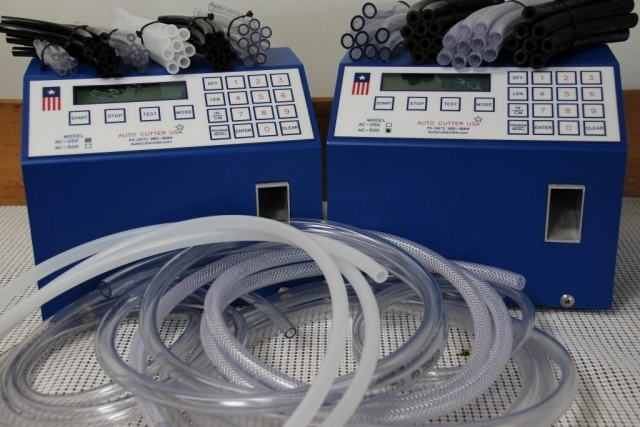
When it comes to rubber pipe cutting machines, several technologies are popular in the US market today, each with its own pros and cons depending on your specific needs.
Flying Knife / Rotary Blade Cutting
This is the most common method in medium to small factories. It uses a fast-spinning blade to slice through rubber pipes or hoses cleanly and quickly. It’s great for medium hardness materials like silicone, EPDM, and NBR. The edge quality is generally good, but blade wear can be a factor, requiring regular replacement.
Cold Knife (Guillotine Style) Cutting
Cold knife cutters use a straight blade that slices through rubber slowly, like a guillotine. This method is simple, cost-effective, and delivers clean edges, but it’s slower compared to rotary blades and more suited for softer or thinner pipes. Blade life is longer as it operates without heat, but cutting speed remains limited.
Ultrasonic Cutting
Ultrasonic cutting uses high-frequency vibrations to cut rubber pipes with precision. It excels at delivering smooth edges on a variety of materials, including harder rubbers and composites. This tech reduces blade wear significantly but comes with higher initial costs and somewhat more complex maintenance. It’s becoming more popular in precision-demanding industries.
Laser Cutting
Laser cutting is relatively niche in the rubber pipe industry as of 2026. It provides excellent precision and clean cuts without physical blade wear since it uses a focused laser beam. However, it’s typically limited by material thickness, cost, and slower speed for high-volume production. Laser cutting shines in industries like medical or food-grade rubber where appearance matters most.
Waterjet Cutting
Waterjet is very rare for rubber pipes but can cut through thick or complex profiles without heat damage. It’s slow and expensive, so it’s only used for niche cases where other cutting methods don’t work.
Quick Comparison Table of Rubber Pipe Cutting Technologies
| Technology | Material Applicability | Edge Quality | Speed (pcs/min) | Blade Life / Wear | Initial Investment | Maintenance Difficulty |
|---|---|---|---|---|---|---|
| Flying Knife | Silicone, EPDM, NBR (30-90 Shore A) | Good | High | Moderate (frequent blade changes) | Low-Medium | Low |
| Cold Knife | Softer rubber types | Very Good | Low-Medium | Long | Low | Low |
| Ultrasonic Cutting | Harder rubber, composites | Excellent | Medium | Very Long (minimal wear) | Medium-High | Medium |
| Laser Cutting | Thin to medium rubber sheets | Excellent | Low-Medium | No blade wear | High | Medium-High |
| Waterjet Cutting | Thick or complex profiles | Excellent | Low | No blade wear | Very High | High |
Each cutting method fits different production scales and quality demands. If you want a precision rubber pipe cutter with fast throughput, rotary blade or ultrasonic might be ideal. For tighter budgets or softer materials, cold knife machines work well. Laser and waterjet remain niche but are options for specialized cutting needs.
Choosing the right rubber pipe cutting machine depends on your typical material, volume, and budget — this guide can help you lock in the best tech for your factory’s setup.
Most Popular Rubber Pipe Cutting Machines for Medium-Small Factories 2025-2025
In the U.S. rubber products market, medium and small factories are leaning toward reliable, flexible cutting solutions that balance cost and performance. Here are the top machine types you’ll find in use for rubber pipe cutting in 2025-2025:
1. Fully Automatic Cut-to-Length Machines
These are the go-to for businesses needing precision and consistency. They offer fixed length tolerance around ±0.3 to 1 mm, ideal for high-quality rubber pipe cutting with minimal waste. Perfect if your demand is steady and accuracy matters.
2. Semi-Automatic High-Speed Cutters
These machines boost productivity but still require some operator input, making them popular for factories wanting speed without a full automation investment. They work well for flexible medium-small production lines where an operator can quickly adjust.
3. Multi-Size Quick Change System Machines
If your factory handles different rubber hose or pipe sizes regularly, machines with quick changeover systems save major downtime. They allow fast switching between sizes, improving efficiency, especially for custom or smaller batch orders.
4. Integrated Chamfer + Cutting Machines
Adding chamfering to cutting in one machine streamlines finishing steps. This is vital for applications like silicone tube cutting or rubber gasket cutting where clean, beveled edges improve fitting and assembly.
5. All-in-One Machines with Hole Punching, Slotting, or Printing
Factories wanting extra functionality choose all-in-one rubber pipe cutting machines. Besides cutting, these units punch holes, slot pipes, or print markings in the same cycle, saving labor and floor space.
These machine types cover a wide range of needs for medium-small factories producing rubber tubes, hoses, or gaskets. Depending on your production volume and product complexity, one of these systems will fit your operation while keeping costs manageable.
Critical Technical Parameters Checklist When Purchasing a Rubber Pipe Cutting Machine
Choosing the right rubber pipe cutting machine means focusing on key specs that affect your daily operation and costs. Here’s a quick checklist to keep in mind before buying:
| Parameter | What to Look For | Why It Matters |
|---|---|---|
| Cutting Accuracy & Repeatability | ±0.3mm to ±1mm tolerance | Ensures consistent product quality, reduces waste |
| Cutting Diameter Range | Max and min pipe sizes machine can handle | Match your rubber tube sizes (small & large) |
| Cutting Speed (pcs/min) | Real production speed, not just specs on paper | Higher speed means better throughput |
| Blade Life & Replacement Cost | Cost per 10,000 cuts & durability | Lowers operational cost, less downtime |
| Material Adaptability | Works with silicone, EPDM, NBR, FKM, hardness 30-90 Shore A | Important for various rubber hose types |
| Quick Size Changeover Time | Minutes, not hours | Reduces downtime when switching rubber pipe sizes |
| Dust & Crumb Management | Built-in suction or cleaning system | Keeps workspace clean and safe |
| Noise Level & Safety Features | OSHA-compliant noise levels, emergency stop | Protects operators and complies with US standards |
Why These Matter:
Many US factories still invest in rubber pipe slicing machines without a clear view of these specs — leading to lost materials, higher repair costs, or safety issues. Focusing on accuracy, durable blades, and fast size changes will save both money and headaches.
To sum it up:
When buying a precision rubber pipe cutter or an automatic rubber hose cutter, zero in on real production metrics, not just flashy specs. That way, your machine will deliver reliable, consistent cuts day after day.
Xiamen Xingchangjia Non-standard Automation Equipment – Our Rubber Pipe Cutting Solutions
At Xiamen Xingchangjia, we specialize in rubber pipe cutting machines tailored to fit the unique demands of U.S. manufacturers. Our non-standard automation equipment is designed for precision, speed, and adaptability, maximizing efficiency in rubber tube cutting and hose production.
Current Main Models Overview
| Model | Cutting Type | Diameter Range (mm) | Cutting Speed (pcs/min) | Accuracy (±mm) | Key Features |
|---|---|---|---|---|---|
| XCJ-RPC200 | Rotary Blade Cutter | 5 – 200 | Up to 60 | ±0.3 | Quick size change, dust control |
| XCJ-CNC400 | CNC Precision Cutter | 10 – 400 | Up to 45 | ±0.2 | Multi-size, integrated chamfer |
| XCJ-AUTO600 | Fully Automatic Cutter | 20 – 600 | Up to 75 | ±0.5 | Automated feeding & cutting |
| XCJ-ULS150 | Ultrasonic Cutter | 1 – 150 | Up to 50 | ±0.3 | Clean edge, low maintenance |
Key Advantages in Real Production
- High Cutting Accuracy & Repeatability: Our cutters provide consistent precision essential for silicone tube cutting, EPDM hose cutting equipment, and other rubber gasket cutting needs.
- Versatile Material Compatibility: Handle everything from soft silicone to harder rubber compounds like NBR and FKM, meeting diverse client demands.
- Minimal Downtime: Fast blade replacement and easy size changeover keep your production line moving.
- Dust & Crumb Management: Equipped to handle rubber pipe slicing byproducts, reducing cleanup and machine wear.
- User-Friendly Interface: Simplified controls mean your operators spend less time troubleshooting and more time producing.
Typical Customer Industries & Application Cases
Customers from automotive, HVAC, medical, and food-grade hose manufacturing rely on Xiamen Xingchangjia equipment for:
- Cutting rubber tubes to precise lengths for automotive air and brake hose assembly.
- Producing custom rubber gasket cutting machine parts for sealing applications.
- Slicing silicone tubes used in medical device manufacturing.
- Precision cutting for rubber extrusion cutting machine setups in HVAC and industrial markets.
After-Sales Reality
We back our solutions with strong service support that U.S. buyers appreciate:
- Fast Response Time: Most service inquiries answered within 24 hours.
- Spare Parts Availability: Ready stock for essential components ensures minimal wait times.
- On-Site Service Coverage: We provide local or remote assistance depending on location for quick troubleshooting.
- Training & Support: Comprehensive training to get your team up to speed quickly and ensure smooth operation.
By choosing Xiamen Xingchangjia’s automatic rubber hose cutter and related equipment, U.S. manufacturers get reliability, efficiency, and ongoing support tailored to real-world production environments.
Real Cost Structure Analysis: What You Actually Pay in 2-3 Years
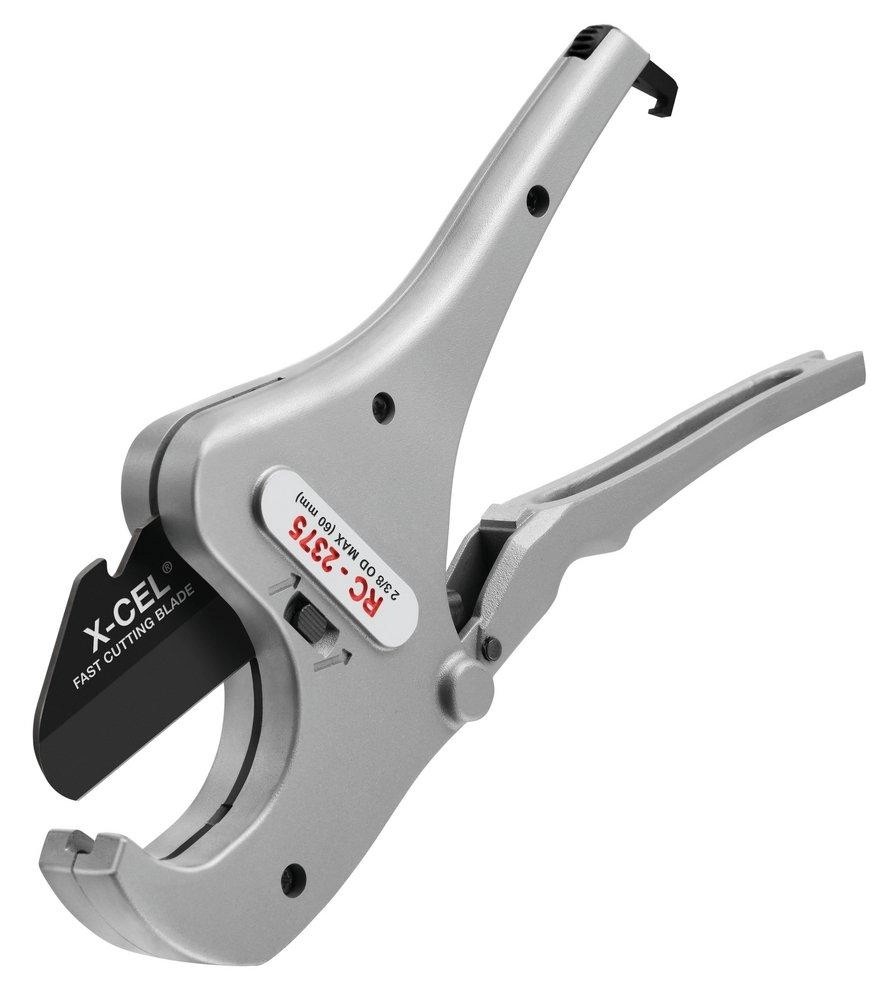
When considering a rubber pipe cutting machine, the upfront price isn’t the whole story. Over 2-3 years, your real costs include more than just the initial investment. Here’s a breakdown of what you should factor in:
Initial Investment Comparison
- Basic manual or semi-automatic cutters cost less upfront but don’t save much time or reduce waste.
- Fully automatic rubber hose cutters have higher initial prices but offer precision and speed that often pay off quickly.
- CNC rubber tube cutting machines and all-in-one systems come at a premium but maximize flexibility and reduce labor.
Blade Consumption Cost (Most Underestimated)
- Blade wear varies by cutting technology. For example:
- Rotary blade cutters have decent blade life but require frequent replacement to maintain accuracy.
- Cold knife rubber cutting machines often need blade changes quicker.
- Don’t overlook replacement costs—they can add up and surpass initial machine cost over time if ignored.
Power & Compressed Air Consumption
- Automatic rubber tube cut-to-length machines typically use more electricity and compressed air.
- However, advanced models are designed for energy efficiency, balancing consumption with production output.
- Consider ongoing utility costs when choosing your machine, especially at high-volume plants.
Labor Saving Calculation Example
- Manual cutting: 1 operator handles ~500-800 pieces per 8-hour shift.
- Semi-automatic cutting machines can double that output per operator.
- Fully automatic rubber pipe cutting machines can handle 3,000+ pieces per shift with little intervention.
- Saving on labor means fewer overtime hours or fewer additional hires—big cost relief in the U.S. market with rising wages.
Payback Period Estimation by Production Volume
| Daily Output (pcs) | Suggested Machine Type | Estimated Payback Period |
|---|---|---|
| <3,000 | Semi-automatic cutters | 12-18 months |
| 5,000 – 15,000 | Fully automatic cut-to-length units | 8-12 months |
| >20,000 | CNC or all-in-one machines | 6-10 months |
Final Tip:
Look beyond the purchase price of your rubber pipe cutting machine. Factor in blade replacement, energy costs, and labor savings. In many cases, investing more upfront pays off with less waste, higher precision, and lower operating costs—especially for U.S. factories aiming to stay competitive in 2025 and beyond.
2025 Purchase Decision Quick Guide – Which Rubber Pipe Cutting Machine Fits Your Situation?
Choosing the right rubber pipe cutting machine for your factory depends a lot on your daily output, cutting needs, and budget. Here’s a quick guide to help you pick the best option for your setup in 2025.
Daily Output Below 3,000 pcs
If your production is under 3,000 pieces a day:
- A semi-automatic rubber pipe cutter is usually enough.
- These machines keep costs low but still offer consistent cutting quality.
- Perfect for small to medium workshops with limited automation needs.
Daily Output 5,000 to 15,000 pcs
For medium volume production:
- Consider a fully automatic cut-to-length rubber pipe cutting machine.
- These systems provide high precision ±0.3~1mm and better repeatability.
- Good for factories wanting to reduce labor and material waste without a huge upfront investment.
Daily Output Over 20,000 pcs + Frequent Size Changes
If you’re running a high-volume shop with lots of size variations:
- Invest in a multi-size quick change automatic rubber hose cutter.
- Machines with fast changeover systems reduce downtime drastically.
- Look for integrated features like chamfering, hole punching, or slotting if your products need it.
Very Strict Appearance Requirements (Medical / Food Grade)
When product finish is critical:
- Go for ultrasonic or laser rubber pipe cutting machines where applicable.
- These offer the cleanest edges and reduce contamination risks.
- Make sure your chosen equipment meets FDA or similar certification standards if serving these industries.
Budget Very Limited but Automation Desired
If automation is a must but funds are tight:
- Opt for entry-level automatic rubber tube cut-to-length machines with basic functions.
- Focus on durability and blade life to keep maintenance costs down.
- Semi-automatic options with safety features can also bridge the gap before full automation.
By matching your daily output and quality needs with the right type of rubber pipe cutting machine, you can control costs while boosting efficiency. For US-based manufacturers, focusing on reliable brands like Xiamen Xingchangjia and machines designed for silicone, EPDM, NBR, or FKM hoses helps ensure you get the best results without unnecessary expenses.
Frequently Asked Questions (FAQ) – Real Questions About Rubber Pipe Cutting Machines
1. What types of rubber pipes can your cutting machines handle?
Our rubber pipe cutting machines work well with materials like silicone, EPDM, NBR, FKM, and other rubber hose types, with hardness typically between 30-90 Shore A.
2. How accurate is the cutting length on your automatic rubber hose cutters?
Most fully automatic machines offer cutting tolerances between ±0.3 to 1 mm, depending on the model.
3. Can I cut different pipe diameters without big downtime?
Yes, multi-size quick change systems allow fast switchovers between sizes, minimizing production delays.
4. What’s the typical cutting speed for a precision rubber pipe cutter?
Speeds vary but expect 60 to 200 pieces per minute with high-speed semi-automatic models, while fully automatic machines handle steady high-volume cutting.
5. How long does the blade last before replacement?
Blade life depends on material and usage but averages around 10,000 cuts before replacement to keep edge quality consistent.
6. Is ultrasonic cutting or laser cutting common in rubber pipe cutting machines?
Ultrasonic cutting is used occasionally, but laser cutting remains niche with limited real-world application in 2025’s rubber industry.
7. What about maintenance and spare parts availability?
Maintenance is straightforward for most rotary blade cutters. We ensure spare parts are stocked and local service is available for minimal downtime.
8. Do machines include dust and crumb management systems?
Yes, most advanced rubber pipe slicing machines feature built-in dust collection to keep your workspace clean and safe.
9. How noisy are these automatic rubber tube cut-to-length machines?
Noise levels are generally low to moderate; safety enclosures and sound dampening options come standard on many models.
10. Can your machines handle medical or food-grade rubber products?
Absolutely. We offer models designed for strict appearance and hygiene standards required in medical and food-grade environments.
11. What’s the average payback period for investing in a rubber pipe cutting machine?
Payback depends on production volume but usually ranges from 6 to 24 months, factoring labor savings and material efficiency.
12. How do I choose between semi-automatic and fully automatic cutting equipment?
Choose based on daily output:
- Under 3,000 pcs/day → Semi-automatic fits well
- 5,000 to 15,000 pcs/day → Consider fully automatic
- Over 20,000 pcs/day + size changes → Fully automatic with multi-size system recommended
13. Are there entry-level options for companies with a tight budget?
Yes, we offer automated rubber tube cutting machines with affordable prices that still improve accuracy and reduce labor.
14. What is the typical initial investment range for these machines?
Prices vary widely but expect anywhere from $10,000 to $70,000 depending on automation level and additional features.
15. Can the machine integrate other functions like chamfering or printing?
Yes, all-in-one machines combining cutting, chamfering, hole punching, and printing are available for streamlined production.
16. How fast can we get after-sales support if something breaks down?
We prioritize quick response times with local technicians ready to assist, plus spare parts are shipped promptly across the U.S.
If you have more questions about rubber pipe cutting machines or need help finding the right model, feel free to reach out!
Post time: Dec-23-2025