




Signs Your Rubber Bale Cutting Process Is Holding You Back
Outdated Manual Cutting vs Modern Rubber Bale Cutters
If you still rely on manual cutting or old mechanical units, you’re leaving throughput and safety on the table. A modern rubber bale cutter or automatic rubber bale cutting machine delivers:
- Consistent block size instead of operator-dependent cuts
- Short, repeatable cycle times per bale instead of unpredictable manual work
- Reduced operator fatigue and injury risk, especially on long shifts
- Better feeding into mixers and kneaders because every rubber block is uniform
Bottlenecks in Rubber Mixing and Kneading Lines
In most plants I visit, the rubber cutting machine is the hidden bottleneck in the rubber mixing line:
- Mixers stand idle while operators wrestle with large bales
- Irregular block sizes cause longer mixing times and recipe inconsistency
- Unplanned micro-stoppages add up to lost hours per week
When the rubber bale cutter can’t keep up, your entire rubber production line efficiency suffers.
How Slow Cutters Drag Down Factory Throughput
A slow or undersized rubber block cutter impacts throughput far beyond the cutting station:
- Fewer batches per shift because each bale takes too long to process
- Higher overtime costs just to hit basic production targets
- Lost flexibility to respond to rush orders or last-minute schedule changes
Upgrading to a hydraulic rubber bale cutter with the right tonnage and stroke speed immediately increases actual line capacity.
Safety Risks and Downtime from Legacy Equipment
Legacy guillotines and homemade rigs are a serious risk:
- Exposed blades and manual handling raise the chance of recordable injuries
- Poor guarding and outdated safety circuits hurt compliance and insurance costs
- Frequent mechanical failures and leaks trigger unplanned downtime
Modern rubber bale cutting safety features—light curtains, interlocks, two-hand controls, and safe PLC logic—make a modern rubber bale cutter a safer, more insurable asset.
Material Limits With Synthetic and Frozen Rubber Bales
Old cutters were designed for simple natural rubber. Today you process much tougher materials:
- Synthetic rubber block cutting (SBR, NBR, EPDM bale processing) often exceeds the tonnage of older machines
- Frozen or chilled rubber bales can crack blades, stall drives, or trip overloads
- Higher-density and specialty compounds demand a true heavy-duty bale splitter or industrial hydraulic shear
If your current rubber cutting machine struggles, stalls, or chips blades on synthetic or frozen bales, it’s a clear sign you need a modern hydraulic rubber bale cutter engineered for today’s raw rubber processing equipment demands.
Modern Rubber Bale Cutter Design
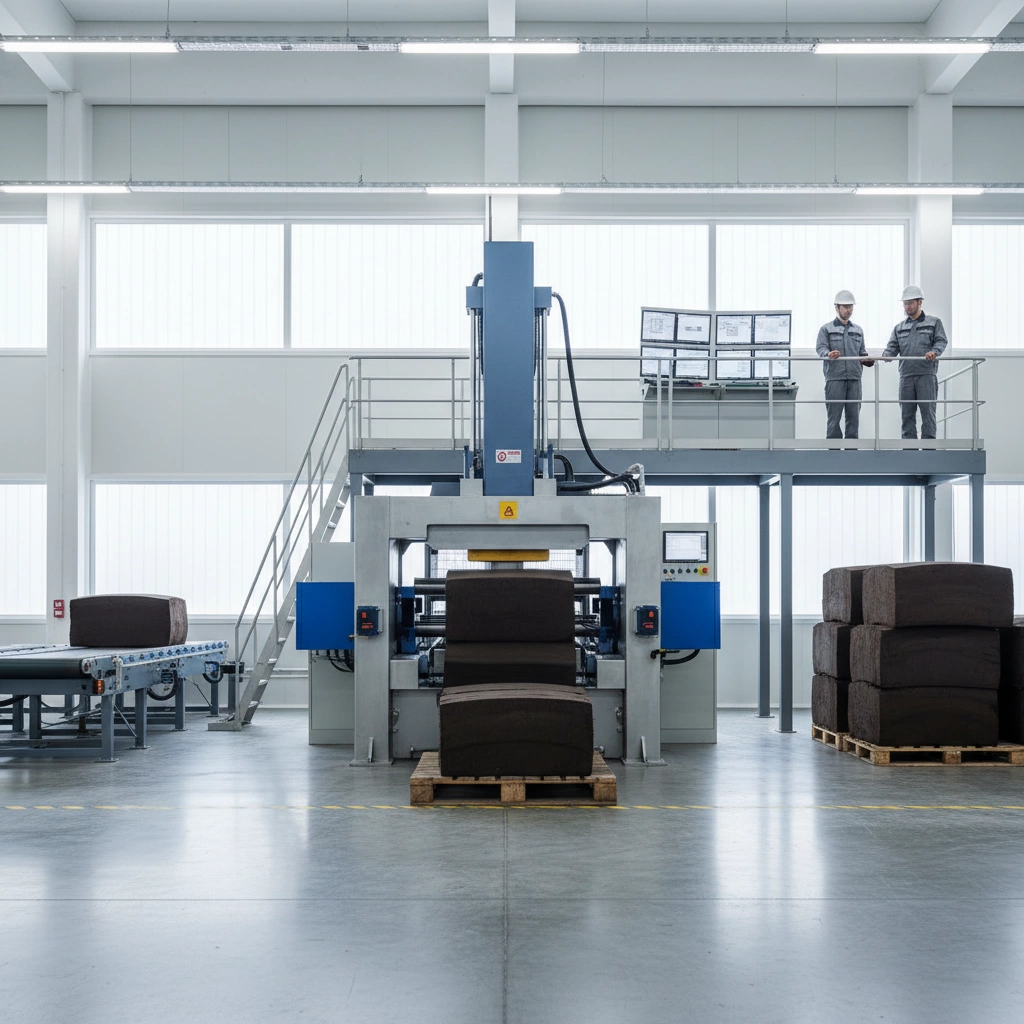
A modern rubber bale cutter is a lot more than a big guillotine. When I spec a new hydraulic rubber bale cutter for a U.S. plant, I focus on a simple goal: cut any bale, every time, with consistent block size and minimal labor.
Core Components of Modern Rubber Bale Cutters
A reliable modern rubber bale cutter or rubber block cutter usually includes:
- Heavy-duty frame and columns for stable, repeatable cuts under high tonnage
- Industrial hydraulic power unit sized for your hardest synthetic and frozen rubber bales
- PLC control cabinet for recipe-based cutting and integration with your rubber mixing line automation
- Safety guarding and light curtains to meet OSHA expectations and cut injury risk
- Conveyor or shuttle table to move rubber bales in and out without a forklift at every cut
These core elements are what separate a modern rubber cutting machine from a basic manual guillotine cutter for natural rubber.
Hydraulic Systems for High-Force Rubber Bale Cutting
For U.S. factories running EPDM bale processing, synthetic rubber block cutting, and frozen natural rubber, the hydraulic package is everything:
- High-pressure industrial hydraulic shear delivers the tonnage to slice dense, cold bales cleanly
- Proportional valves help control speed so the blade doesn’t slam, reducing shock and wear
- Energy-efficient pumps cut power consumption during long shifts
- Oversized cooling and filtration keep the hydraulic rubber bale cutter stable in hot, dusty plants
This setup lets your operators run heavy-duty bale splitter duty all day without babying the machine.
PLC Control for Consistent Rubber Block Sizing
Modern rubber bale cutters with PLC controlled rubber machinery give you control that old units simply don’t:
- Touchscreen HMI to set block weight, cut pattern, and bale orientation
- Stored recipes for each compound or line, so every operator hits the same target size
- Real-time diagnostics to spot issues before they shut down your rubber production line efficiency
- I/O ready for integration with upstream conveyors and downstream mixers or a rubber bale granulator alternative
This is how an automatic rubber bale cutting machine keeps block size consistent and keeps your batch quality steady.
Blade Materials for High-Density Rubber Bale Slicing
Blade quality directly impacts cut quality and downtime:
- Alloy tool steel blades for long life on natural rubber and standard synthetic bales
- Special wear-resistant steels or coatings for abrasive compounds and cold, high-density bales
- Optimized bevel geometry to reduce cutting force and improve edge life
- Quick-change blade design so your maintenance team can swap blades fast on a weekend PM
With the right blade materials, your modern rubber bale cutter slices cleaner and needs fewer stoppages.
Material Handling and Conveyors Around Rubber Bale Cutters
To really maximize rubber factory throughput optimization, the rubber cutting machine has to move bales efficiently:
- Infeed conveyors or powered roller tables to bring bales from storage or from a weigh station
- Automatic pusher or clamps to position each bale under the blade with minimal operator effort
- Outfeed conveyors to send cut blocks directly to the rubber mixing line or buffer storage
- Custom vertical rubber cutting machine or horizontal rubber bale cutter layouts to fit tight U.S. floor plans
When the material handling is designed right, your modern rubber bale cutter becomes a key part of your raw rubber processing equipment, not a bottleneck.
Maximizing Efficiency with Modern Rubber Bale Cutters
How Modern Rubber Bale Cutters Cut Cycle Time Per Bale
When I switched to a modern rubber bale cutter, the first win was cycle time. A hydraulic rubber bale cutter drops each cut to just a few seconds, instead of minutes of manual work. With an automatic rubber bale cutting machine feeding your rubber mixing line, you keep the internal mixer loaded and avoid operators waiting on hand-cut bales.
Improving Batch Accuracy With Precise Rubber Bale Sizing
Consistent batch quality in the U.S. market comes down to repeatable bale weights. A PLC controlled rubber machinery setup lets me set target block size and weight, and the modern rubber bale cutter repeats it all day. That tighter control improves batch accuracy, keeps your rubber compound specs steady, and cuts down on lab failures and customer complaints.
Reducing Energy Use With Efficient Hydraulic Rubber Cutters
Older guillotine cutters for natural rubber waste power because they run full force, all the time. A modern hydraulic rubber bale cutter uses smart hydraulics and pressure control, so it only pulls what it needs for each cut. You see lower kWh per ton of rubber processed, which matters when U.S. energy costs keep climbing.
Lowering Scrap and Rework in Rubber Mixing
Badly cut synthetic rubber blocks and EPDM bales create feed issues at the mixer throat. With high-precision rubber slicing, block edges are cleaner and thickness is consistent, so the mixer loads smoothly. That alone cuts scrap, lowers rework, and keeps your raw rubber processing equipment running instead of stopping to dig out bridges or chunks.
Reallocating Operators to Higher-Value Tasks
A modern automatic rubber bale cutting machine lets me pull people off repetitive knife work and put them on higher-value jobs. Instead of two operators fighting frozen bales by hand, one person can oversee the vertical rubber cutting machine or horizontal rubber bale cutter and still handle quality checks, staging, or basic maintenance. That’s how you actually boost rubber factory throughput optimization without just adding headcount.
Custom Rubber Bale Cutter Solutions for Your Factory
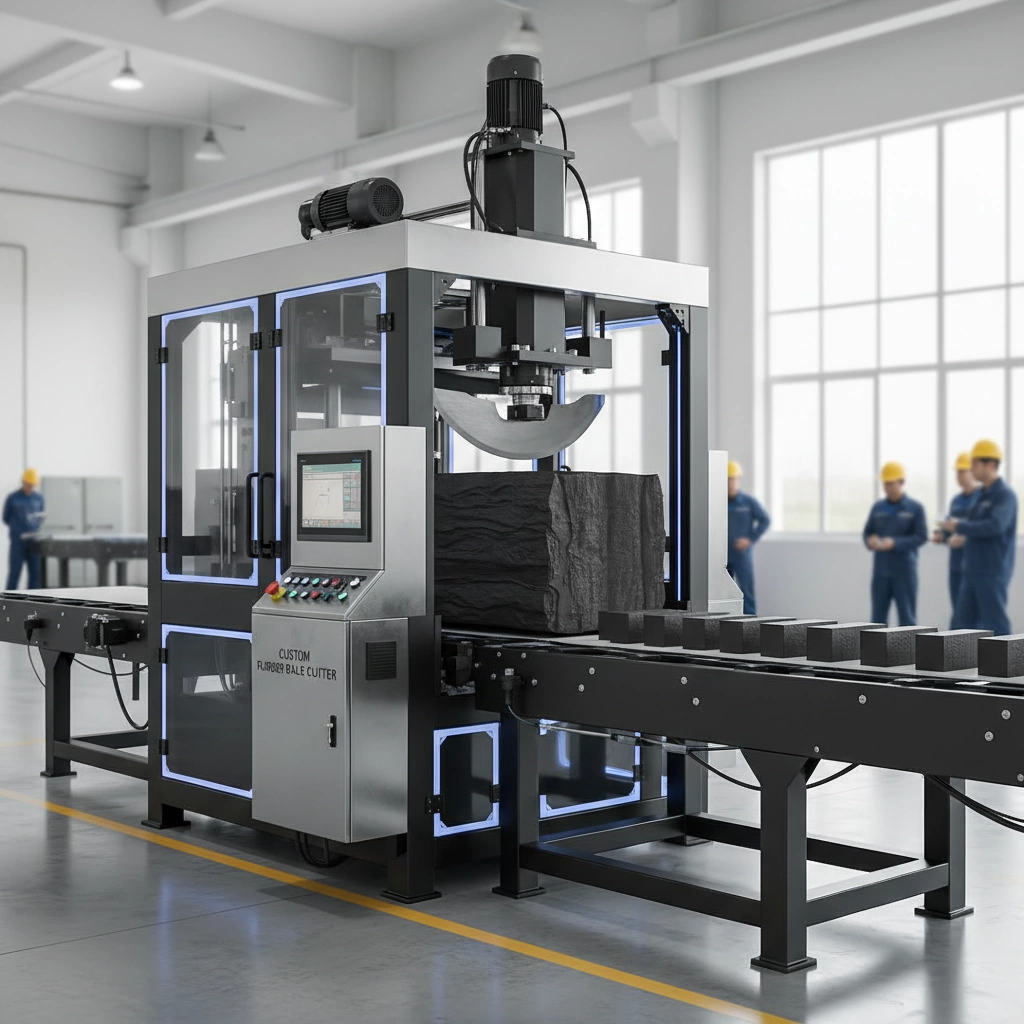
Why standard rubber bale cutters don’t fit every factory
A standard rubber bale cutter might look cheaper up front, but it usually doesn’t match real production in a U.S. rubber plant. Every factory runs different bale sizes, durometers, and mixing schedules. I design modern rubber bale cutters and automatic rubber bale cutting machines around actual throughput, safety rules, and staffing levels, so you’re not forcing your process to fit a generic machine. That’s how you get true rubber factory throughput optimization instead of another bottleneck.
Custom tonnage for different rubber hardness
If you cut natural rubber, EPDM bales, synthetic compounds, and sometimes frozen rubber, you need the right tonnage, not a guess. I size each hydraulic rubber bale cutter so it has:
- Enough cutting force to slice high-density, high-hardness bales cleanly
- Fast cycle times for softer natural rubber without burning energy
- Extra safety margin for frozen or cold-room synthetic rubber block cutting
This lets you use one heavy-duty bale splitter across multiple recipes without stalling or overloading the hydraulic system.
Vertical vs horizontal rubber bale cutters
Floor space is tight in most US mixing rooms, especially in older buildings. That’s why I offer both vertical rubber cutting machines and horizontal rubber bale cutters:
- Vertical guillotine cutter for natural rubber: small footprint, ideal near the mill or internal mixer
- Horizontal automatic rubber cutting machine: easier infeed with conveyors and safer guarding in high-volume lines
I match the layout to your actual room, forklift paths, and OSHA guard requirements, not a catalog drawing.
Integrating into existing rubber mixing lines
A modern rubber bale cutter only pays off if it plugs cleanly into your current raw rubber processing equipment. I design for:
- Direct feeding into mixers, mills, or a rubber bale granulator alternative
- Upstream and downstream conveyors sized for your bale dimensions
- PLC controlled rubber machinery that talks to your existing line controls
This is how we turn the cutter into a real rubber mixing line automation node, not an isolated manual station.
Non-standard automation for complex setups
Many US plants run a mix of batch and semi-continuous lines, and standard automation won’t cover every case. I build non-standard automation solutions around your process:
- Custom bale staging, barcode/lot tracking, and recipe-specific block sizing
- Automated clamps, pushers, and infeed tables for high-throughput lines
- Integration with MES/SCADA so operators manage rubber cutting from one screen
With the right modern rubber bale cutter and custom rubber processing equipment, you cut labor at the cutter, stabilize input to the mixer, and lock in long-term rubber production line efficiency.
ROI of Upgrading Your Rubber Bale Cutter
When I look at rubber plants across the U.S., the biggest hidden cost is still the old rubber cutting machine sitting in front of the mixer.
Cost of downtime from old rubber cutting equipment
Every time a manual rubber bale cutter jams, a blade chips, or an operator has to “fight” a bale, the whole rubber mixing line waits.
With a legacy guillotine cutter for natural rubber, you pay for:
- Idle mixers and kneaders while operators clear jams
- Overtime to catch up on delayed batches
- Higher labor cost per pound of rubber just to keep up
An automatic rubber bale cutting machine with a modern hydraulic rubber bale cutter drive basically removes that random downtime, which shows up fast in your monthly numbers.
Payback period of modern rubber bale cutter upgrades
For most U.S. factories I work with, the payback period on a modern rubber bale cutter upgrade is usually:
- 12–24 months when you run multiple shifts
- Even faster if you process a mix of natural rubber and synthetic rubber block cutting (like EPDM bale processing) where manual sizing is slow and inconsistent
When you factor in labor savings, fewer line interruptions, and more stable batch weights, the ROI is usually clearer than almost any other raw rubber processing equipment upgrade.
Impact on overall rubber production line efficiency
A modern rubber bale cutter is a small footprint change that can unlock big gains in rubber production line efficiency:
- Faster, repeatable cuts keep the rubber mixing line fed and avoid mixer starvation
- Better block sizing improves mixing repeatability and reduces rework and scrap
- Rubber factory throughput optimization often starts at the cutter, not the mixer
If you’re chasing more throughput without adding another mixer, upgrading the rubber bale cutter is usually the first lever I pull.
Safety, compliance, and insurance benefits
Old hydraulic shears and home-built heavy-duty bale splitters are a safety and compliance risk. A modern PLC controlled rubber machinery setup with proper guarding, light curtains, and interlocks:
- Reduces recordable incidents tied to rubber bale cutting safety
- Helps with OSHA compliance and safety audits
- Often improves your insurance position or avoids premium hikes after incidents
Insurers look closely at high-force equipment; a safer modern rubber bale cutter is a simple way to de-risk that part of your plant.
Long-term maintenance and spare parts savings
Legacy rubber block cutters and horizontal rubber bale cutters built decades ago are getting harder to maintain:
- Obsolete hydraulics and control parts mean long waits and expensive emergency fixes
- No standardization across lines drives up spares inventory cost
- Unplanned failures hit your schedule at the worst time
With a modern hydraulic rubber bale cutter designed for U.S. plants, I standardize components, keep PLC spares common, and simplify service. Over 5–10 years, that reduction in emergency calls, scrap, and lost production is a big part of the real ROI—far beyond just the initial purchase price.
How to Choose a Modern Rubber Bale Cutter Manufacturer
Picking the right partner for a modern rubber bale cutter or automatic rubber bale cutting machine directly impacts your uptime, safety, and costs. Here’s how I look at it when I’m buying equipment for a U.S. rubber plant.
Check Build Quality & Durability
I don’t buy on looks. I buy on steel, structure, and real-world performance.
- Heavy welded frame for 24/7 industrial use
- Oversized hydraulic cylinders and industrial valves
- Quality PLC and electrics (Siemens, Allen-Bradley, etc.)
- Proven performance on natural rubber, EPDM bales, and synthetic rubber block cutting
- Clear safety guarding around the guillotine cutter for natural rubber
Simple check: Ask for photos of the machine after 2–3 years in production, not just brand-new.
After-Sales Support & Service
In the U.S. market, slow support kills ROI. I only work with manufacturers that treat service like a product.
- Fast response on phone/email/remote PLC support
- Spare parts stocked in or quickly shipped to the U.S.
- Clear service plans and training for operators and maintenance
- Remote diagnostics on PLC controlled rubber machinery
If they can’t commit to response times in writing, I move on.
Customization Capability Matters
A modern rubber bale cutter must fit your process, not the other way around.
- Custom tonnage for different rubber hardness and frozen bales
- Vertical rubber cutting machine vs horizontal rubber bale cutter for tight floor layouts
- Adjustable block size for different mixing recipes
- Options for conveyors, scales, and safety fencing
Manufacturers that do real custom rubber processing equipment and non-standard automation solutions usually understand rubber mixing line automation better.
Questions to Ask About Integration & Automation
Before I sign, I drill into integration with our existing raw rubber processing equipment and rubber production line efficiency:
- Can this hydraulic rubber bale cutter talk to my current PLC/SCADA?
- How does it sync with my rubber mixing line automation and batch weighing?
- Can they integrate conveyors, bale identification, and interlocks to downstream mixers?
- Do they support future upgrades (robots, rubber bale granulator alternative, etc.)?
If they struggle to explain automation, they’re just selling a standalone rubber cutting machine, not a solution.
Compare Total Cost of Ownership, Not Just Price
I always look at lifetime cost, not just the quote.
| Factor | What I Look For |
|---|---|
| Purchase Price | Competitive, but not “too good to be true” |
| Energy Use | Efficient industrial hydraulic shear and pumps |
| Downtime & Reliability | Real uptime data and references from U.S. plants |
| Blades & Consumables | Long-life blades and easy blade change |
| Maintenance & Spare Parts | Clear costs and stock levels for 5–10 years |
| Safety & Insurance Impact | Meets OSHA, reduces risk and insurance exposure |
A truly modern rubber bale cutter with strong support, smart automation, and low downtime almost always beats a cheap machine on total cost of ownership.
Post time: Feb-03-2026