




Why Upgrade to Automatic Gasket Cutting Equipment?
When gasket tolerances tighten and material costs climb, manual cutting and steel-rule dies quickly become a bottleneck. I use automatic gasket cutting equipment to solve three recurring problems: short-run flexibility, repeatable precision, and material yield.
Die-less Gasket Production for Short Runs
With a digital flatbed cutting system or CNC oscillating knife cutter, I can move from CAD file to finished gasket without waiting on tooling.
- No dies, no waiting: I load DXF gasket cutting files or PLT gasket design files and cut immediately—ideal for prototypes, MRO, and low-volume OEM parts.
- Fast design changes: Engineering revisions are handled at the software level, not with new dies.
- Lower upfront cost: Die-less gasket manufacturing eliminates tooling spend on short-run and custom gasket jobs.
Precision Tolerances for Critical Sealing Parts
For critical sealing parts in pumps, valves, compressors, and process equipment, I rely on a precision CNC gasket plotter to hold tight, repeatable tolerances.
- Typical flatbed CNC gasket cutter specs: ±0.1–0.2 mm positional accuracy on rubber, PTFE, graphite, and foam.
- Servo motor motion control systems and pneumatic knife tools keep cut edges clean and square, even on soft elastomers.
- A vacuum table gasket cutter with zoned vacuum hold-down reduces sheet movement, which is usually the main cause of tolerance drift in manual cutting.
Material Optimization with Automatic Nesting
Gasket materials—non-asbestos, graphite, PTFE, high-temp rubber—are expensive. Automatic nesting software is where I see fast ROI.
- Automatic nesting for gasket layouts can improve material yield by 5–15% compared to manual layout.
- Smart nesting packs different part sizes onto the same sheet, minimizing skeleton waste on rubber sheet cutting equipment.
- For high-speed sealing material processing, the nesting engine quickly re-optimizes layouts when orders change or remnant sizes vary.
Throughput and Scalability vs Manual Cutting
Manual cutting is hard to scale. A modern digital knife cutting machine gives me predictable throughput and easier labor planning.
- One operator with an automatic gasket cutting equipment setup can often replace 2–3 manual cutting stations for standard materials.
- Cutting paths, feed rates, and tool selection are software-controlled, so adding a second shift or a second machine is straightforward.
- As order volume grows, I can integrate automated material feeding systems and custom gasket production lines rather than hiring and training more manual cutters.
Upgrading to a gasket cutter machine with CAD/CAM integration for manufacturing, vacuum hold-down, and automatic nesting is how I standardize quality, cut scrap, and scale gasket production without losing control over precision sealing parts.
Core Gasket Cutting Technologies: Choosing the Best Gasket Cutter Machine
Oscillating knife gasket cutter for rubber, PTFE, graphite, and foam
For most US gasket shops, a CNC oscillating knife cutter is the most practical automatic gasket cutting equipment. On my flatbed digital knife cutting machines, I rely on:
- Rubber and silicone: Clean edges, no burning or melting like you get with some laser setups.
- PTFE gasket cutting: A sharp pneumatic knife tool handles PTFE and other chemical-resistant sheets without stress or warping.
- Graphite and non-asbestos: Our graphite gasket cutting equipment keeps dust down with proper extraction and stable vacuum table gasket cutter beds.
- Foam and sponge: Industrial foam and sponge cutter tools avoid compression, so you keep the right thickness and sealing performance.
If you cut mixed materials—rubber, PTFE, graphite, soft metals with adhesive—an oscillating knife digital flatbed cutting system gives the best balance of cost, speed, and flexibility for day-to-day work.
Laser gasket cutting advantages and limitations
A laser gasket cutting machine has its place, but I treat it as a niche tool, not my main B2B gasket cutting solution:
- Advantages
- Very fast on thin non-metallic sheets.
- No tool wear, so you keep consistent gasket cutting tolerances.
- Great for fine, detailed profiles and tiny features.
- Limitations
- Heat can discolor, harden, or melt rubber and some plastics.
- Not ideal for PTFE gasket cutting where you need clean, cold cuts.
- Fume extraction is a must, especially for US shops under tight safety rules.
For most high-speed sealing material processing, I prefer a precision CNC gasket plotter with a knife over laser unless the customer specifically wants laser-cut parts.
Waterjet gasket cutting for thick and metallic seals
When I need to process thicker or tougher materials, I move to a waterjet gasket cutting system:
- Handles thick rubber, composites, and soft metals like stainless or copper.
- No heat-affected zone, which is important for critical metallic seals.
- Can cut stacked sheets to boost gasket production throughput.
The downside is higher operating cost and more maintenance compared with a flatbed CNC gasket cutter using knives. For everyday non-metallic gasket work, waterjet is often overkill, but it’s unbeatable for thick or metallic seals.
Choosing the best gasket cutter technology for general production
For general production in a US gasket shop, I usually recommend:
- Primary system: A digital knife cutting machine (CNC oscillating knife cutter) with a zoned vacuum hold-down and servo motor motion control system for most rubber, PTFE, graphite, foam, and non-asbestos jobs.
- Optional add-ons:
- Laser gasket cutting machine for thin specials and intricate small parts.
- Waterjet gasket cutting system for thick metal and heavy-duty industrial seals.
If you’re running mixed materials, short runs, and custom orders, an automatic gasket cutter based on oscillating knife technology gives the best balance of cost, flexibility, and throughput for US manufacturing needs.
Key Criteria for Choosing the Best Gasket Cutter Machine
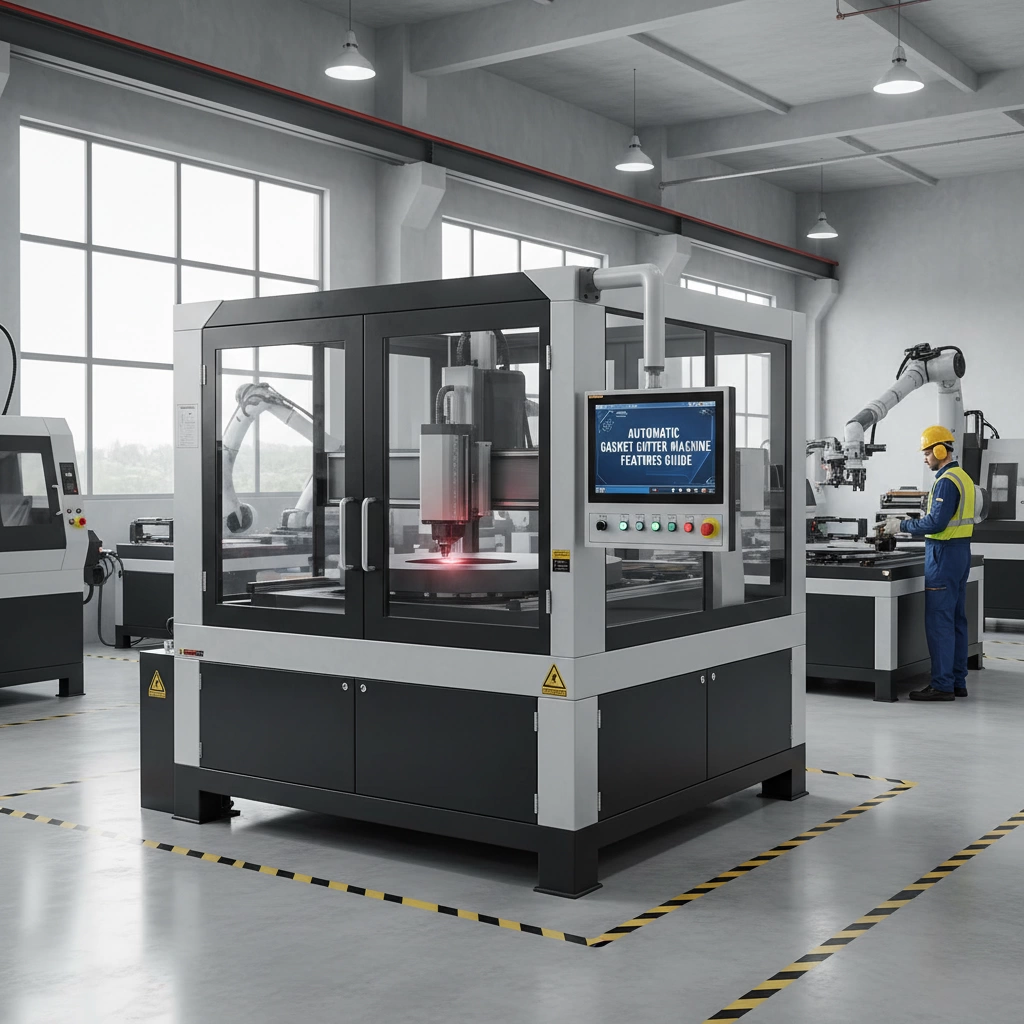
When I’m helping a U.S. shop pick the best gasket cutter machine, I always focus on a few core specs that actually move the needle day to day.
Cutting Head Versatility & Tools
For automatic gasket cutting equipment, the cutting head is where you win or lose.
- Look for a CNC oscillating knife cutter that can swap tools fast: pneumatic knife tool, creasing tools, kiss-cut, routing.
- Make sure it handles rubber, silicone, PTFE, graphite, non-asbestos, and foam on the same digital knife cutting machine.
- Check that pressure and oscillation are fully adjustable for soft foam vs dense gasket sheet.
- If you run short-turn custom jobs, tool change speed and presets matter more than raw top speed.
Bed Size & Vacuum Hold-Down
Bed size should match how you buy material and your target gasket production throughput.
- Choose a flatbed CNC gasket cutter with a bed sized for your most common sheet or roll width.
- Go for a vacuum table gasket cutter with zoned vacuum hold-down so you don’t lose grip on partial sheets.
- For high-speed sealing material processing, make sure the vacuum is strong enough to keep thin rubber from lifting or shifting.
- If you plan to automate, confirm it supports an automated material feeding system.
CAD/CAM Software & File Compatibility
CAD/CAM integration for manufacturing is where most U.S. gasket shops either save time or waste it.
- Your machine should open standard DXF gasket cutting files and PLT gasket design files without weird conversions.
- Look for plug-ins or smooth workflows from the CAD you already use (AutoCAD, SolidWorks, etc.).
- Make sure the precision CNC gasket plotter uses servo motor motion control system for accurate contour following.
- Cloud or network-ready software is a plus if you’re aiming for Industry 4.0 gasket manufacturing.
Smart Nesting & Vision Systems
Smart software turns a good gasket cutter machine into a serious B2B gasket cutting solution.
- Insist on automatic nesting software or automatic nesting for gasket layouts to boost material yield optimization.
- For printed or pre-printed sheets, vision system contour recognition keeps cuts aligned with graphics or print marks.
- If you re-cut existing parts, camera-based registration on a digital flatbed cutting system can save a lot of labor.
Speed vs Accuracy in Automatic Gasket Cutting
Every U.S. shop has a different balance between rush orders and critical tolerances.
- For tight gasket cutting tolerances on critical sealing parts, prioritize accuracy and repeatability over max IPM.
- For large foam and rubber sheet cutting equipment, higher speed is fine as long as edges stay clean.
- Ask for real sample cuts on your actual materials so you can see the true speed/accuracy tradeoff before you buy.
Non-standard automation for gasket manufacturing
When I talk with U.S. gasket shops and OEMs, the biggest jump in performance usually comes from going beyond off‑the‑shelf gear and building non-standard automation around a gasket cutter machine.
Limits of off-the-shelf gasket cutting machines
Standard automatic gasket cutting equipment hits a wall fast when you’re dealing with:
- Short‑run custom jobs where changeovers kill your margins
- Mixed materials (rubber, PTFE, graphite, foam) that need different tools and speeds
- Manual loading, labeling, and inspection that slow high‑speed sealing material processing
- No API or data link to your ERP/MRP, so operators are re‑typing orders at the machine
That’s why I treat “catalog only” machines as a starting point, not the finish line.
Customized gasket cutter solutions
On most projects, we customize the digital flatbed cutting system around the workflow, not the other way around. Typical non-standard automation solutions include:
- Automatic feeding and stacking: automated material feeding system, roll‑to‑sheet, and part offloading to keep the CNC oscillating knife cutter running without babysitting
- Tooling and heads: extra pneumatic knife tools, creasers, kiss‑cut tools, and dedicated graphite seal cutter setups on one vacuum table gasket cutter
- Smart software: CAD/CAM integration for manufacturing, DXF gasket cutting files, PLT gasket design files, barcode job recall, and automatic nesting software tuned for material yield optimization
- Custom safety and labeling: inline printing, part marking, and bagging so gaskets come off the flatbed CNC gasket cutter production‑ready
The result is a custom gasket production line that matches how your operators already work, instead of forcing them into a rigid system.
Industry 4.0 gasket manufacturing integration
For U.S. plants pushing toward Industry 4.0 gasket manufacturing, I design gasket cutter machine cells to plug into the bigger data picture:
- Servo motor motion control system tied into your line PLC for real‑time speed and status
- Zoned vacuum hold‑down and vision system contour recognition feeding quality data to your MES
- Machine events, material usage, and gasket production throughput logged automatically for OEE and cost tracking
- Remote monitoring, recipe control, and job scheduling so your precision CNC gasket plotter is just another smart node on the network
Done right, your automatic gasket cutting equipment stops being a standalone “CNC island” and becomes a connected, high‑throughput B2B gasket cutting solution that can scale without adding headcount.
Material Compatibility for Automatic Gasket Cutting Equipment
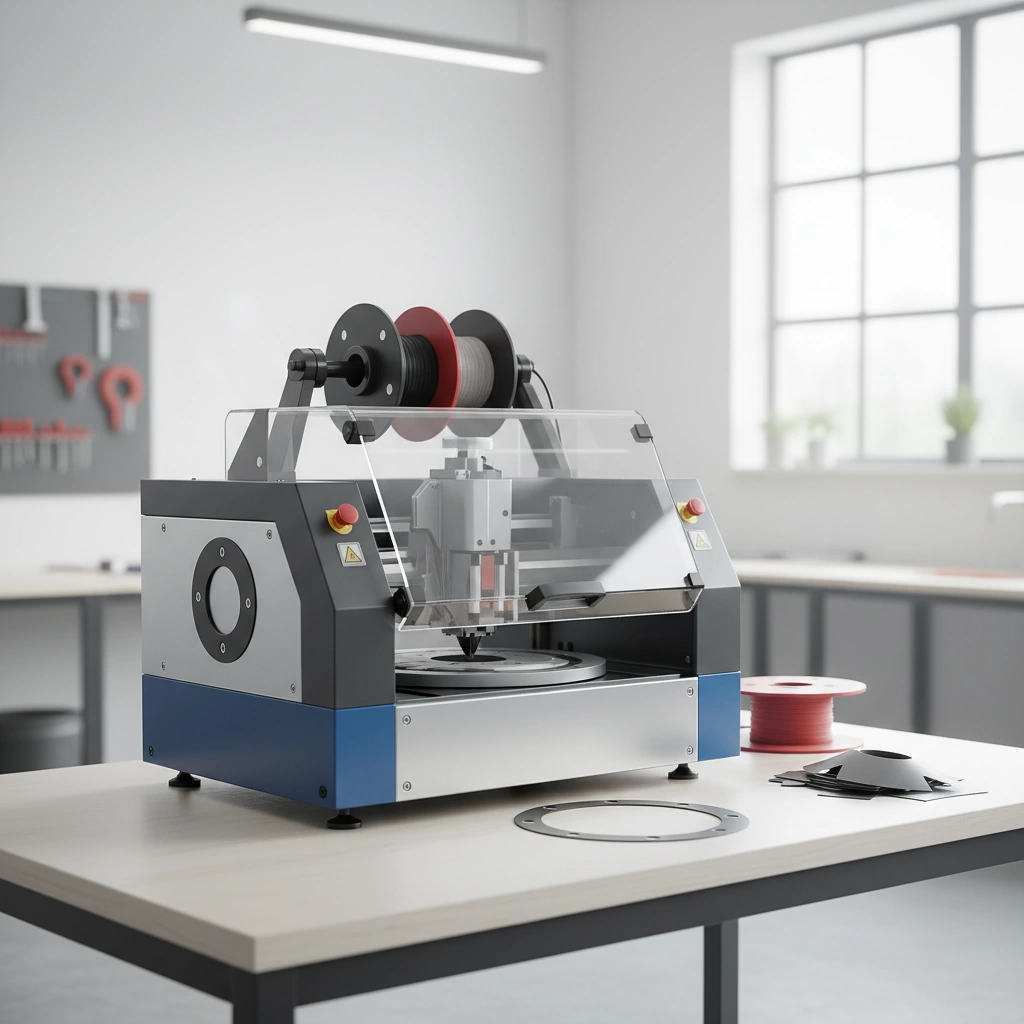
When I’m choosing automatic gasket cutting equipment for US production, material compatibility is the first filter. The right gasket cutter machine lets me switch between non-asbestos, rubber, PTFE, and foam without babysitting the process or wasting sheets.
Non-asbestos and graphite gasket cutting challenges
Non-asbestos and graphite gasket cutting equipment has to deal with brittle, dusty materials that chip easily. With a flatbed CNC gasket cutter or CNC oscillating knife cutter, I look for:
- Stable vacuum table gasket cutter with zoned vacuum hold-down so sheets don’t lift or vibrate
- Precision CNC gasket plotter motion control so small bolt holes and narrow webs stay intact
- Dust extraction and filtration to protect operators and keep the machine clean
- Tool paths tuned for graphite gasket cutting equipment to reduce edge cracking
Rubber and silicone gasket cutting without distortion
Rubber and silicone will stretch if the system isn’t dialed in. For rubber sheet cutting equipment and a rubber and silicone gasket cutter, I focus on:
- Digital knife cutting machine with a sharp pneumatic knife tool or oscillating knife
- Strong but controlled vacuum hold-down so parts don’t move under the blade
- Correct feed rates to avoid “pulling” the material and changing gasket dimensions
- Clean edges for high-speed sealing material processing where leak paths aren’t acceptable
PTFE gasket cutting machine for chemical seals
PTFE is slippery, tough, and often used in critical chemical service. A PTFE gasket cutting machine for chemical seals needs:
- Servo motor motion control system for tight gasket cutting tolerances on thin and thick PTFE
- Aggressive zoned vacuum hold-down to lock down slick sheets
- Proven CAD/CAM integration for manufacturing to handle DXF gasket cutting files and PLT gasket design files precisely
- Tooling and parameters tested for die-less gasket manufacturing of PTFE without burring or warping
Foam and sponge gasket cutting without compression
With foam and sponge, I can’t afford crushed edges or inconsistent thickness. A digital flatbed cutting system or industrial foam and sponge cutter should offer:
- Low-compression vacuum table gasket cutter setup so the material isn’t flattened during cutting
- Proper blade choice and depth control to avoid tearing soft foam
- Optional vision system contour recognition for printed foam gaskets or kiss-cut labels
- Automatic nesting software to maximize material yield on high-volume foam runs
When the automatic gasket cutting equipment matches the material, I get repeatable parts, higher material yield optimization, and fewer rejected sealing components.
ROI and Total Cost of Ownership for a Gasket Cutter Machine
When I look at an automatic gasket cutting equipment investment, I’m not just chasing speed. I’m running the full ROI and total cost of ownership numbers to see how this gasket cutter machine pays us back in a U.S. production environment.
Calculating ROI for Automatic Gasket Cutting Equipment
For most shops, the ROI on a flatbed CNC gasket cutter is driven by a few clear points:
- Labor savings: Replacing manual gasket cutting or dies with a precision CNC gasket plotter and digital knife cutting machine usually cuts labor hours per job by 30–60%.
- Die-less gasket manufacturing: No steel-rule dies to buy, store, or wait on. Short runs and rush jobs move straight from DXF gasket cutting files or PLT gasket design files to the cutter.
- Material yield optimization: Automatic nesting software and smart gasket layouts can bump material yield by 10–20%, especially on expensive PTFE, graphite, and non-asbestos sheets.
- Throughput and uptime: A high-speed sealing material processing setup with a vacuum table gasket cutter and servo motor motion control system runs predictable production, which is huge for U.S. customers with tight lead times.
In most cases, shops I work with see payback in 12–24 months when they factor in saved labor, reduced scrap, and eliminated die costs.
Maintenance and Consumables for Oscillating Knife Cutters
A CNC oscillating knife cutter is low-drama if you stay on top of basic upkeep:
- Consumable blades: Pneumatic knife tool blades, kiss-cut tools, and routing bits are inexpensive versus waterjet or laser consumables. Blade life depends on rubber sheet cutting equipment usage, graphite gasket cutting equipment work, and PTFE gasket cutting machine loads.
- Routine service: Cleaning the vacuum zones, checking the zoned vacuum hold-down, lubricating linear guides, and keeping the digital flatbed cutting system dust-free go a long way.
- Planned downtime: I schedule quick weekly checks and a deeper quarterly service so the machine never surprises us during peak gasket production throughput.
Because the consumables are simple and predictable, the total cost of ownership stays controlled over the long term.
After-Sales Technical Support and Training for CNC Gasket Cutters
For me, the real value in a B2B gasket cutting solution is what happens after the install:
- Onsite and remote training: We make sure operators are comfortable with CAD/CAM integration for manufacturing, handling DXF and PLT files, setting cutting parameters, and using automatic nesting for gasket layouts.
- US-based support: Fast phone, email, and remote login support matter when your flatbed CNC gasket cutter is feeding a custom gasket production line. Downtime kills ROI.
- Process optimization: We help dial in vacuum hold-down, cutting speeds, and tooling setups for rubber and silicone gasket cutters, non-asbestos gasket cutting, graphite seal cutters, and industrial foam and sponge cutter jobs.
Strong after-sales support, clear maintenance routines, and predictable consumables are exactly how I keep the total cost of ownership low and the automatic gasket cutter ROI high for U.S. manufacturers.
Post time: Feb-10-2026